
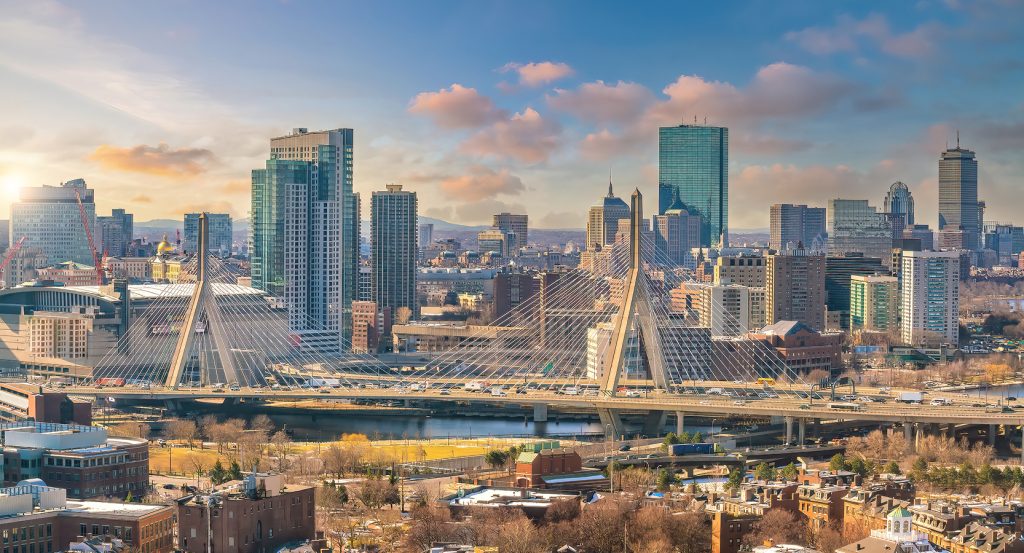
Why Congress Street matters.
Congress Street is a historic Financial District corridor where commercial ambition, revolutionary history, and architectural innovation converge along one of Boston's most influential thoroughfares.
Running through the Financial District between State Street, Fort Point Channel, Atlantic Avenue, and Downtown Crossing, this distinguished corridor connects landmark office towers, historic commercial buildings, celebrated museums, architecturally significant civic institutions, thriving business districts, and welcoming public spaces that collectively showcase Boston's remarkable evolution from colonial seaport to global financial center. Historic masonry architecture, thoughtfully integrated skyscrapers, energetic commercial activity, welcoming pedestrian environments, celebrated cultural landmarks, and enduring business traditions create an urban landscape where generations of merchants, financiers, artists, entrepreneurs, residents, and visitors have shaped one of New England's defining urban corridors. Congress Street has continually evolved while preserving its longstanding importance as one of Downtown's principal commercial arteries. The result is a corridor defined by historical significance, architectural distinction, and lasting metropolitan importance.
What defines Congress Street.
Congress Street is best known for housing Faneuil Hall, where Samuel Adams and other Patriot leaders delivered speeches that helped inspire resistance to British rule before the American Revolution, earning the landmark its enduring nickname as the “Cradle of Liberty.”
Completed in 1742 as Boston's principal marketplace and meeting hall, Faneuil Hall became the city's foremost forum for public debate during the revolutionary era. Mass meetings held within its walls galvanized colonial opposition to taxation and imperial policies, helping shape the political ideas that ultimately led to American independence. Over the following centuries, generations of abolitionists, suffragists, labor leaders, and civil rights advocates continued to gather there, extending its legacy as one of the nation's most influential platforms for democratic expression. That extraordinary civic heritage has established Congress Street as one of America's most historically significant corridors.
How Congress Street fits.
Congress Street works as an exploration of Boston's Revolutionary history, architectural landmarks, and waterfront culture.
Begin along Congress Street, where the historic commercial streetscape immediately establishes the corridor's defining identity. Continue toward Faneuil Hall, where one of America's most influential Revolutionary landmarks provides broader perspective on the street's extraordinary civic legacy. From there, make your way to the Boston Children's Museum, where one of the nation's oldest children's museums provides a memorable conclusion while celebrating Congress Street's remarkable connection between colonial history and Boston's revitalized waterfront. Along the way, you'll encounter architecturally significant commercial buildings, welcoming public plazas, thriving business districts, beautifully preserved historic landmarks, celebrated cultural institutions, and energetic gathering places that reveal Downtown's exceptional depth. The progression moves naturally from a historic commercial corridor to the Cradle of Liberty to a landmark waterfront museum, demonstrating how Congress Street connects democratic ideals, community life, and historical discovery.
Where your story begins.
Foresyte Travel reveals places that feel extraordinary long before you arrive.
Enjoy editorial crafted for luxury travelers.
Foresyte may earn a commission when you book.







































































































