Why Courtyard by Marriott San Francisco Fisherman's Wharf matters.
Courtyard San Francisco Fisherman's Wharf is a strategically placed hotel where Fisherman's Wharf's maritime character meets a compact 1960s building, the district's late twentieth-century hospitality expansion and direct access to San Francisco's historic northern waterfront.
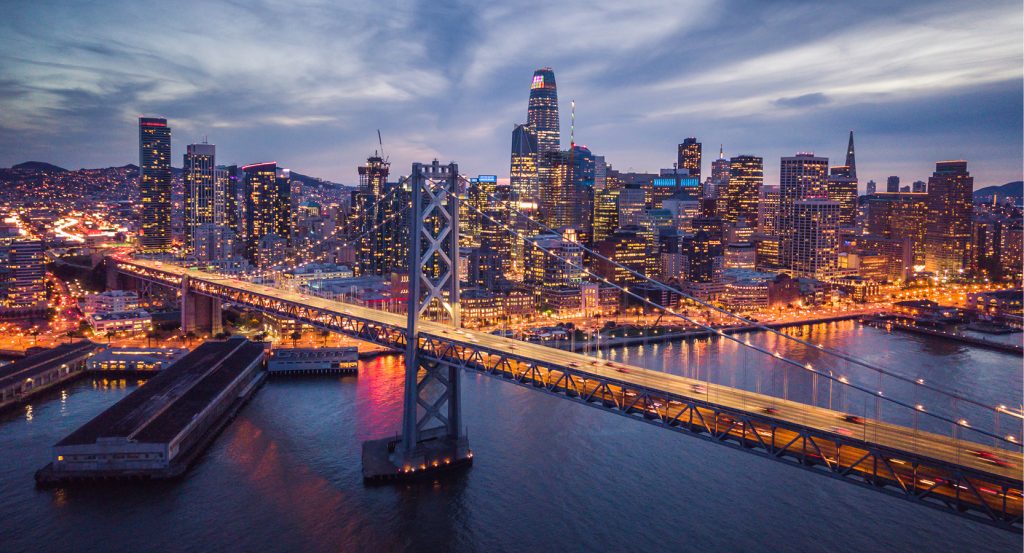
Set along Beach Street near Mason Street and just steps from the Powell-Hyde Cable Car Turnaround, the hotel occupies a low-rise block between the working and recreational waterfront, the rising slope toward Russian Hill and the dense commercial streets surrounding Jefferson Street. The four-story building extends horizontally along Beach Street, with a restrained masonry exterior, recessed window bays and street-level frontage preserving a scale markedly closer to the surrounding wharf blocks than San Francisco's downtown hotel towers. Interior windows and upper-floor openings look toward the dense roofscape between Beach Street and the Bay, placing the waterfront's piers, hills and maritime structures within the property's immediate visual field. A recent renovation recast the lobby and accommodations through pale wood, streamlined furnishings and contemporary finishes, renewing a building whose basic low-rise form remains rooted in its earlier development period. The result is a hotel whose modest physical scale and exceptional position between the Bay shoreline, cable railway and Russian Hill place Fisherman's Wharf's layered urban geography directly around its Beach Street footprint.
What defines Courtyard San Francisco Fisherman's Wharf.
Courtyard San Francisco Fisherman's Wharf is best understood through the conversion of a 1960s lodging property into a Marriott-affiliated hotel during Fisherman's Wharf's maturation as one of San Francisco's principal hospitality districts. The building opened in June 1967, placing its origin in the decade when the northern waterfront was undergoing a major transition from industrial and fishing functions toward recreation, preservation and commercial hospitality. That timing followed the 1963 opening of the Maritime State Historical Park at nearby Hyde Street Pier and preceded the larger visitor-oriented developments that subsequently intensified activity across the wharf. The property entered the Courtyard system in July 2001, linking the older Beach Street building to a Marriott brand created in the 1980s around a more focused hotel format. The affiliation also arrived during a period when former industrial structures across the surrounding waterfront had already been converted into major commercial destinations, fundamentally changing the setting inherited by the 1967 building. Marriott retained the property's comparatively low-rise massing as the hotel continued operating from the same Beach Street address through the following quarter century. Another substantial physical turn began in late 2025, when renovation work extended through the winter across a property still carrying the footprint of its earlier development era. The completed 2026 work renewed interiors and public areas, giving the hotel its most recent design layer more than five decades after the building first entered the Fisherman's Wharf lodging landscape. The sequence from 1967 construction through 2001 Courtyard affiliation and 2026 renovation places the property across three distinct phases in the district's hospitality history, with the original building surviving through each transition.
Marriott developed the Courtyard brand during a pivotal expansion of American lodging segmentation, and the Fisherman's Wharf property eventually became a localized example of that model inside one of San Francisco's most historically specific districts. Courtyard began in 1983 after Marriott research identified demand for lodging positioned between limited-service motels and the company's larger full-service hotels. The first property opened near Atlanta, establishing a smaller-scale formula that subsequently became one of Marriott's principal growth vehicles. International expansion followed during the 1990s, and the brand crossed the 500-property threshold in the following decade as Marriott carried the format into increasingly varied urban settings. San Francisco's Beach Street property joined that system in 2001 inside a building already several decades old, making adaptation central to its relationship with the standardized Courtyard model. Table 580 Fisherman's Wharf gives the property a location-specific character within that system, taking its name directly from the 580 Beach Street address. The 2026 redesign continued the same process of fitting an evolving national brand into an inherited San Francisco structure through renewed interiors, contemporary work areas and revised public spaces. The building represents a different strand of hotel history from the city's grand historic properties: an existing midcentury lodging structure repeatedly adapted to the changing operating conventions of a major international hotel company.
How Courtyard San Francisco Fisherman's Wharf fits.
Courtyard San Francisco Fisherman's Wharf works as the waterfront anchor for an outing connecting a preserved industrial warehouse, an extraordinary Works Progress Administration arts project and the nineteenth-century chocolate enterprise that transformed another section of San Francisco's northern shoreline.
Begin at San Francisco Maritime National Historical Park Visitor Center, occupying the Haslett Warehouse at Hyde and Jefferson streets, where an 1890s brick industrial building preserves the material history of the waterfront that preceded Fisherman's Wharf's later commercial transformation. The structure belonged to the factories and industries surrounding Black Point Cove, and its setting developed alongside boatbuilding, fish handling, lumber yards, oil storage and the State Belt Line Railroad before maritime preservation gave the warehouse another institutional purpose. Continue to Maritime Museum, whose ship-shaped Streamline Moderne building originated as the Aquatic Park Bathhouse within the vast federal public-works campaign that reshaped this section of shoreline during the 1930s. Hilaire Hiler directed an ambitious interior arts program joined by Sargent Johnson and other artists, filling the building with murals, mosaics and sculpture before its 1939 dedication; maritime historian Karl Kortum subsequently helped establish the San Francisco Maritime Museum there in 1951. Conclude at Ghirardelli Square, where Domenico Ghirardelli's chocolate enterprise consolidated production inside a former woolen-mill complex overlooking the Bay after the company acquired the property in the 1890s. Chocolate manufacturing continued there until the operation moved to San Leandro in the 1960s, after which William Matson Roth and his mother Lurline Matson Roth backed the conversion of the industrial buildings into a retail and dining complex that became an influential American example of adaptive reuse. The progression moves from a surviving waterfront warehouse through a federally built civic arts project and culminates in a former chocolate factory whose reinvention helped establish preservation-driven commercial redevelopment as a defining force along Fisherman's Wharf.
Where your story begins.
Foresyte Travel reveals places that feel extraordinary long before you arrive.
Enjoy editorial crafted for luxury travelers.
Foresyte may earn a commission when you book.