Why Downtown Napa matters.
Downtown Napa is a nineteenth-century commercial district where Napa Valley's agricultural heritage meets the Napa River's trading history, the architectural legacy of California's wine industry and the transformation of a historic county seat into a center of food, wine and cultural commerce.
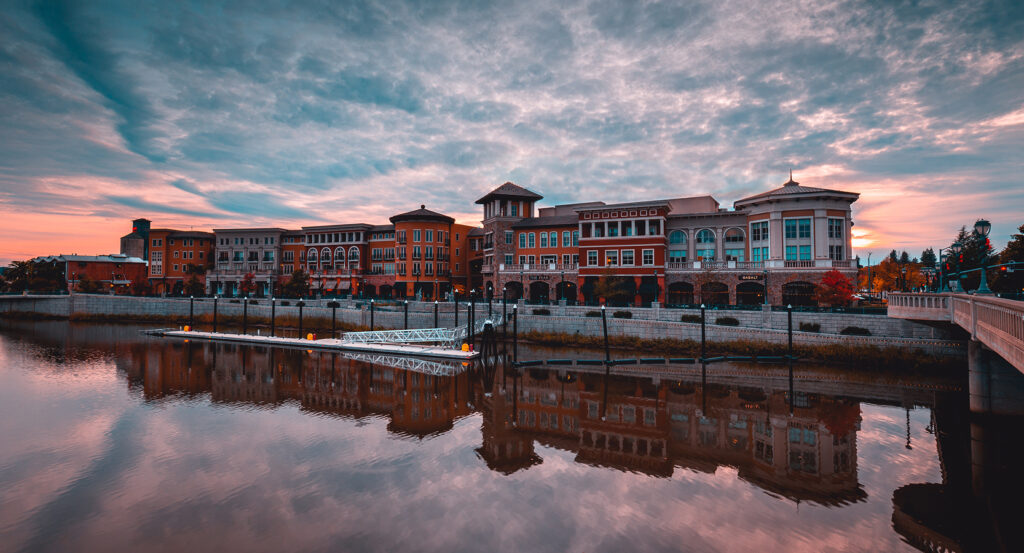
Positioned between the Napa River, the Oxbow district and the residential neighborhoods west of Jefferson Street, the downtown district occupies Napa's historic commercial center, where 1st Street, Main Street and 3rd Street connect nineteenth-century business blocks with the riverfront and surrounding civic institutions. Brick commercial buildings, stone façades and restored theaters preserve successive periods of urban development. The Napa River forms the eastern boundary of the historic core, with pedestrian crossings connecting downtown to the Oxbow waterfront. Restaurants, tasting rooms and independent businesses occupy former retail premises and adapted commercial structures. The result is a walkable city center whose architecture and public spaces preserve Napa's evolution from river port to wine-country capital.
What defines Downtown Napa.
Downtown Napa is best known for its historic commercial architecture, riverfront setting and concentration of restaurants, wine tasting rooms and cultural institutions associated with the Napa Valley. The city originated in the mid-nineteenth century as agricultural settlement expanded through the valley following California's transition to American governance. Nathan Coombs laid out the town of Napa in 1847, establishing a street grid near the river that became the foundation of its commercial center. Napa County was created in 1850, and the settlement developed as its administrative and trading center. The Napa River provided a navigable connection to San Pablo Bay, allowing agricultural products, construction supplies and merchandise to move between the valley and the San Francisco Bay region. Steamboat transportation strengthened the town's commercial position during the nineteenth century, supporting warehouses, hotels and retail businesses near the waterfront. The development of vineyards and wineries across Napa Valley increased the importance of the city as a center for agricultural trade and services. Railroad construction during the latter nineteenth century expanded transportation connections between Napa and neighboring communities. Commercial buildings along 1st Street and Main Street incorporated brick construction, ornamental cornices and architectural details associated with Victorian-era California towns. The 1906 San Francisco earthquake damaged buildings throughout the region, influencing subsequent construction and repairs. Downtown Napa continued to serve as the county's commercial center through the twentieth century, even as suburban development shifted portions of retail activity beyond the historic core. The Napa River experienced repeated flooding, prompting extensive flood-control planning and infrastructure improvements. The Napa River Flood Protection Project reshaped portions of the waterfront through environmental restoration, flood management and the creation of public access areas. The 2014 South Napa earthquake damaged numerous historic buildings, leading to structural repairs and preservation work across downtown. Successive investments in building restoration, cultural institutions and hospitality businesses strengthened the district's relationship with the surrounding wine region.
Nathan Coombs's original street grid continues to organize downtown's commercial blocks, with 1st Street forming a principal east-west route through the historic center. The Napa River curves along the district's eastern edge, connecting the urban core with the valley's broader watershed. Main Street contains surviving commercial buildings whose ground-floor premises accommodate restaurants, tasting rooms and independent businesses. Upper stories retain architectural details associated with nineteenth-century mercantile development, including decorative masonry and vertically proportioned windows. The Napa Valley Opera House, completed in 1879, preserves the district's early association with theatrical performance and civic entertainment. Its historic auditorium and restored architectural features connect contemporary cultural programming with the city's Victorian-era commercial prosperity. The Uptown Theatre, opened in 1937, represents a later period of entertainment architecture through its Art Deco design and prominent downtown façade. Its restoration preserved a substantial example of twentieth-century theater construction in the Napa Valley. 1st Street's commercial development incorporates historic storefronts alongside adapted buildings containing dining and retail establishments. The district's tasting rooms connect regional wineries with an urban setting, allowing producers to present wines beyond their vineyard properties. Restaurant kitchens draw upon agricultural products associated with Napa Valley and neighboring Northern California growing regions. Public spaces along the river provide pedestrian access to the waterfront and views of the surrounding historic buildings. Bridges connect the central business district with the eastern riverbank, extending pedestrian circulation toward neighboring commercial areas. The Napa Valley Wine Train operates from a station near downtown, preserving a connection between railway transportation and the region's wine tourism. The district's combination of historic architecture, cultural venues and regional food commerce maintains Napa's role as the principal urban center of the valley.
How Downtown Napa fits.
Downtown Napa works as the urban centerpiece for a Napa Valley itinerary connecting the city's public market, historic railway transportation and the agricultural landscape that established the region's international wine reputation.
Begin at Oxbow Public Market, the food hall situated east of the Napa River near 1st Street. Opened in 2007, the market occupies a building designed around independent food merchants, specialty retailers and prepared-food businesses. Its interior arrangement connects individual stalls with shared circulation areas and outdoor seating overlooking the surrounding district. The market's vendors emphasize products associated with Northern California agriculture, including artisan cheese, baked goods, seafood and regional wines. Its development contributed to the commercial expansion of the Oxbow district, strengthening the relationship between Napa's historic center and the eastern riverfront. Continue to Napa Valley Wine Train, the passenger railway operating along the historic rail corridor extending north through Napa Valley. The original railway developed during the nineteenth century to connect agricultural communities and commercial centers with regional transportation networks. The modern excursion service began in 1989, incorporating restored passenger cars and dining facilities. Its route passes vineyards, wineries and agricultural properties associated with the valley's wine production. The train preserves elements of historic railway travel through period-inspired interiors, formal dining service and views of the surrounding landscape. Its departure facilities near downtown connect the city's transportation heritage with contemporary wine tourism. Conclude at Napa Valley Museum Yountville, the cultural institution situated north of Napa in the town of Yountville. Founded in 1972, the museum developed as an institution devoted to the history, art and cultural heritage of Napa Valley. Its exhibitions examine regional subjects through historical artifacts, photography and changing artistic presentations. The museum's collections connect the valley's agricultural development with its communities and cultural institutions. Its location within the Napa Valley provides a broader regional perspective on the forces that shaped downtown's commercial history. The progression moves from contemporary regional food commerce through historic railway travel and culminates in the valley's cultural heritage, connecting Downtown Napa with the agricultural and transportation history of Northern California.
Where your story begins.
Foresyte Travel reveals places that feel extraordinary long before you arrive.
Enjoy editorial crafted for luxury travelers.
Foresyte may earn a commission when you book.