Why you should experience Drum Bridge at Japanese Tea Garden in San Francisco, California.
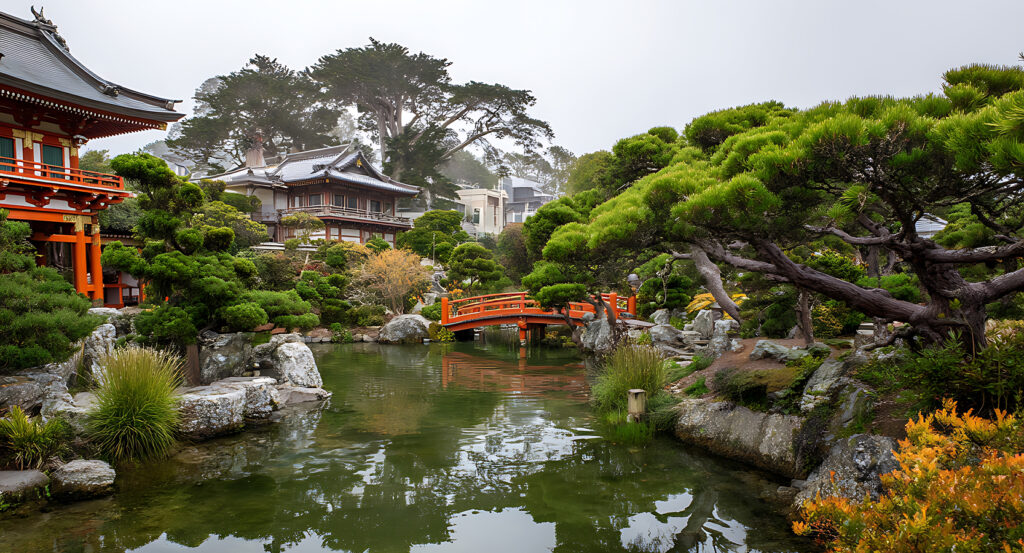
The Drum Bridge is the soul of the San Francisco Japanese Tea Garden, a perfect arc rising over tranquil water, where art and reflection meet.
Its curved form mirrors a full circle, symbolizing harmony between heaven and earth, and when you look into the pond below, the reflection completes that circle, turning wood and water into a living mandala. Crossing it isn't just a walk, it's a moment of play, grace, and balance. Visitors pause mid-arch, steadying themselves as koi swirl beneath, cameras forgotten for a heartbeat as they simply breathe. The bridge feels alive, crafted not only to connect two banks but to connect people with presence. It's the kind of structure that doesn't shout beauty, it whispers it through the sound of rippling water, the patina of wood warmed by sunlight, and the stillness that wraps around you like air after rain.
What you should know about Drum Bridge at Japanese Tea Garden.
The Drum Bridge, or Taiko-bashi, was originally designed by landscape architect Makoto Hagiwara, who shaped the Japanese Tea Garden into the cultural masterpiece it is today.
Imported from Japan in the late 19th century, the bridge's unique semi-circular design was chosen for its symbolism as much as its aesthetics. In traditional Japanese architecture, the drum-shaped arch represents the spiritual passage from the everyday world into one of contemplation and purity. Hagiwara placed it strategically near the garden's entrance, so that crossing it became a ceremonial act of leaving the city behind. The bridge's name comes from the way its reflection forms a perfect circle, like a taiko drum, when seen from the right angle. Over the decades, it has been carefully restored with authentic materials to preserve its character, weathering time and fog with quiet dignity. Few structures in San Francisco hold this blend of artistic, spiritual, and cultural resonance in such a small space.
How to fold Drum Bridge at Japanese Tea Garden into your trip.
When visiting the San Francisco Japanese Tea Garden, make the Drum Bridge your first stop before exploring the deeper pathways.
Approach from the main pond, where the bridge reveals its full reflection, best seen in the calm of morning light. Cross slowly, noticing how your balance shifts with the curve beneath your feet, each step feeling like part of an ancient ritual. Afterward, linger nearby at the base of the bridge to watch its image ripple in the water as koi drift below and cherry blossoms fall from above. For photographers, this is among the garden's most timeless vantage points; for travelers seeking quiet, it's a place to pause and absorb the energy of design meeting nature. From here, follow the path toward the Tea House or the Five-Story Pagoda, but remember: no matter where you go, the Drum Bridge remains the garden's heartbeat, a wooden echo of Japan's artistry, grace, and stillness, thriving in the heart of San Francisco.
Where your story begins.
Foresyte Travel reveals places that feel extraordinary long before you arrive.
Experience premium editorial crafted for luxury travelers.