
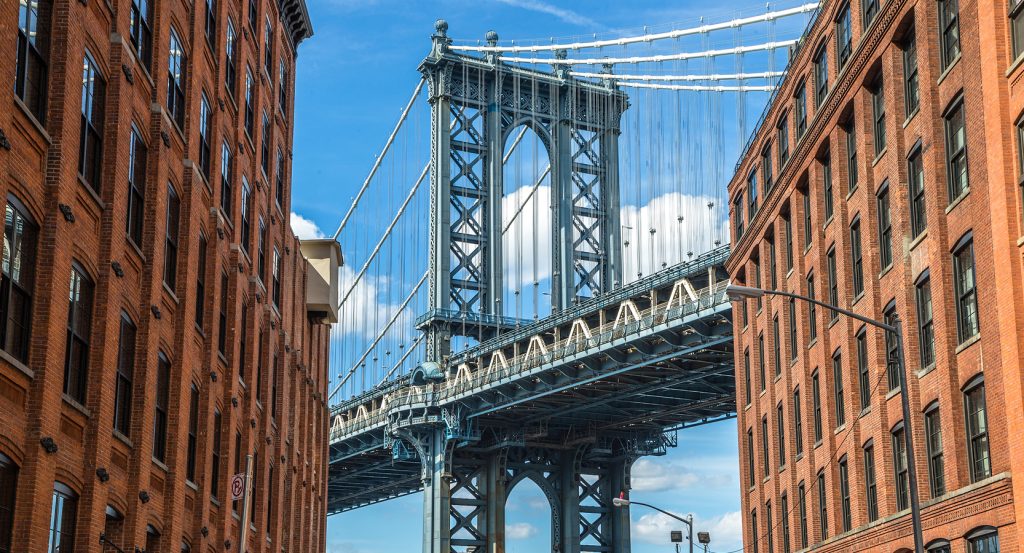
Why you should experience Duffield Street in New York, NY.
Duffield Street is a historic Downtown Brooklyn corridor where abolitionist courage, civic history, and urban renewal converge along one of the borough's most historically significant streets.
Running through Downtown Brooklyn between Brooklyn Heights and Fort Greene, this compact historic corridor connects landmark civic buildings, preserved nineteenth-century structures, neighborhood businesses, educational institutions, and thriving commercial districts that collectively reflect Brooklyn's remarkable transformation from an independent city into one of New York City's foremost civic and economic centers. Historic brick rowhouses, early commercial buildings, architecturally significant public institutions, and thriving pedestrian streets create an urban landscape where centuries of political leadership, commerce, and social progress continue to intersect. Duffield Street developed during Brooklyn's rapid nineteenth-century growth while becoming closely associated with the borough's abolitionist movement, preserving a remarkable legacy within the heart of modern Downtown Brooklyn. The result is a corridor defined by historical significance, civic importance, and enduring cultural legacy.
What you should know about Duffield Street.
Duffield Street is best known for being home to the Duffield Street Historic District, where nineteenth-century buildings are closely associated with Brooklyn's documented abolitionist movement and Underground Railroad history.
Several surviving homes along the street have long been connected to prominent abolitionists who actively supported the movement to end slavery, while historical research and archaeological investigations have explored evidence of spaces believed to have sheltered freedom seekers escaping enslavement. The district has become one of Brooklyn's most important sites for interpreting the borough's role in the national struggle for freedom, inspiring preservation efforts that protected these rare historic buildings from redevelopment. Today, Duffield Street stands as a powerful reminder of the individuals whose courage and commitment helped shape the fight against slavery while preserving an irreplaceable chapter of Brooklyn's civic history.
How to fold Duffield Street into your trip.
Duffield Street works as an exploration of Downtown Brooklyn's abolitionist history, civic landmarks, and architectural heritage.
Begin at the Duffield Street Historic District, where preserved nineteenth-century buildings immediately establish the corridor's defining historical legacy. Continue toward Brooklyn Borough Hall, whose stately Greek Revival architecture reflects the civic leadership that guided Brooklyn through its years as an independent city. From there, make your way to the New York Transit Museum, where immersive exhibits provide broader perspective on the transportation systems that fueled Brooklyn's remarkable nineteenth- and twentieth-century growth. Along the route, you'll encounter architecturally significant civic buildings, neighborhood cafés, historic commercial streets, welcoming public plazas, educational institutions, and thriving business districts that reveal the corridor's exceptional depth. The progression moves naturally from nationally significant abolitionist district to landmark civic building to celebrated transit museum, demonstrating how Duffield Street connects the pursuit of freedom, public leadership, and urban development within one of Brooklyn's most influential historic corridors. Duffield Street remains one of the borough's most rewarding streets, preserving a distinctive balance between historical significance, civic identity, and metropolitan vitality.
Where your story begins.
Foresyte Travel reveals places that feel extraordinary long before you arrive.
Experience premium editorial crafted for luxury travelers.







































































































