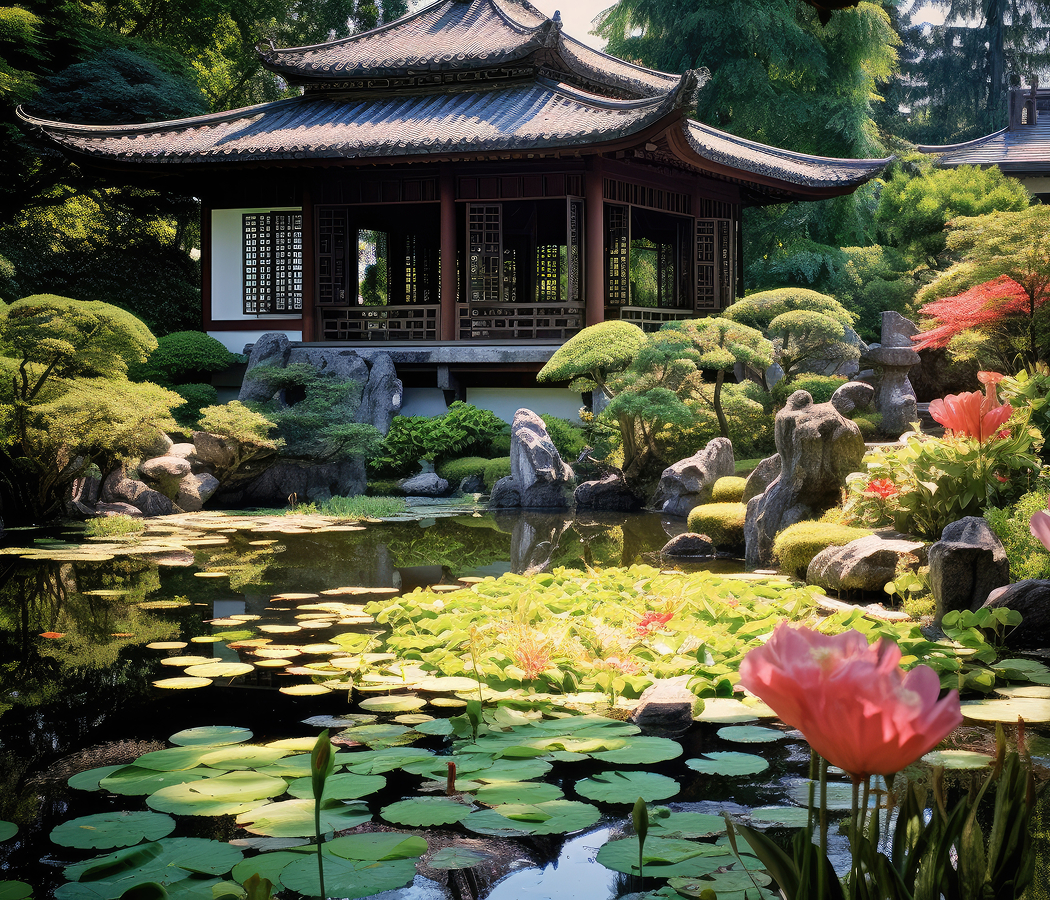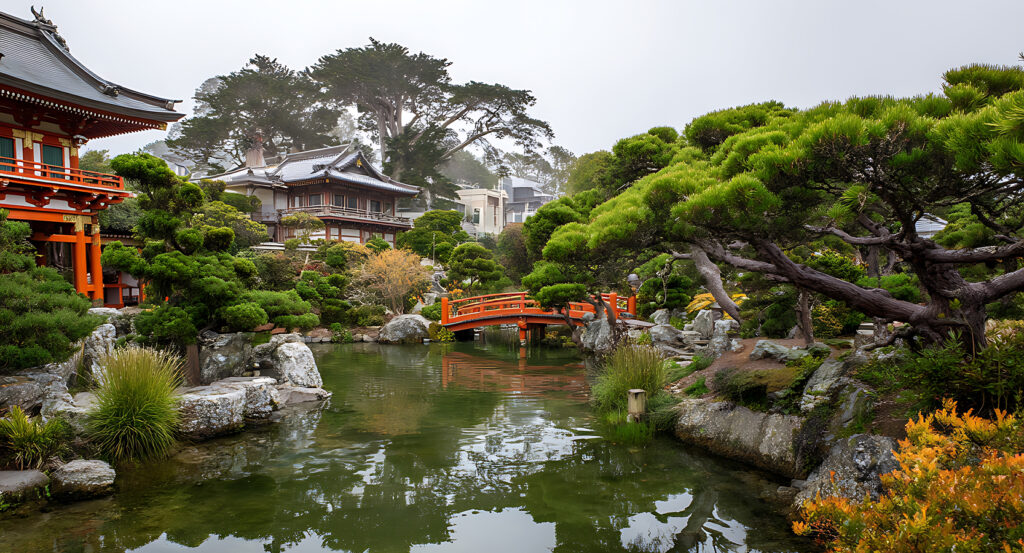
Why you should experience Japanese Tea Garden Pagoda in San Francisco, California.
The Five-Story Pagoda at the Japanese Tea Garden in San Francisco stands as the garden's spiritual and visual heartbeat, a towering expression of harmony, balance, and reverence.
Framed by whispering pines and cherry blossoms, it rises gracefully from the landscape like a memory from another world. Each tier seems to float above the one below, stacked in perfect proportion to represent the five elements of Buddhist cosmology, earth, water, fire, wind, and sky. Though you can't enter the structure, its presence alone feels monumental, casting a quiet stillness over the surrounding pathways. When sunlight filters through the trees, it paints the red lacquered wood in shifting tones of gold and vermilion, a color palette designed to inspire both vitality and serenity. Visitors often stop here longer than they intend to, sensing something wordless in its symmetry, a reminder that true beauty doesn't shout; it simply exists.
What you should know about Japanese Tea Garden Pagoda.
The Five-Story Pagoda has its origins in Japan's ancient architectural tradition, modeled after structures used to enshrine sacred relics of the Buddha.
The version that now graces the Japanese Tea Garden originally arrived from the 1915 Panama-Pacific International Exposition, later relocated to Golden Gate Park as a permanent cultural landmark. Each of its five eaves was crafted using interlocking joinery techniques that require no nails, a hallmark of Japanese carpentry that allows the structure to flex subtly with the wind, symbolizing resilience through grace. The pagoda's design was also influenced by the temple architecture of Nara and Kyoto, though scaled to fit within the contemplative intimacy of the garden. Few realize that its verticality mirrors the natural rise of Mount Fuji in silhouette, a deliberate alignment meant to evoke spiritual ascent. Over the years, it has become a beloved symbol of endurance and cross-cultural exchange, surviving restoration cycles and earthquakes alike with quiet dignity.
How to fold Japanese Tea Garden Pagoda into your trip.
When visiting the Japanese Tea Garden in San Francisco, approach the Five-Story Pagoda from the east path near the Drum Bridge, it's the most cinematic reveal.
Pause at the base of the structure, where the stone lanterns and low shrubs frame the pagoda like a living painting. Early morning or late afternoon are ideal times to visit, when the soft light catches the curved eaves and the air feels charged with calm. Take a few moments to simply stand still; the garden's rhythm seems to slow in the pagoda's shadow. Afterward, continue toward the Zen Garden Courtyard or the Tea House Pavilion to extend that meditative mood. If you're visiting during spring, the blooming cherry trees create a pink-and-white canopy that feels almost unreal, a natural halo around the crimson tower. Whether you see it as an architectural marvel or a quiet prayer in wood and stone, the Five-Story Pagoda captures the soul of the garden: rooted in the earth, yet always reaching for the sky.
Where your story begins.
Foresyte Travel reveals places that feel extraordinary long before you arrive.
Experience premium editorial crafted for luxury travelers.