
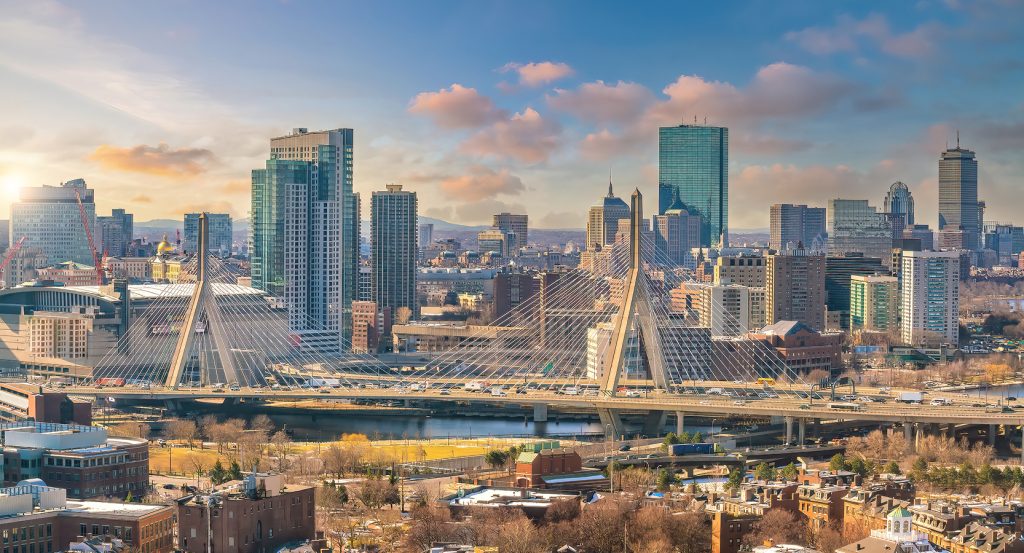
Why you should experience Fleet Street in Boston, Massachusetts.
Fleet Street is a lively corridor where North End's maritime heritage, Italian-American traditions, colonial history, and enduring neighborhood character converge into one of Boston's most distinctive streets.
Running through North End between the Waterfront and Government Center, the corridor threads through one of Boston's oldest street networks, where brick rowhouses, neighborhood businesses, historic churches, and intimate public spaces reflect centuries of continuous urban life. Each successive block heightens the experience as granite curbs, narrow brick sidewalks, nineteenth-century façades, family-owned storefronts, and glimpses toward the harbor reveal a streetscape shaped by generations of commerce and community. The defining moment arrives as the corridor's preserved urban fabric and deeply rooted neighborhood traditions demonstrate how Boston's colonial waterfront evolved into the city's enduring center of Italian-American culture. The result is an experience defined by historical continuity, architectural intimacy, and one of North End's most engaging corridors.
What you should know about Fleet Street.
Fleet Street is best known for occupying part of Boston's North End, whose street pattern originated during the seventeenth century as the peninsula developed into the colony's principal maritime settlement and commercial waterfront. Following the construction of Faneuil Hall in 1742 and the expansion of Boston's Atlantic trade, merchants, ship chandlers, artisans, and waterfront laborers established a dense urban district characterized by narrow rights-of-way, interconnected commercial buildings, and closely spaced brick residences. Much of the corridor's present architectural character emerged between the 1830s and the early twentieth century through the construction of Federal, Greek Revival, Italianate, and Queen Anne buildings distinguished by brick masonry, granite lintels, brownstone trim, cast-iron storefronts, and ornamental cornices. Successive generations of Italian immigrants transformed Fleet Street during the late nineteenth and early twentieth centuries by establishing groceries, bakeries, cafés, religious societies, and family businesses that permanently reshaped the corridor's cultural identity. Collectively, the North End's colonial origins, maritime economy, immigration history, architectural evolution, and enduring commercial traditions established Fleet Street as one of Boston's defining historic corridors.
Religious and cultural traditions became the defining thread sustaining the corridor as the Saint Agrippina di Mineo Society, founded in 1914, established one of the North End's enduring mutual aid organizations while continuing annual celebrations that reflect the neighborhood's Sicilian heritage. That tradition is reinforced by the North End Historical Society, whose archival collections, photographs, and oral histories document the lives of immigrant families, neighborhood merchants, and civic organizations that have remained closely connected to Fleet Street across multiple generations. Skilled brick masons, stone conservators, decorative metalworkers, and restoration specialists continue preserving original masonry façades, granite door surrounds, ornamental cornices, and historic storefront details, ensuring the corridor retains the craftsmanship that distinguishes Boston's oldest residential neighborhood. Together, these cultural organizations, historical resources, and enduring preservation traditions demonstrate how Fleet Street continues expressing the maritime legacy and immigrant character that have shaped the North End for centuries.
How to fold Fleet Street into your trip.
Fleet Street works as a walk through the North End's maritime heritage and enduring Italian-American traditions.
Begin at Boston Harborwalk, where expansive waterfront views establish the maritime setting that gave rise to the surrounding neighborhood before naturally leading inland toward Fleet Street. Continue to Paul Revere House, where Boston's oldest remaining downtown residence deepens appreciation for the colonial streetscape that still defines the North End today. Conclude at Old North Church, where nationally significant history and beautifully preserved eighteenth-century architecture provide the defining historical payoff while completing the story of one of Boston's oldest neighborhoods. The progression moves naturally from the harbor that created the community to its colonial origins before culminating in one of the city's most enduring symbols of early American history.
Where your story begins.
Foresyte Travel reveals places that feel extraordinary long before you arrive.
Experience premium editorial crafted for luxury travelers.







































































































