Why Four Seasons Hotel New York Downtown matters.
Four Seasons Hotel New York Downtown is a commanding hotel where Tribeca's architectural heritage meets Larry Silverstein's Lower Manhattan redevelopment, Robert A.M. Stern's masonry skyscraper and Yabu Pushelberg interiors within the soaring 30 Park Place tower.
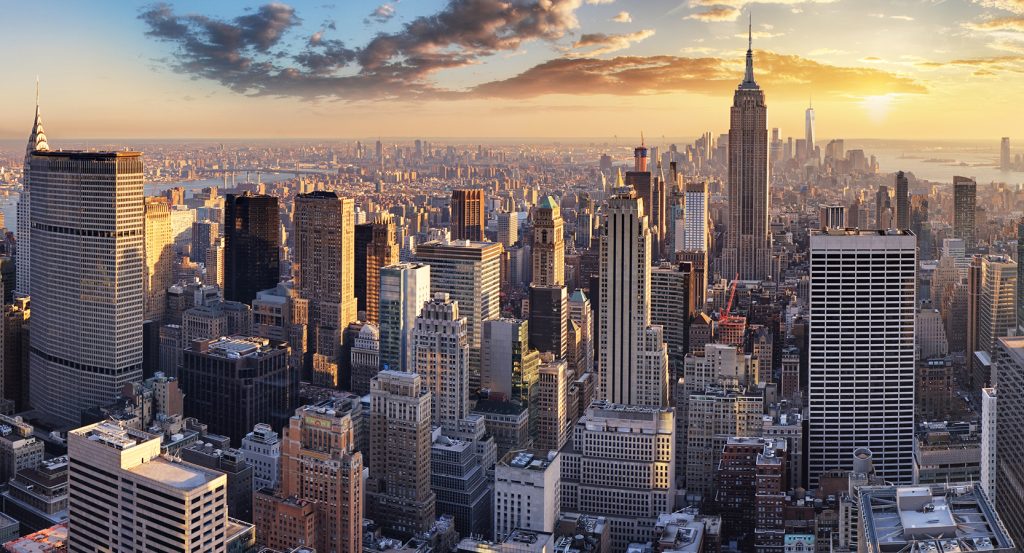
Set along Barclay Street near Church Street and just steps from City Hall Park, the hotel occupies Tribeca's eastern threshold between the Gothic profile of the Woolworth Building, the rebuilt World Trade Center district and the dense civic architecture extending north toward Chambers Street. Robert A.M. Stern Architects gave 30 Park Place a limestone base and cast-stone shaft whose setbacks and articulated crown draw directly from the proportions of Lower Manhattan's early twentieth-century skyscrapers. The hotel occupies the tower's lower section beneath private residences, with a separate Barclay Street entrance distinguishing its circulation from the residential lobby on Park Place. Yabu Pushelberg shaped the principal interiors through walnut paneling, woven metal screens, bronze details and a suspended staircase that creates a contemporary counterpoint to Stern's classically composed exterior. The result is a hotel whose expansive masonry tower, residential integration and proximity to the rebuilt World Trade Center place luxury hospitality inside one of the most consequential architectural transformations in modern Lower Manhattan.
What defines Four Seasons Hotel New York Downtown.
Four Seasons Hotel New York Downtown is best known for becoming the hospitality anchor of 30 Park Place, Larry Silverstein's $1 billion hotel and condominium development beside the Woolworth Building. Silverstein Properties and the California State Teachers' Retirement System acquired the former Moody's headquarters site in 2007 through their Metro Fund joint venture, clearing an eleven-story office building for a far more ambitious mixed-use project. Robert A.M. Stern Architects joined the development before the financial crisis, with early plans pairing Four Seasons hospitality with private residences inside a skyscraper conceived to complement the masonry towers surrounding City Hall Park. The 2008 financial collapse froze credit markets and stalled the project before vertical construction began, delaying one of Silverstein's principal developments beyond the World Trade Center site. The Children's Investment Fund supplied construction financing in 2013, allowing work to restart with Tishman Construction managing the build. Robert A.M. Stern, Daniel Lobitz, Sargent C. Gardiner and Paul L. Whalen led the design for Robert A.M. Stern Architects, with SLCE Architects serving as associate architect. The completed 926-foot tower uses a limestone base, cast-stone shaft, setback terraces and increasingly slender upper floors to reinterpret the vertical hierarchy associated with prewar Manhattan skyscrapers. A landscaped through-block public plaza occupies the eastern side, with a low annex concealing service infrastructure and separating the tower from neighboring development. Four Seasons Hotel New York Downtown opened on September 19, 2016, introducing the company's second Manhattan property within a building that simultaneously established a major new residential address. Silverstein joined Robert A.M. Stern and Four Seasons leadership at an October ribbon cutting that formally completed a project conceived before the financial crisis and realized during Lower Manhattan's subsequent residential and commercial resurgence.
Yabu Pushelberg established the hotel's interior character as a contemporary foil to Robert A.M. Stern Architects' classically composed tower. George Yabu and Glenn Pushelberg organized the two-story lobby around deliberately asymmetrical forms, creating a spatial sequence inspired by the irregular streets and compressed passages of Lower Manhattan. Rich wood walls, woven metal screens, brushed bronze details and muted jewel-toned fabrics give the public rooms a tactile depth distinct from the limestone and cast stone governing the exterior. Original artworks are integrated throughout the lobby, allowing individual pieces to punctuate the darker architectural surfaces instead of functioning as a detached decorative collection. A suspended staircase rises through the principal public volume as one of the interior's strongest sculptural elements, connecting the restrained entrance level with gathering spaces above. Bill Rooney Studio developed the specialty-suite interiors as a separate component of the design program, adding another creative practice to the collaboration established by Stern and Yabu Pushelberg. Wolfgang Puck brought an equally consequential authorship to the building when CUT opened in October 2016 as his first Manhattan restaurant. Puck and Gelila Assefa Puck collaborated with Jacques Garcia, Kimberly Brown and Strata Architects on the restaurant interiors, with Garcia combining European architectural references with a darker interpretation of New York. Executive chef Raymond Weber led the opening kitchen after nearly a decade working within Puck's organization, preparing American and Japanese beef over hardwood before finishing selected cuts under intense broiler heat. CUT connected Silverstein's development, Four Seasons hospitality and Puck's international restaurant company through a partnership established specifically for 30 Park Place, giving the building a culinary institution with its own design authorship and a significant place in Puck's career.
How Four Seasons Hotel New York Downtown fits.
Four Seasons Hotel New York Downtown works as the architectural anchor for an outing connecting the skyscraper that established Lower Manhattan's early twentieth-century vertical ambition, the rediscovery of New York's colonial African history and the memorial landscape created from the footprints of the World Trade Center towers.
Begin at Woolworth Building, where retail entrepreneur Frank W. Woolworth commissioned Cass Gilbert to design a corporate skyscraper that became the world's tallest building when completed in 1913. Gilbert combined a steel frame with Gothic-inspired terra-cotta cladding, raising a slender tower above a broad Broadway base and developing a richly ornamented lobby whose mosaics and sculptural details carried the medieval references inside. Woolworth financed the $13.5 million project in cash, giving the five-and-dime merchant unusual control over a building that became an influential model for the romantic skyscraper. Continue to African Burial Ground National Monument, where construction of a federal office building in 1991 uncovered a colonial cemetery used by free and enslaved Africans during the seventeenth and eighteenth centuries. Excavation recovered the remains of 419 individuals before community activism and federal intervention redirected the project toward preservation, and the remains were later transferred to Howard University for extensive scholarly work. The 419 ancestors returned to Lower Manhattan during the 2003 Rites of Ancestral Return and were reinterred in hand-carved Ghanaian coffins, with national-monument designation following in 2006. Conclude at 9/11 Memorial, where an international competition drawing 5,201 submissions from 63 countries selected Michael Arad and Peter Walker's Reflecting Absence in 2004. Twin pools occupy the footprints of the former North and South Towers, with thirty-foot waterfalls descending inside bronze parapets carrying the names of victims of the September 11 attacks and the 1993 World Trade Center bombing. Hundreds of swamp white oak trees form the surrounding plaza, and the memorial opened on September 11, 2011, exactly ten years after the attacks. The progression moves from Gilbert and Woolworth's pursuit of unprecedented skyscraper height through the recovery and preservation of New York's colonial African burial ground and culminates in Arad and Walker's transformation of the World Trade Center footprints into a national memorial, placing Four Seasons Hotel New York Downtown within three profound layers of Lower Manhattan history.
Where your story begins.
Foresyte Travel reveals places that feel extraordinary long before you arrive.
Enjoy editorial crafted for luxury travelers.
Foresyte may earn a commission when you book.