Why Four Seasons Hotel San Francisco at Embarcadero matters.
Four Seasons Hotel San Francisco at Embarcadero is a sky-high hotel where the Financial District's architectural ambition meets Four Seasons hospitality through the distinctive twin-tower crown of 345 California Center and a Marzipan redesign shaped around panoramic views and San Francisco history.
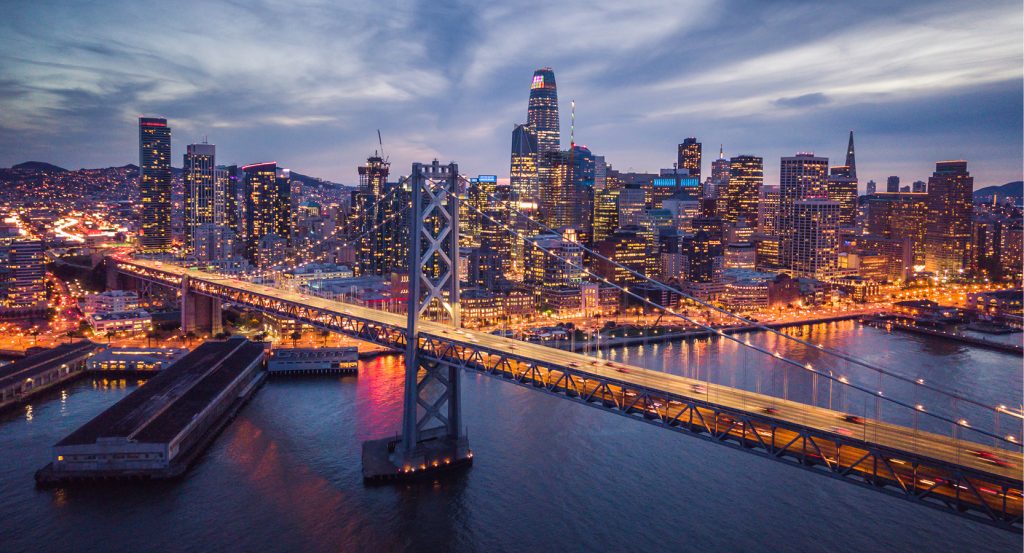
Set along Sansome Street near California Street and just steps from Embarcadero Center, the hotel occupies the Financial District between the historic towers surrounding Montgomery Street, Jackson Square's nineteenth-century blocks and the descending streets reaching east toward the Ferry Building and waterfront. The hotel occupies the upper reaches of a 48-story tower whose hexagonal shaft separates into two diagonal glass-and-granite crowns high above the street. Enclosed sky bridges connect those elevated sections, turning circulation between them into a sequence of broad city and bay perspectives. Marzipan's interiors use natural wood, hand-tufted wool rugs, metallic accents and expansive glazing to direct attention outward from the tower. The result is a hotel whose unusual split-crown architecture and elevated interiors transform one of the Financial District's defining 1980s skyscrapers into an unusually intimate vantage point over San Francisco.
What defines Four Seasons Hotel San Francisco at Embarcadero.
Four Seasons Hotel San Francisco at Embarcadero is best known for occupying the dramatic upper crown of 345 California Center, a Skidmore, Owings & Merrill skyscraper whose hotel component has passed through Mandarin Oriental, Loews and Four Seasons during four decades of Financial District hospitality. Skidmore, Owings & Merrill designed the steel-frame tower with full seismic engineering and a hexagonal office plan beneath two upper structures rotated 45 degrees from the principal building geometry. Hathaway Dinwiddie executed construction, completing a building whose architectural height reaches 695 feet beneath taller spires. Five varieties of imported granite cover the exterior and continue across the California Street plaza and arcade, giving the tower a materially consistent base beneath its unusually articulated crown. Thirty-foot vaulted ceilings shape the arcade linking Battery and Sansome streets with the principal office entrance. The upper twin structures were initially conceived for residential condominiums before the development program shifted toward a luxury hotel. Mandarin Oriental became the original hospitality operator, establishing the building as one of the earliest American properties associated with the Hong Kong luxury company. Loews Hotels acquired the hotel in February 2015 and introduced the Loews Regency San Francisco identity, adding the property to its Regency collection. Westbrook Partners purchased the hotel from Loews in May 2019 and selected Four Seasons Hotels and Resorts to assume management after a comprehensive renovation. AXIS Architecture directed the architectural renovation for Westbrook Properties, with Marzipan responsible for the new interior direction. Four Seasons established its Embarcadero character in 2020, creating a second San Francisco address for the Toronto-based luxury company. Marzipan completed the phased interior work across the following two and a half years, using cable-car-inspired furniture and lighting, gold-threaded wall coverings tied to Gold Rush history and custom hand-tufted wool rugs across the renewed interiors. The 2022 completion also introduced Golden Gate and Embarcadero terrace configurations with 800-square-foot private outdoor areas positioned high above the Financial District. Four Seasons Hotel San Francisco at Embarcadero preserves an unusually layered hospitality record within a single SOM skyscraper, joining ambitious 1980s high-rise engineering with three successive international hotel identities and a Four Seasons reinvention centered on the architectural advantage of the building's extraordinary crown.
Orafo develops a separate culinary thesis around the relationship between regional Italian technique, Northern California ingredients and San Francisco's Gold Rush history. The restaurant's Italian name means goldsmith, establishing craftsmanship as the organizing idea behind a menu drawing principally from Tuscany and Calabria. Executive Chef Gunnar Planter introduced the restaurant in February 2023 after building his California career through kitchens farther south before moving into San Francisco's dining scene. Housemade pasta became the kitchen's principal technical foundation, with pappardelle, orecchiette and campanelle providing distinct shapes for sauces and seasonal ingredients. Culatello, guanciale and Italian olive oils arrive from Italy, giving the kitchen direct access to products fundamental to its regional repertoire. Rigatoni Pomodoro develops depth through cherry tomatoes roasted for 24 hours, concentrating a familiar preparation through extended cooking. Culatello and buffalo mozzarella join imported salumi with fresh cheese, and tuna bresaola carpaccio extends the cured-meat style toward seafood. Porchetta carries the Tuscan strand into a substantial meat preparation, with fennel and slow roasting central to the dish. Branzino establishes the seafood counterpart through a fish deeply associated with Mediterranean cooking. Northern California farms and fisheries supply produce and seafood that shift the Italian foundation toward the surrounding region. Marzipan designed the 118-seat dining room with metallic detailing, industrial-style lighting, velvet and leather seating and bronze finishes, connecting Orafo's goldsmith name with the physical environment. Orafo gives the hotel a culinary program whose Italian regional structure, imported pantry and California sourcing translate the Gold Rush reference into a sustained craft theme extending from pasta production to the metallic dining room.
How Four Seasons Hotel San Francisco at Embarcadero fits.
Four Seasons Hotel San Francisco at Embarcadero works as an anchor for an outing connecting Gold Rush-era public education, San Francisco's surviving cable-powered transit technology and the expansive ferry terminal that organized regional movement before the Bay Bridge.
Begin at Mechanics' Institute, founded in 1854 by builders, artisans and engineers seeking technical education as the Gold Rush declined and San Francisco's economy diversified. The institution began with four books and $300 before developing a substantial library, industrial exhibitions and educational programs for the city's working population. Its Industrial Exhibitions ran from 1857 through 1899 and promoted California manufacturing, agriculture, invention and art across thirty-one editions. The Mechanics' Institute Chess Club also originated in 1854 and became the oldest continuously operating chess club in the United States, attracting generations of major players to its downtown rooms. Continue to Cable Car Museum, established in 1974 inside the Washington and Mason cable-car barn and powerhouse rebuilt after the 1906 earthquake. The building remains part of San Francisco's operating cable-car system, with massive winding wheels visibly pulling the underground cables that propel cars across the city. Lower viewing areas expose the sheaves guiding those moving cables beneath the Washington and Mason intersection. Three nineteenth-century cars belong to the collection, including Clay Street Hill Railroad grip car number 8, the sole surviving car from the world's first cable-car company. Conclude at Ferry Building, designed by A. Page Brown and opened in 1898 as the largest project San Francisco had undertaken. Its 245-foot clock tower drew from the Giralda in Seville, placing an expansive vertical marker above the city's principal ferry gateway. Before completion of the Bay Bridge, ferry connections made the building the principal entry point for rail passengers arriving through East Bay terminals, and annual traffic eventually exceeded 50 million passengers. A major rehabilitation completed in 2003 restored the building as a transportation, food and public-market center after decades of diminished ferry traffic and interior alteration. The progression moves from Mechanics' Institute's response to San Francisco's post-Gold Rush educational needs through Cable Car Museum's preservation of the machinery that conquered the city's hills and culminates in Ferry Building's expansive expression of regional transportation, tracing three institutions created by the infrastructure and ambitions of a rapidly expanding nineteenth-century city.
Where your story begins.
Foresyte Travel reveals places that feel extraordinary long before you arrive.
Enjoy editorial crafted for luxury travelers.
Foresyte may earn a commission when you book.