
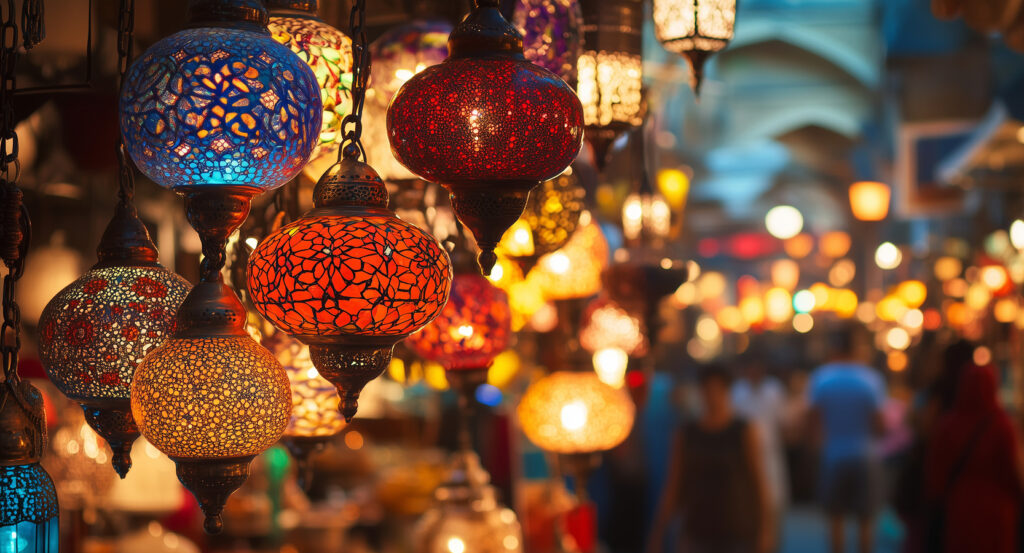
Why you should experience Spice Market at Grand Bazaar in Istanbul, Türkiye.
Spice Market at Grand Bazaar is Istanbul's heartbeats, scent and shimmer, earth and fire.
Step into the Spice Market, and you're enveloped in color and aroma: pyramids of saffron, crimson paprika, rose petals, dried figs, and amber resins glowing beneath brass lamps. The air tastes alive, sweet, sharp, and ancient. Merchants scoop heaping spoonfuls of sumac or cardamom with practiced ease, the same way their ancestors did when Ottoman caravans arrived from Persia and India. Just beyond, light catches the turn, and suddenly, scent gives way to shine. The jewelry arcade dazzles like sunlight in stone. Rows of gold filigree, Ottoman-style signet rings, and strings of pearls spill from every display, each piece a tiny universe of craftsmanship. To walk from one arcade to the other is to move through the soul of Istanbul, a city that has always traded in beauty, measured not in weight, but in wonder.
What you should know about Spice Market at Grand Bazaar.
Together, these arcades tell the story of how the Ottoman Empire ruled the world through commerce, craft, and connection.
The spice section, often mistaken for the Egyptian Bazaar's offshoot, predates it, tracing its lineage to the 15th century when the Grand Bazaar first opened. The most prized goods of empire passed through these vaulted lanes: Iranian saffron, Yemeni coffee, Indian pepper, and Chinese cinnamon. Spice merchants were considered chemists of taste, trained in blending, curing, and even medicine. Their arcades were designed with subtle ventilation shafts in the domes, ensuring that the air carried scent but never spoilage. The jewelry arcade, meanwhile, reflects the pinnacle of Ottoman ornamentation. Jewelers, or kuyumcus, belonged to the most regulated guild in the bazaar, their techniques passed through secret apprenticeships that could last decades. Each storefront functioned as both workshop and showroom, where gems were cut and set by hand under the same domed arches that still hang above you. Even the layout of the arcades had symbolic intent, spice and gold placed side by side to represent the balance of body and spirit, nourishment and adornment. Few visitors realize that many of these shops still occupy the same family leases that have been handed down for centuries, each generation inheriting not just property, but legacy.
How to fold Spice Market at Grand Bazaar into your trip.
Approach these arcades with all your senses awake.
Begin at mid-morning, when the sun filters through the domed windows, setting the gold displays ablaze and warming the air thick with clove and cumin. In the Spice Market, take your time, ask to smell the difference between Aleppo pepper and Turkish pul biber, or watch as a vendor blends herbal teas in small brass bowls. Then follow the sound of gentle chatter toward the jewelry arcade, where the tone shifts from earthy to celestial. Here, look closely, the artistry lies in the details: granulated gold wirework so fine it looks woven, silver chased with Ottoman calligraphy, and turquoise amulets believed to guard against envy. Step into one of the smaller ateliers tucked behind the main shops, where jewelers still polish settings by hand over small wooden benches. Visit again in late afternoon when the lights dim and the entire arcade glows like candlelight reflected in amber. Spice Market is Grand Bazaar's symphony: one carried on scent, playing the song of Istanbul for six hundred years and counting.
Where your story begins.
Foresyte Travel reveals places that feel extraordinary long before you arrive.
Experience premium editorial crafted for luxury travelers.





































































































