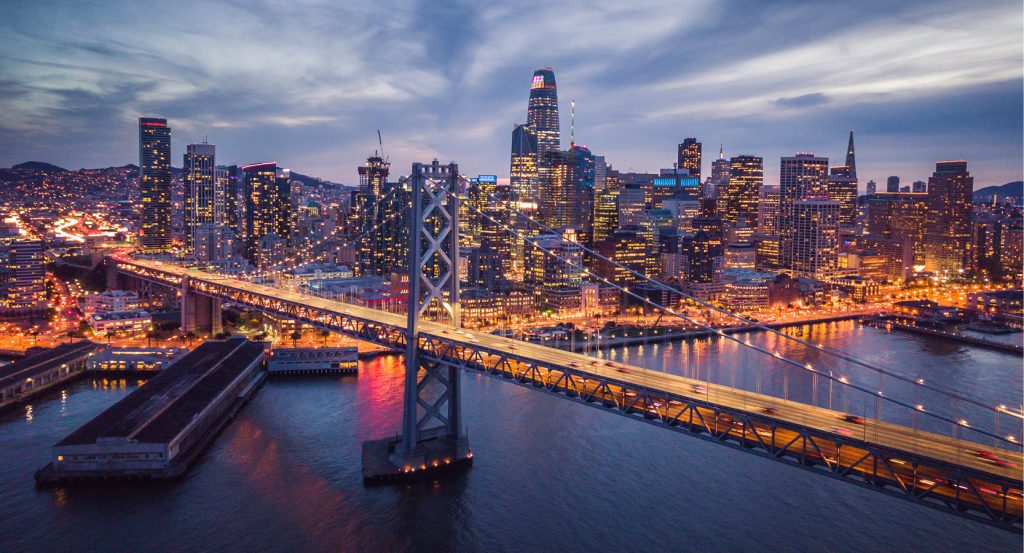
Why you should experience Hotel Triton Union Square San Francisco in San Francisco, California.
Hotel Triton Union Square San Francisco is a bohemian boutique hotel where Union Square's creative irreverence, literary counterculture, independent hospitality tradition and fascination with expressive art converge at the threshold of Chinatown.
Set along Grant Avenue near Bush Street and just steps from Dragon Gate, the hotel opened in 1913 and later developed a deliberately eccentric character that drew heavily from San Francisco's writers, artists and countercultural history. Jack Kerouac became a defining reference within an earlier design chapter, with pages from On the Road incorporated into interior collages while local artists contributed work throughout the property and specialty accommodations included the J. Garcia Suite associated with Grateful Dead guitarist Jerry Garcia. Other rooms pushed that collaborative premise into pop culture through Kathy Griffin's D-List Suite and the Häagen-Dazs Sweet Suite, creating an unusually specific lineage of artists, performers and brands within the 140-room hotel. The result is a hotel where Jack Kerouac, Jerry Garcia, Kathy Griffin and Häagen-Dazs connect Union Square's creative culture with a century-old property that repeatedly treated individual authorship as the foundation of its personality.
What you should know about Hotel Triton Union Square San Francisco.
Hotel Triton Union Square San Francisco is best known for completing a $6 million reinvention in 2018 under designer Liubasha Rose and Rose Ink Workshop, who recast the property around a concept of worldly collecting while developing custom lighting, fabrics and furniture specifically for the project. Rose organized the guestrooms around the Danish concept of Hygge, combining patterned drapery and extensive bespoke artwork with Carrara marble finishes and Waterworks fixtures, while the lobby became a cabinet of cultural objects encompassing Nigerian Yoruba crowns and minerals including sulfur and pink opal. Large-format photographs taken during Rose's international travels extended the collection into the corridors and central staircase, allowing her personal photographic archive to become part of the hotel's physical narrative. The $6 million investment, Liubasha Rose's creative direction, Rose Ink Workshop's custom pieces, Yoruba crowns, geological specimens and travel photography collectively repositioned Hotel Triton through named authorship and collected objects.
Impressionist painter Jon Oshanna introduced an unexpected historical layer during the same reconstruction when demolition uncovered one of his murals concealed behind a lobby wall, transforming an accidental discovery into a permanent component of the redesigned hotel. Oshanna's composition depicts Mission Dolores, the eighteenth-century mission complex that gave San Francisco's Mission District its name, allowing a previously hidden artwork to connect the property's contemporary art program with an earlier representation of the city. Rose Ink Workshop preserved the mural within a lobby already structured around global objects and commissioned design, creating a discussion between Oshanna's recovered San Francisco imagery and Rose's deliberately assembled contemporary collection. Together, Jon Oshanna, Mission Dolores, Liubasha Rose and Rose Ink Workshop give Hotel Triton a visual narrative built through discovery, preservation and contemporary design authorship, with the recovered mural functioning as a genuine piece of the building's accumulated cultural history.
How to fold Hotel Triton Union Square San Francisco into your trip.
Hotel Triton Union Square San Francisco works as the anchor for an afternoon tracing Chinese American architectural identity, Gold Rush-era religious history and Frank Lloyd Wright's experiments with spatial movement around Union Square and Chinatown.
Begin at Dragon Gate, where a 1967 competition for Chinese American architects selected 27-year-old Clayton Lee's design, developed with landscape architects Melvin H. Lee and Joseph Yee before 120 decorative ceramic tiles and guardian lions fabricated in Taiwan contributed to the structure dedicated before 3,000 people on October 18, 1970. Continue to Old St. Mary's Cathedral, built in 1854 at California Street and Grant Avenue as the first cathedral serving the Archdiocese of San Francisco, preserving a direct architectural connection to the city's Gold Rush era within the blocks north of the hotel. Conclude at V. C. Morris Gift Store, where Frank Lloyd Wright designed a brick retail interior in 1948 around a circular mezzanine and spiral ramp, developing an architectural idea already present in his plans for Guggenheim Museum more than a decade before the New York museum opened in 1959. The progression moves from Lee, Lee and Yee's Chinese American gateway through Old St. Mary's nineteenth-century religious history into Wright's rebellious retail architecture, revealing three distinct expressions of San Francisco design within the compact cultural geography surrounding Hotel Triton.
Where your story begins.
Foresyte Travel reveals places that feel extraordinary long before you arrive.
Experience premium editorial crafted for luxury travelers.