Why InterContinental The Clement Montere matters.
InterContinental The Clement Monterey is a defining waterfront hotel where Cannery Row's industrial history meets Monterey Bay ecology, Pacific maritime culture and the region's transformation into a major coastal destination.
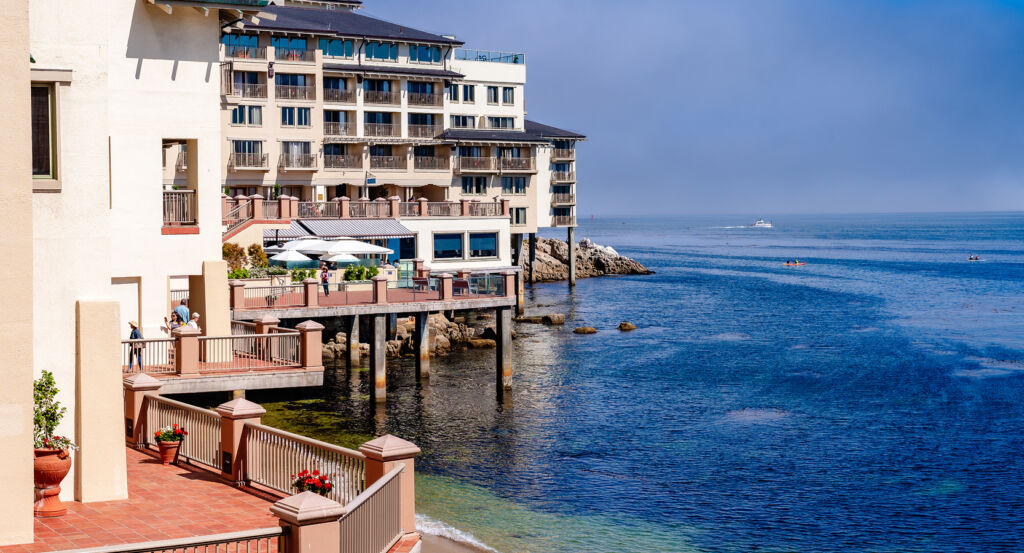
Set along Cannery Row beside Monterey Bay, InterContinental The Clement Monterey occupies a position between the Monterey Bay Aquarium, Steinbeck Plaza, the harbor and the shoreline extending toward Pacific Grove, with the historic streets of Downtown Monterey lying southeast across the city. Its distinctive physical setting combines a contemporary luxury hotel, restored industrial buildings, oceanfront paths and one of California's most celebrated marine landscapes. The coast is encountered primarily through movement between the hotel, Cannery Row, the aquarium, the waterfront trail, harbor piers and the rocky shoreline overlooking the bay. A second atmosphere develops inside the property through restaurants, lounges, guest terraces, fireplaces, wellness spaces and event rooms that provide a warm refuge from the fog, wind and open Pacific horizon. The result is an exceptional coastal hotel whose architecture and setting connect Monterey's canning history, marine science, maritime culture and contemporary hospitality economy.
What defines InterContinental The Clement Monterey.
InterContinental The Clement Monterey is best known for transforming a former sardine cannery site into a landmark waterfront hotel, establishing a new chapter in the architectural and commercial revival of Monterey's historic Cannery Row. The property occupies land formerly associated with the Del Mar Canning Company, whose industrial operations belonged to the fishing economy that made Monterey one of the world's leading sardine-processing centers during the early twentieth century. The surrounding district acquired international literary significance through John Steinbeck's 1945 novel Cannery Row, which immortalized the workers, marine biologists, merchants, and unconventional personalities inhabiting the waterfront during the industry's commercial prominence. The subsequent collapse of Monterey's sardine fishery left numerous industrial properties vacant, initiating a prolonged transformation from working waterfront to cultural and recreational destination. Redevelopment of the future hotel site had been contemplated since the 1980s, although successive proposals encountered difficulties involving financing, development planning, and the preservation of Cannery Row's historic character. Hotel developer Clement Chen III ultimately advanced the project through Pacific Hotel Management, acquiring control of the site in 2006 and bringing the long-delayed development into construction. The undertaking represented an investment of $80 million, supported by construction financing from Wells Fargo and a development partnership operating through Cannery Row Hotel Development Venture. Palo Alto-based HKS Hill Glazier Studio received the architectural commission, with Devcon Construction responsible for design-build execution and TM Davis & Associates overseeing construction management. Work began in August 2006, establishing one of the most substantial new hospitality developments undertaken along Monterey's historic waterfront in more than two decades. InterContinental Hotels Group entered the project through a licensing agreement announced in September 2007, extending its luxury hospitality portfolio into a coastal destination internationally associated with marine conservation and California literary history. The hotel opened on May 22, 2008, introducing a major international establishment immediately beside the Monterey Bay Aquarium. Its development incorporated public waterfront access as an essential component of the project, establishing pedestrian connections along a shoreline historically occupied by industrial buildings and commercial fishing infrastructure. The California Coastal Commission's approval required a continuous oceanside promenade and connections from Cannery Row, strengthening public access to Monterey Bay within a privately developed waterfront property. The hotel subsequently earned multiple IHG Torchbearer Awards, including recognition for 2017, establishing an important distinction within the company's international hospitality portfolio. InterContinental The Clement Monterey represents a significant achievement in Cannery Row's transformation, connecting the district's industrial and literary inheritance with waterfront conservation, public access, and contemporary international hospitality.
Alamosa Design Associates developed the hotel's interior character around the distinctive architectural character of California's historic maritime communities, establishing a relationship between contemporary luxury and the industrial heritage of Monterey's working waterfront. The San Francisco-based studio incorporated natural wood, polished stone, marble, and expansive glazing into an architectural environment informed by the textures and colors of the surrounding coastline. The design complements HKS Hill Glazier Studio's exterior composition, whose varied rooflines, historic industrial references, and restrained building heights preserve the established visual character of Cannery Row. The property occupies interconnected low-rise structures organized along the waterfront, with an enclosed pedestrian bridge spanning the historic commercial corridor and establishing a distinctive architectural connection between its principal buildings. This elevated passage recalls the industrial walkways that once connected processing facilities across Cannery Row, translating a recognizable feature of the district's former commercial infrastructure into the contemporary hotel. BFS Landscape Architects developed the surrounding outdoor environments, coordinating the public boardwalk, waterfront gathering spaces, landscaped terraces, and circulation routes through a challenging coastal site. Much of the landscape construction occupies structural decks above enclosed building spaces, requiring specialized waterproofing, planting systems, and engineering coordination to accommodate public activity along the shoreline. The Pacific View Courtyard establishes a particularly significant relationship with Monterey Bay through an outdoor gathering space overlooking the protected waters of the Monterey Bay National Marine Sanctuary. Its position places the region's exceptional marine ecology at the center of the hotel's architectural identity, connecting the waterfront setting with the conservation movement that reshaped Monterey's relationship with its former fishing economy. The hotel's culinary program develops this connection through The C Restaurant + Bar, whose coastal California cooking emphasizes seafood and ingredients associated with the agricultural and maritime traditions of the Monterey Peninsula. The restaurant participates in the Monterey Bay Aquarium's Seafood Watch program, integrating sustainable seafood guidance into its culinary character and reinforcing the relationship between regional dining and marine conservation. Monterey Bay's productive coastal waters support an exceptionally diverse marine ecosystem, influenced by nutrient-rich upwelling and the submarine canyon that extends into the bay. This ecological setting gives the restaurant's seafood orientation a direct geographical significance, connecting contemporary California cooking with the marine environment visible from its dining room. The hotel's waterfront promenade extends the same relationship into the public realm, providing pedestrian access to a coastline once dominated by sardine-processing operations. Together, Alamosa's maritime-inspired interiors, the historically informed architectural composition, the engineered waterfront landscape, and the restaurant's connection with marine conservation establish a coherent interpretation of Monterey's industrial heritage and contemporary coastal identity.
How InterContinental The Clement Monterey fits.
InterContinental The Clement Monterey works as the starting point for an exploration connecting Monterey's marine environment, its Spanish and Mexican heritage and the historic coastal landscapes that define the Monterey Peninsula.
Begin at Monterey Bay Aquarium, the landmark marine institution where kelp forests, open-ocean habitats, sea otters, jellyfish and regional marine life reveal the ecological richness of Monterey Bay. The aquarium occupies the former Hovden Cannery site at the northern end of Cannery Row, linking scientific research and public education with the industrial buildings that once processed sardines along the waterfront. Its galleries provide a direct encounter with the ocean environment that surrounds the hotel and shapes the character of the entire peninsula. Continue to Monterey State Historic Park, the collection of adobe buildings, gardens, plazas and historic structures that preserve Monterey's role as a Spanish, Mexican and early American capital. The park extends through the old town and connects the Custom House, historic residences, civic buildings and paths leading toward the waterfront. Its architecture and public spaces reveal the political and cultural history that preceded Cannery Row's industrial development. Continue to Point Pinos Lighthouse, the historic beacon standing above the rocky coast of Pacific Grove where ocean currents, coastal fog, cypress trees and marine habitat define the western edge of the peninsula. Built in the nineteenth century, the lighthouse remains associated with navigation, shipping and the hazardous Pacific coastline surrounding Monterey Bay. Its elevated setting provides broad views toward the bay, beaches and offshore waters. Conclude at 17-Mile Drive, the scenic coastal route where cypress forests, granite outcrops, beaches, golf landscapes and marine viewpoints reveal the larger geography of the Monterey Peninsula. The route connects Pacific Grove with Pebble Beach and Carmel through a sequence of dramatic shoreline environments shaped by wind, waves and coastal vegetation. Its protected landscapes provide a broader perspective on the natural setting beyond Cannery Row and Downtown Monterey. The progression moves from Monterey Bay Aquarium's marine science through Monterey State Historic Park's colonial and civic history, continues across Point Pinos Lighthouse's maritime landscape and concludes at 17-Mile Drive, where Monterey's ocean, heritage, geology and coastal culture meet.
Where your story begins.
Foresyte Travel reveals places that feel extraordinary long before you arrive.
Enjoy editorial crafted for luxury travelers.
Foresyte may earn a commission when you book.