Why Kelly's Coffee & Fudge Factory matters.
Kelly's Coffee & Fudge Factory is a longstanding coffeehouse where Beverly Hills' polished civic-center character meets organic specialty coffee, house-made fudge and a coffee-and-confectionery concept with roots reaching into the 1980s.
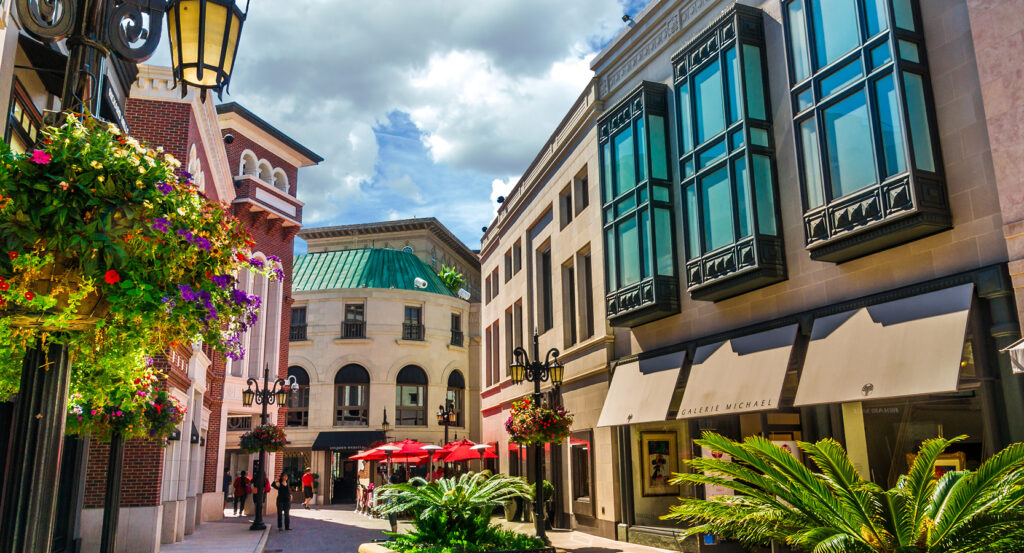
Set along Rexford Drive near Santa Monica Boulevard and just steps from Beverly Hills Public Library, the café occupies the city's civic core between City Hall, the historic post office complex and the commercial streets extending west toward the Golden Triangle. The compact storefront organizes its counter around espresso drinks, baked goods, sandwiches and a substantial confectionery selection. Organic Bourbon and Typica coffee beans supply the foundation for drip and espresso preparations, with small-batch roasting supporting drinks across hot, iced and frozen formats. House-made fudge gives the café a second specialty extending beyond conventional coffeehouse fare. The result is a Beverly Hills coffee shop whose pairing of specialty coffee and confectionery remains unusually faithful to the concept carried by the Kelly's name for decades.
What defines Kelly's Coffee & Fudge Factory.
Kelly's Coffee & Fudge Factory is best known for combining coffee and house-made fudge through a restaurant concept whose commercial history reaches back decades before contemporary specialty coffee became widespread. The Kelly's Coffee & Fudge Factory name was in commercial use by October 1993, and its restaurant-service trademark followed in 1997 before registration in April 1998. Kelly's Enterprises had already operated the concept under an earlier version of the same name during the 1980s, connecting the Beverly Hills business with a longer coffee-and-fudge lineage. A separate Kelly's Coffee of Beverly Hills trademark followed in 1999, explicitly tying the brand to the city during an era when Kelly's locations had also appeared beyond Southern California. The contemporary Rexford Drive café has occupied its location since the 2000s, carrying the historic pairing of coffee and fudge into a more concentrated Beverly Hills operation. Its signature Mocha Fudge Freeze preserves that connection in a single preparation by blending chocolate fudge with mocha powder, cacao and water, joining the two products that have defined the business across generations.
Chocolate fudge forms the base of the Mocha Fudge Freeze, where mocha powder and cacao deepen the confection before blending turns it into the café's signature frozen drink. Vanilla Fudge Freeze applies the same idea to house-made vanilla fudge and vanilla, with espresso available to push the preparation back toward the coffee side of the business. The confectionery counter develops chocolate, peanut butter, cookies and cream, vanilla, English toffee, maple nut, chocolate walnut and mint chocolate as quarter-pound fudge selections, making flavor variation part of the shop's second major specialty. Banana Split cappuccino combines organic espresso with chocolate and banana beneath steamed milk and foam, and the Milky Way moves espresso through chocolate and caramel. Organic coffee and espresso use Bourbon and Typica beans roasted in small batches, giving the conventional latte, cappuccino, Americano and cold brew program a defined bean foundation. The Italian marinated chicken sandwich, Reuben and pastrami extend the operation into made-to-order lunch without displacing the central relationship between espresso, chocolate and fudge that distinguishes Kelly's from a conventional neighborhood café.
How Kelly's Coffee & Fudge Factory fits.
Kelly's Coffee & Fudge Factory works as the anchor for an outing connecting Beverly Hills' Depression-era civic architecture with the city's evolving cultural institutions and the former post office transformed into a major performing-arts complex.
Begin at Beverly Hills City Hall, completed in 1932 after architects William J. Gage and Harry G. Koerner designed an elaborate California Churrigueresque building crowned by a tiled dome. Beverly Hills purchased the site from Pacific Electric in 1930, replacing a smaller municipal building on Burton Way as the city expanded rapidly during the interwar years. Construction carried forward during the Depression, producing a civic building whose scale dramatically exceeded the modest municipal facilities of the young city. A 1982 renovation enlarged the building from 49,000 to 67,000 square feet while retaining the ornate tower as the architectural center of the civic complex. Continue to Beverly Hills Public Library, created by municipal ordinance in December 1929 and initially housed in rented quarters on Canon Drive. Its 10,288 volumes and 5,152 registered borrowers had already overwhelmed that space by 1930, leading the collection into the new City Hall in 1932. A dedicated library opened in 1965 after voters approved construction financing two years earlier, and architect Charles Moore's Renovation Group subsequently developed the building that opened in September 1990. The collection has since grown to 200,000 volumes, preserving an institutional history that developed alongside the surrounding civic center. Conclude at Wallis Annenberg Center for the Performing Arts, built around Beverly Hills' former main post office after Will Rogers helped secure federal money for the project during the Depression. Ralph C. Flewelling designed the Italian Renaissance Revival building with Allison & Allison, and its 1934 interior incorporated a marble-clad grand lobby beneath a barrel-vaulted ceiling and eight frescoes by Charles Kassler. Beverly Hills purchased the former post office in 1999, and a $25 million Annenberg Foundation gift helped propel its conversion into a 70,000-square-foot arts center designed by Zoltan Pali of SPF:architects. The restored historic building now joins the 500-seat Bram Goldsmith Theater and 150-seat Lovelace Studio Theater within the complex. The progression moves from the ornate municipal building that announced Beverly Hills' interwar ambitions through a library that expanded alongside the city and culminates inside a Depression-era post office reborn as a major center for theater, dance and music.
Where your story begins.
Foresyte Travel reveals places that feel extraordinary long before you arrive.
Experience premium editorial crafted for luxury travelers.
Foresyte Travel may earn a commission when you book through the link on this page.