
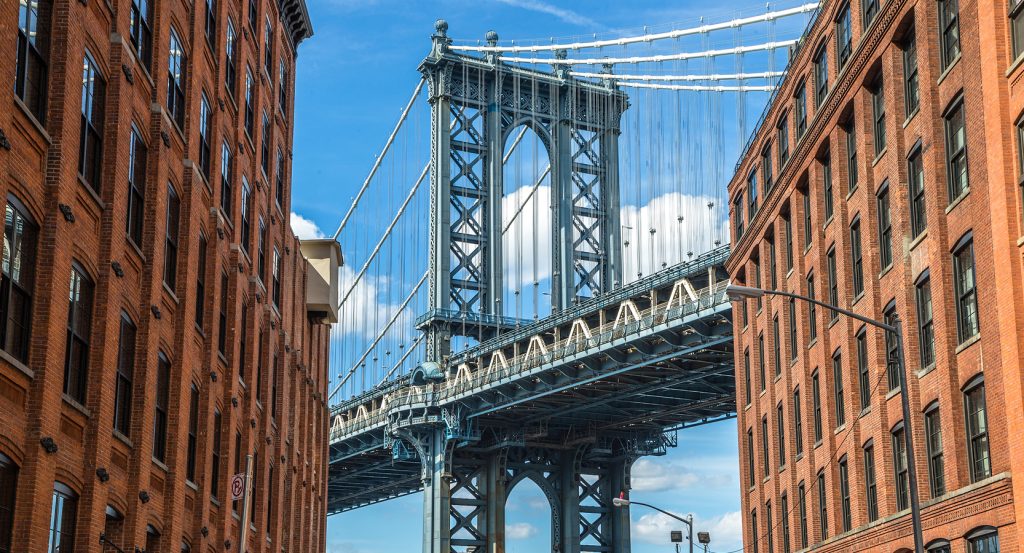
Why you should experience Lee Avenue in New York, NY.
Lee Avenue is a historic North Brooklyn corridor where Hasidic Jewish heritage, immigrant traditions, and neighborhood commerce converge along one of Williamsburg's most culturally significant thoroughfares.
Running through South Williamsburg between the Williamsburg Bridge and Broadway, this energetic corridor connects historic synagogues, neighborhood businesses, religious schools, community institutions, residential blocks, and thriving commercial districts that collectively reflect one of the largest Hasidic Jewish communities outside Israel. Traditional storefronts, kosher bakeries, Judaica shops, elegant brick apartment buildings, and architecturally significant religious institutions create a streetscape where generations of faith, family, and entrepreneurship remain deeply woven into everyday life. Lee Avenue developed alongside Williamsburg's industrial growth before becoming the cultural and commercial heart of Brooklyn's Satmar Hasidic community following the arrival of Holocaust survivors in the years after World War II. The result is a corridor defined by religious tradition, cultural continuity, and neighborhood identity.
What you should know about Lee Avenue.
Lee Avenue is best known for being the commercial and cultural center of the world's largest Satmar Hasidic community, serving as the primary gathering place for one of the most influential Orthodox Jewish communities in the world.
Following World War II, Rabbi Joel Teitelbaum established the Satmar community in Williamsburg after surviving the Holocaust, transforming Lee Avenue into the movement's commercial, educational, and religious heart. Over the following decades, the corridor became lined with synagogues, yeshivas, kosher markets, bookstores, clothing shops, and family-owned businesses that support every aspect of daily community life. Today, visitors encounter one of the world's most distinctive urban cultural landscapes, where Yiddish remains widely spoken and longstanding religious traditions continue to shape the rhythm of neighborhood life. Lee Avenue stands as the defining main street of a globally significant religious community whose influence extends far beyond Brooklyn.
How to fold Lee Avenue into your trip.
Lee Avenue works as an exploration of Williamsburg's cultural heritage, neighborhood traditions, and historic streetscapes.
Begin along Lee Avenue's commercial corridor, where neighborhood bakeries, kosher markets, Judaica stores, and locally owned businesses immediately establish the avenue's defining cultural identity. Continue toward Domino Park, whose restored refinery structures reveal the industrial prosperity that once surrounded the neighborhood. From there, make your way to The City Reliquary, where thoughtfully curated exhibits illuminate the immigrant communities, industries, and traditions that transformed Williamsburg into one of New York City's most distinctive neighborhoods. Along the route, you'll encounter historic synagogues, architecturally significant residential buildings, neighborhood cafés, energetic commercial streets, community institutions, and public spaces that reveal the corridor's exceptional depth. The progression moves naturally from one of New York City's most distinctive cultural corridors to a celebrated waterfront park and neighborhood history museum, demonstrating how Lee Avenue connects religious heritage, immigrant resilience, and urban evolution within one of Brooklyn's most fascinating neighborhoods. Lee Avenue remains one of the borough's most culturally significant thoroughfares, preserving a distinctive balance between living tradition, community identity, and historical continuity.
Where your story begins.
Foresyte Travel reveals places that feel extraordinary long before you arrive.
Experience premium editorial crafted for luxury travelers.







































































































