
Why Mandarin Oriental matters.
Mandarin Oriental is Prague distilled into composed luxury, a hotel that does not compete with the city's grandeur but absorbs it with presence, situating you within the historic heartbeat while offering a sanctuary of precision, refinement, and resonant ease.
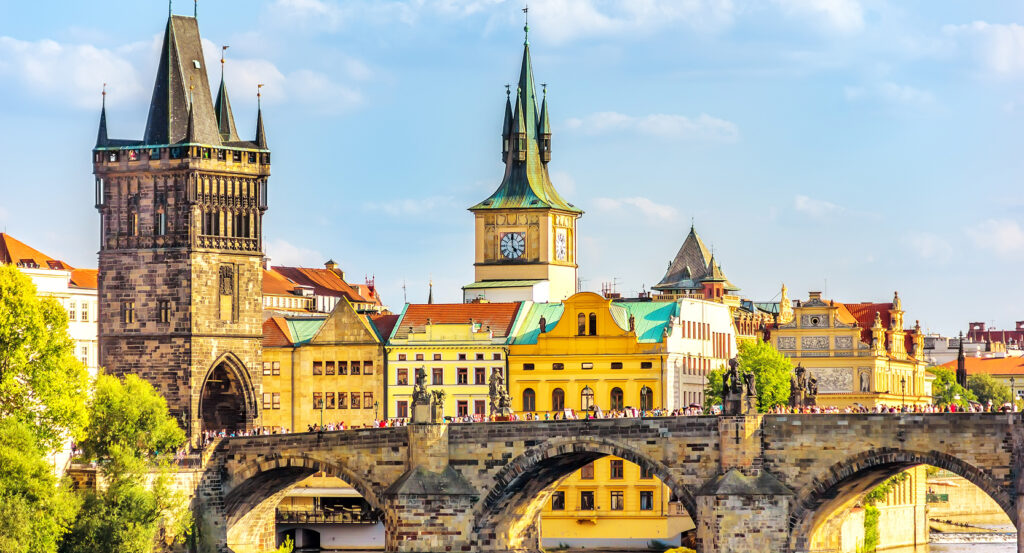
Tucked into a quiet lane in the Malá Strana district, just steps from the Charles Bridge, Vltava River, and the city's most storied lanes, the hotel occupies a location that is at once central and serene. Arrival feels immediate but defined by a sense of transition: you step off winding cobblestones, immersed in centuries-old urban texture, and into an environment that balances heritage with contemporary clarity. The lobby and public spaces are composed around proportion and light rather than spectacle: soft palettes, materials that age gracefully, and spatial rhythms that foster psychological ease instead of physical overload. There is no artificial separation from Prague's energy, but a calibration that lets you feel the city. Guest rooms and suites extend this foundational precision into private domain. They are generous by city-center standards, with layouts that allow work, rest, and contemplation to coexist. Beds are engineered for restorative rest after long days exploring labyrinthine streets and museums; linens and finishes feel tactilely rich. Floor-to-ceiling windows frame historic rooftops, glimpses of church spires, or hidden courtyards, transforming Prague's texture into a living backdrop. Furniture is a study in disciplined comfort: desks support real productivity, seating invites duration without excess, and storage allows you to unpack fully rather than exist in transit. Lighting is layered and intuitive, enabling smooth transitions from bright morning activity to calm evenings. Bathrooms reflect the same thoughtful restraint and utility: generous circulation, high-end fixtures chosen for tactile excellence, and materials that feel grounded. Deep soaking tubs and walk-in rain showers become moments of physical reset that feel integral to the rhythm of your stay. Dining and amenity spaces at Mandarin Oriental are intricately woven into the hotel's character as places of presence and nuance. Restaurants and lounges offer menus that interpret local ingredients with global sophistication, focusing on depth of flavor and context. Breakfast unfolds in an environment that feels calm and composed, with culinary precision that prepares you for the day's explorations. Bars and lounges facilitate conversation, pause, and reflection, settings that feel alive. The hotel's wellness and fitness facilities are substantial and intelligently designed, supporting genuine restoration. The spa spaces are composed with material warmth and visual calm, inviting practices that help the body and nervous system reset after hours of walking Prague's historic layers. Service throughout Mandarin Oriental is unfailingly attentive, situationally aware, and human in tone. Interactions are guided by context and empathy rather than rote scripting, allowing guests to feel supported without being managed. Whether arranging transit, suggesting curated cultural routes, or adapting spaces for your needs, the team operates with discretion and depth of local knowledge. The property attracts travelers who value coherence, cultural presence, and refined calm: seasoned urban explorers, couples seeking depth without flash, professionals on extended travel, and repeat visitors to Prague who understand how rare a stay like this feels. Mandarin Oriental does not sanitize the city's pulse nor romanticize it into cliché. Instead, it frames Prague's lived complexity into an experience of composed luxury, one that feels deeply integrated with the city's rhythm.
What defines Mandarin Oriental.
Mandarin Oriental was conceived not simply as a luxury hotel, but as an architectural and experiential response to Prague's layered urban condition, a site where centuries of history, civic life, and contemporary culture converge.
Rather than imposing a generic luxury model onto the city, the developers and designers approached the project with spatial empathy: how does one create calm within a historic urban fabric without erasing its character? The hotel occupies a converted monastery and 14th-century convent site with adjacent neoclassical buildings, and this history is evident not through literal theming but through spatial relationships, material continuity, and preservation of heritage elements. Public interiors were designed to respect the existing fabric while introducing contemporary spatial logic: sightlines that feel generous, volumes that balance scale with human presence, and materials that mediate between old and new. Guest rooms were not treated as interchangeable units but as sequential fields calibrated for comfort, utility, and presence. Designers observed how people actually inhabit rooms over multiple nights, where movement occurs, how light changes throughout the day, how storage and work spaces contribute to psychological settlement, and crafted layouts that feel intuitive and complete. Materials were selected for durability, tactility, and resonant resonance over trend-led appeal: stone that feels grounding underfoot, wood that warms spaces without heaviness, and textiles that endure both time and touch. Dining spaces were developed with culinary character at the forefront, bringing Prague's local ingredients, seasonal variation, and historical gastronomic context into menus that are thoughtful. The spa was conceived as a restoration environment rather than an auxiliary luxury add-on, with sequences of space that support physical reset at a systemic level rather than resonant peak moments alone. Operationally, the hotel captures a service philosophy that prioritizes situational responsiveness and cultural knowledge over scripted hospitality. Staff training emphasizes context, empathy, and anticipatory support, enabling service interactions that feel genuinely supportive. This fosters a guest experience where autonomy is respected and enriched. Over time, Mandarin Oriental has developed a loyal following among travelers who return not for transient novelty but for dependable presence, people who value continuity, cultural immersion, and environments that feel alive under real use. In a global landscape where many luxury hotels lean into performance or trend, the property's distinction lies in integrated coherence, architecture, service, and experience all calibrated to enhance presence.
How Mandarin Oriental fits.
Mandarin Oriental works best when you treat it as a central organizing frame for your Prague visit rather than a retreat from the city, allowing it to shape your travel tempo, movement patterns, and cultural engagement.
Begin mornings with unhurried clarity: enjoy breakfast in calm light, letting the thoughtful culinary approach and refined spatial tone orient your attention before stepping into the city's historic streets. From here, explore Prague Castle, Mala Strana, or the Jewish Quarter at a pace that feels responsive to place. The hotel's location makes it easy to walk to major sites, minimizing logistical friction and allowing your day to unfold through proximity. Midday resets are opportunities to return into the experience rather than away from it: rest, read, or plan in spaces that feel calm without detaching you from context. The spa and wellness facilities are strategic tools for physical recalibration, use them as part of your rhythm. In the afternoon, venture toward Old Town Square, shopping corridors, or refined galleries, taking advantage of the hotel's central positioning to navigate. Evenings at Mandarin Oriental can be both composed and cinematic. Dine on site for menus that converse with Czech culinary tradition and international refinement, or explore nearby restaurants favored by locals and frequent visitors alike. After cultural events, concerts, or riverfront walks, returning to the hotel feels coherent rather than abrupt because the interior language absorbs the day's energy rather than amplifying it. Late nights at the hotel never feel alienating because the service, spatial logic, and interior tone support calm return. Mandarin Oriental pairs especially well with travel patterns that combine culture, extended stays, work and leisure, and repeated engagement with place. By the time you leave, the hotel will feel less like a stop on your itinerary and more like an interpretive frame through which Prague became legible, generous, and deeply present, not softened or abstracted, but lived and felt. In a city defined by layers of meaning and visual density, that kind of integrated luxury becomes its own form of presence.
Where your story begins.
Foresyte Travel reveals places that feel extraordinary long before you arrive.
Enjoy editorial crafted for luxury travelers.
Foresyte may earn a commission when you book.





































































































