Why Millennium Park matters.
Millennium Park is a compact civic plaza where the Financial District's historic Broadway spine meets turn-of-the-millennium streetscape design and the southern threshold of New York's municipal center.
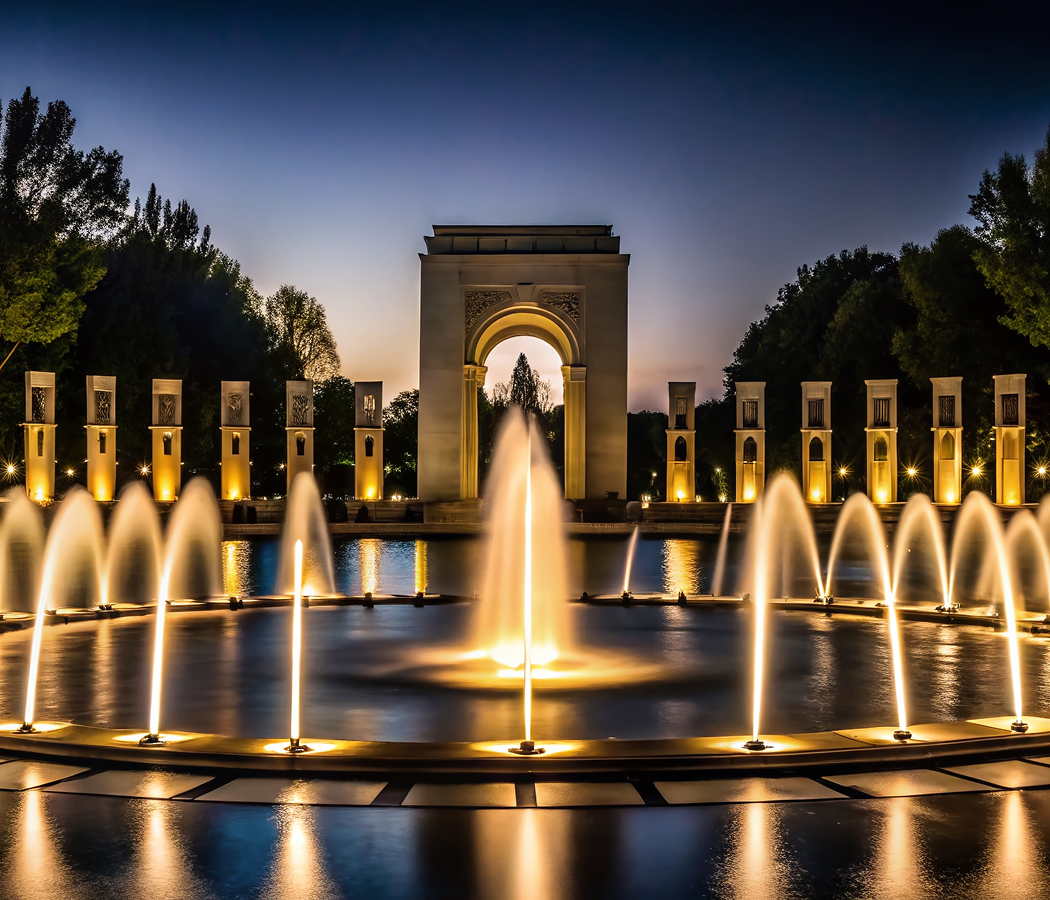
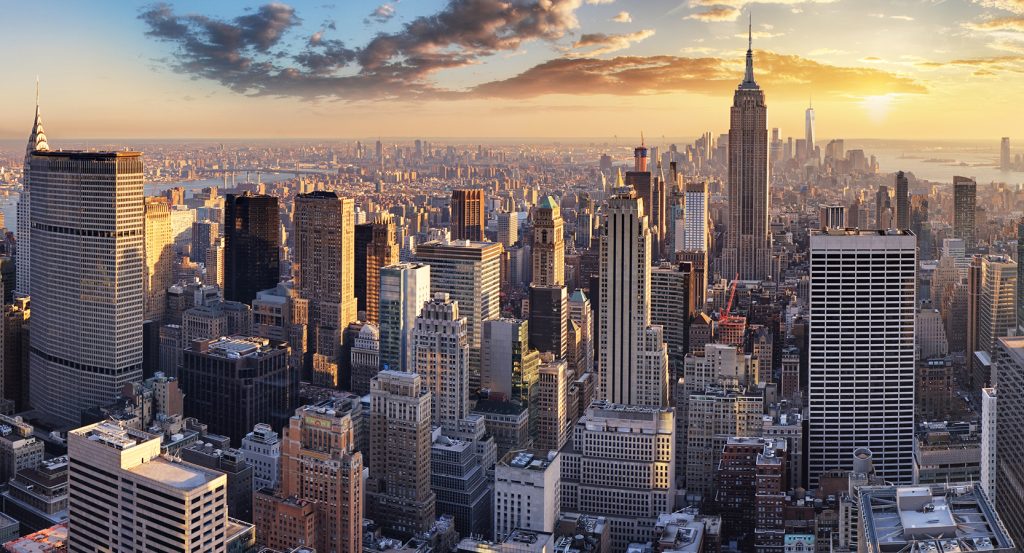
Set at Broadway and Park Row near Vesey Street and just south of City Hall Park, the plaza occupies a narrow traffic island between the Manhattan street grid, the approach toward the Brooklyn Bridge and the dense towers extending south through the Financial District. Trees and low planting convert the former paved median into a small wooded interruption within one of Lower Manhattan's busiest street junctions. Curving paths and the surrounding roadway give the site a distinctly elongated footprint shaped by traffic movement rather than a conventional rectangular park plan. The David Rockefeller Clock rises at the southern end, providing a vertical marker against the much larger civic and commercial buildings surrounding the intersection. The result is a remarkably small public landscape whose greenery and ornamental centerpiece mark the transition between Broadway's skyscraper corridor and the governmental precinct around City Hall.
What defines Millennium Park.
Millennium Park is best known for transforming a paved traffic median at Broadway and Park Row into a Greenstreet conceived as a miniature forest during the reconstruction of the southern edge of City Hall Park. The project emerged alongside New York's $34.6 million restoration of City Hall Park, completed in 1999 after the return of the historic Jacob Wrey Mould fountain, creation of a central walkway and replacement of extensive pavement with lawns and trees. Transportation work at the southern boundary consolidated six traffic islands into two greener islands and realigned roadbeds and crossings between Broadway, Park Row, Ann Street and the Brooklyn Bridge approach. Millennium Park occupied the principal southern island, extending the landscape treatment of City Hall Park into infrastructure previously dominated by vehicles. Its completion arrived at the transition into the twenty-first century, giving the new plaza its name. The city dedicated Millennium Park in November 2000, completing a project whose significance rests less in acreage than in the conversion of residual roadway into planted civic ground at one of Manhattan's historically dense intersections.
How Millennium Park fits.
Millennium Park works as the civic anchor for an outing connecting Manhattan's oldest surviving church building, a skyscraper that held the world height title for seventeen years and sacred ground preserving the history of free and enslaved Africans in colonial New York.
Begin at St. Paul's Chapel, opened in 1766 as a chapel of ease for Trinity Church parishioners living north of the established city. A bucket brigade helped save the building during the Great Fire of 1776, which destroyed the original Trinity Church. George Washington attended a service there on April 30, 1789 after taking the presidential oath at Federal Hall, and the chapel served him during New York's period as the national capital. Its surviving colonial fabric and uninterrupted use give the building an exceptional place within Manhattan's architectural chronology. Continue to Woolworth Building, commissioned by five-and-dime magnate Frank W. Woolworth after the 1910 consolidation of his retail empire. Cass Gilbert designed the neo-Gothic tower with engineer Gunvald Aus, using a steel frame beneath architectural terra cotta supplied by Atlantic Terra Cotta Company. Woolworth progressively increased its intended height until the building reached 792 feet, making it the world's tallest upon completion in 1913. He financed the $13.5 million project in cash, and President Woodrow Wilson activated its lights remotely during the April 24 opening ceremony. Its reign at the top of the world skyline lasted until 1930. Conclude at African Burial Ground National Monument, preserving part of a cemetery used by New York's African community from the colonial period into the 1790s. The burial ground eventually covered 6.6 acres and received thousands of free and enslaved Africans before later construction and fill concealed it beneath Lower Manhattan. Federal building work rediscovered the cemetery in 1991, and 419 individuals were excavated from part of the site. Their remains were reinterred in 2003 in hand-carved Ghanaian coffins following the Rites of Ancestral Return, and the federal government created the national monument in 2006. Rodney Leon's memorial followed in 2007, giving permanent architectural form to a history that urban development had obscured for two centuries. The progression moves from colonial religious architecture through the engineering and corporate ambition of the first skyscraper age and culminates at sacred ground recovering the lives of New York's early African community, placing three radically different chapters of Lower Manhattan history within the streets surrounding Millennium Park.
Where your story begins.
Foresyte Travel reveals places that feel extraordinary long before you arrive.
Enjoy editorial crafted for luxury travelers.