
Why Nashua Street matters.
Nashua Street is an energetic corridor where West End's transportation heritage, riverfront setting, civic institutions, and contemporary skyline create one of Boston's most compelling urban streets.
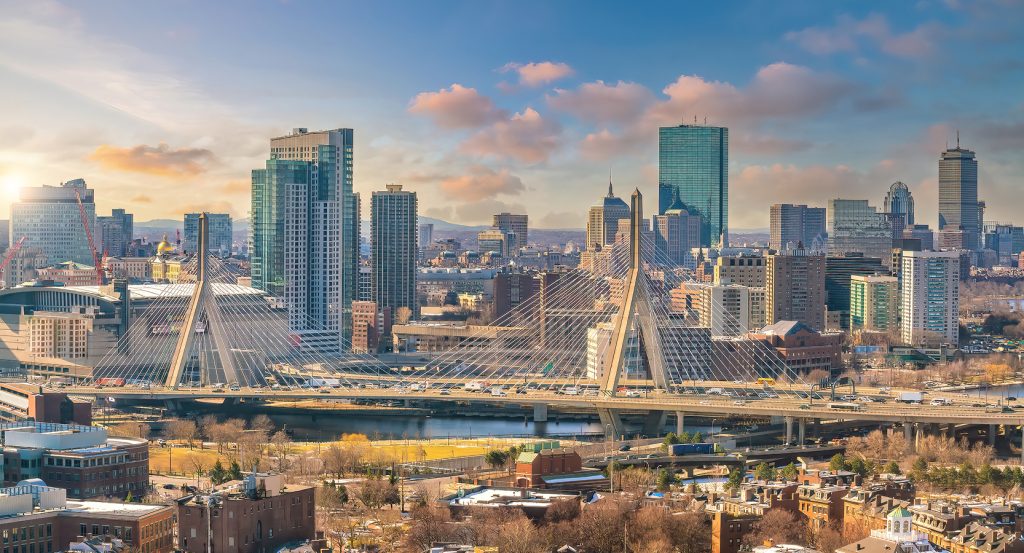
Running through the West End between Beacon Hill and North Station, the corridor traces the edge of the Charles River while linking prominent civic buildings, broad waterfront vistas, and modern streetscapes that reflect the neighborhood's continuing evolution. Each successive block heightens the experience as expansive river views, granite promenades, contemporary architecture, passing commuter trains, and the changing rhythm of the waterfront reveal an increasingly layered relationship between infrastructure, public space, and the city beyond. The defining moment arrives where the Charles River, Boston skyline, and the corridor's transportation legacy converge into a panoramic setting that captures the city's enduring connection between movement and place. The result is an experience defined by waterfront perspective, civic significance, and one of the West End's most distinctive corridors.
What defines Nashua Street.
Nashua Street is best known for extending through the West End beside the Charles River, where successive transportation improvements reshaped Boston's northwestern edge during the nineteenth and twentieth centuries. The corridor developed alongside the expanding Boston and Maine Railroad terminal complex that evolved into today's North Station, establishing the surrounding district as one of New England's principal passenger and freight gateways. Completion of the nearby Zakim Bunker Hill Bridge in 2003, together with the relocation of Interstate 93 through the Central Artery/Tunnel Project, fundamentally redefined the corridor's relationship with the riverfront while restoring new public access to the waterfront. Granite sidewalks, landscaped public spaces, modern institutional buildings, and uninterrupted views across the Charles River express the corridor's continuing evolution from an infrastructure corridor into an important civic gateway. Collectively, the district's transportation heritage, riverfront setting, engineering achievements, and civic investment established Nashua Street as one of the West End's defining corridors.
Healthcare became the defining thread shaping the corridor as Massachusetts General Hospital, founded in 1811, expanded westward through research facilities, clinical buildings, and patient services that strengthened Nashua Street's role within one of the nation's foremost medical campuses. That institutional presence encouraged the development of specialized biomedical offices, medical support organizations, and research partnerships whose daily activity reinforced the corridor's character beyond its transportation origins. Architectural commissions associated with these medical institutions introduced durable granite façades, high-performance glass curtain walls, carefully integrated public plazas, and thoughtfully designed pedestrian connections that complement the corridor's civic character while maintaining strong visual relationships with the Charles River. Together, these medical institutions, architectural investments, and research-oriented development demonstrate how Nashua Street evolved into a corridor where transportation heritage and internationally recognized healthcare continue shaping the West End's identity.
How Nashua Street fits.
Nashua Street works as a walk through the West End's riverfront, engineering achievements, and civic landscape.
Begin at TD Garden, where Boston's premier arena establishes the neighborhood's contemporary energy before naturally leading toward Nashua Street and the Charles River. Continue to Charles River Esplanade, where broad waterfront paths and sweeping river views deepen appreciation for the corridor's connection to Boston's celebrated shoreline. Conclude at Leonard P. Zakim Bunker Hill Bridge, where one of New England's defining engineering achievements provides the historical payoff by revealing how modern infrastructure reshaped the landscape surrounding Nashua Street. The progression moves naturally from the neighborhood's civic vitality to its riverfront setting before culminating with the engineering achievement that redefined Boston's northwestern gateway.
Where your story begins.
Foresyte Travel reveals places that feel extraordinary long before you arrive.
Enjoy editorial crafted for luxury travelers.
Foresyte may earn a commission when you book.







































































































