
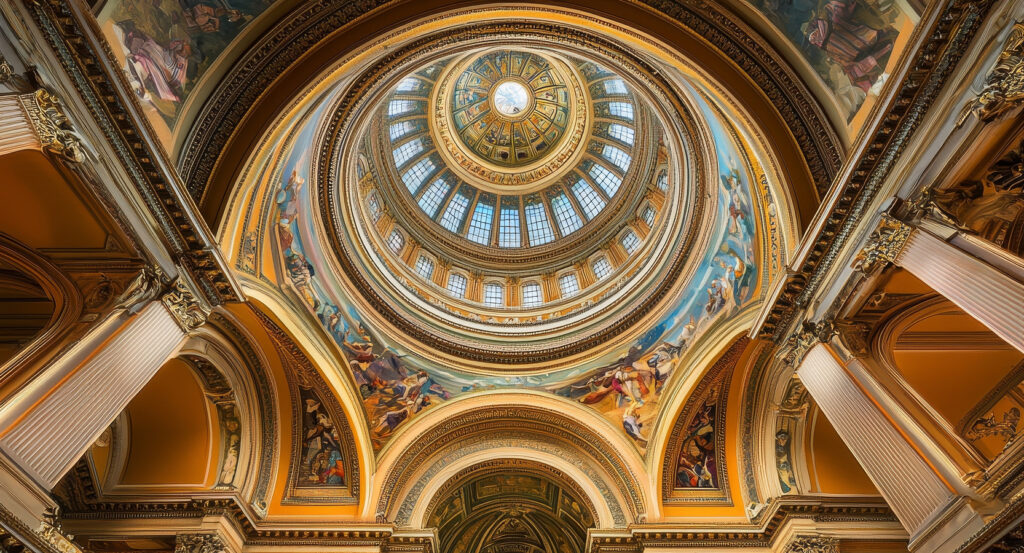
Why you should experience National Gallery of Art - East Building in Washington, D.C.
National Gallery of Art - East Building in Washington, D.C. is where art and architecture collide in a symphony of modern brilliance.
Designed by the renowned I.M. Pei, its sharp geometric angles and soaring glass atrium feel like a sculpture in motion, a temple to creativity that refuses to stand still. Inside, light and space interact with the art itself, giving new life to modern and contemporary masterpieces by artists like Picasso, Pollock, Warhol, and Rothko. Walking through its triangular galleries, you sense that Pei intended the building to provoke, to make you feel the tension between control and chaos that defines the modern age. Every turn reveals a surprise: a massive Calder mobile swaying gently above you, minimalist canvases whispering serenity, or immersive installations that redefine what art can be. East Building isn't just a museum wing, it's a modern pilgrimage for anyone who believes in art's power to reimagine the world.
What you should know about National Gallery of Art - East Building.
East Building opened in 1978 as one of the most daring architectural undertakings ever attempted on the National Mall.
Faced with an irregular, trapezoidal plot of land, I.M. Pei famously divided the space into two interlocking triangles, one housing galleries, the other offices, linked by a central glass atrium that soars like a cathedral of light. Funded by Paul Mellon, son of the Gallery's founder, East Building was envisioned as a counterpart to the neoclassical West Building, a discussion between old-world mastery and modern imagination. The building's Calder mobile, suspended in the atrium, remains one of its most iconic features, while the underground Concourse (connecting it to the West Building) features Leo Villareal's hypnotic light installation, Multiverse. Today, East Building also houses the Tower Galleries, which offer panoramic views and cutting-edge exhibitions. It's both a work of art and a living experiment in how architecture shapes emotion.
How to fold National Gallery of Art - East Building into your trip.
To truly appreciate East Building, start by entering through the grand glass atrium, a space that instantly dissolves the boundaries between art and structure.
From there, take the elevator to the Tower Galleries to experience the museum's rotating exhibitions in a more intimate setting, then work your way downward through the angular halls of modern art history. Allow yourself to move slowly, Pei's architecture was designed for wandering, with lines that lead the eye and footsteps in tandem. Don't miss the Concourse, where the futuristic energy of Villareal's Multiverse creates a physical bridge to the West Building. Before leaving, linger in the atrium beneath Calder's mobile, it's a moment of quiet grace suspended in motion. Whether you're drawn to the genius of Pei's design or the art it holds, National Gallery of Art - East Building captures the essence of modernism: light, movement, and the endless possibility of form.
Where your story begins.
Foresyte Travel reveals places that feel extraordinary long before you arrive.
Experience premium editorial crafted for luxury travelers.







































































































