
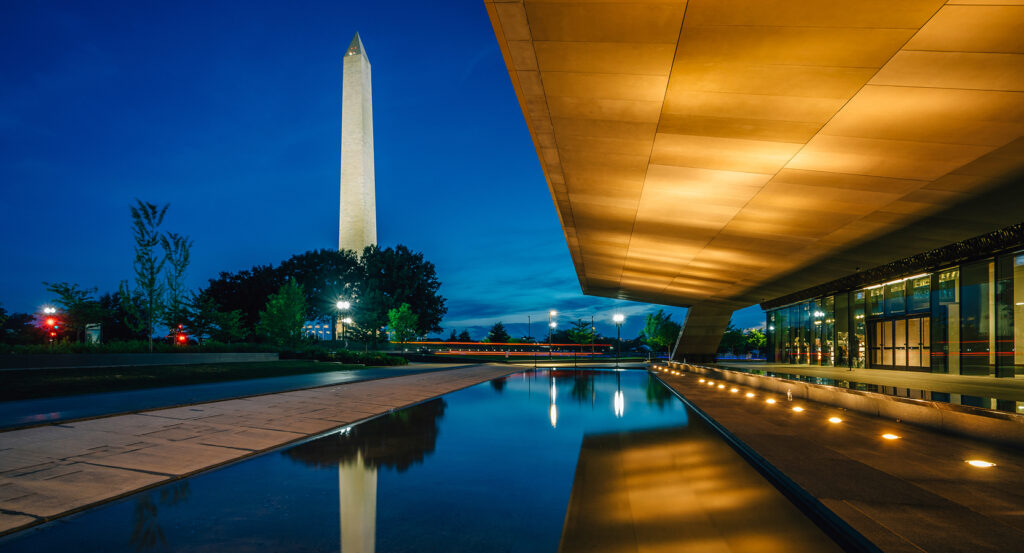
Why you should experience Community Galleries at National Museum of African American History and Culture in Washington, D.C.
Community Galleries at National Museum of African American History and Culture in Washington, D.C. capture the heartbeat of everyday Black life, the neighborhoods, churches, schools, and movements that built the foundation of a people.
If the museum's lower levels tell the story of survival and freedom, these galleries reveal what came next: community, creativity, and the unshakable bonds that turned adversity into solidarity. The space unfolds like a living neighborhood, filled with the voices and artifacts of those who made history not from podiums, but from porches and pews. You'll find church hats beside choir robes, barbershop chairs next to protest banners, and photographs of HBCU students who changed the course of education in America. Every display hums with pride, the beauty of belonging, the rhythm of family, and the power of ordinary people doing extraordinary things.
What you should know about Community Galleries at National Museum of African American History and Culture.
Community Galleries tell one of the most important stories in the museum, how African Americans built institutions that sustained character and hope through generations.
Curators structured the galleries around three intertwined pillars: Home, Place, and Community. The exhibits move through a century of evolution, from early Black townships and rural churches to urban cultural centers, sports leagues, and activist networks. Highlights include displays dedicated to the role of the Black church as both a spiritual and political anchor, the rise of Black-owned newspapers and businesses, and the energetic world of historically Black colleges and universities. One gallery recreates a mid-century beauty salon and barbershop, not as novelty, but as sacred community space where character and culture were affirmed daily. Another traces the history of fraternities, sororities, and civic groups that fought for justice long before national headlines caught up. Many visitors overlook the subtle design detail: the walls here are lined with photographs of community gatherings, arranged like a patchwork quilt, a metaphor for unity stitched together by love, struggle, and shared purpose.
How to fold Community Galleries at National Museum of African American History and Culture into your trip.
Make Community Galleries your bridge between the museum's historical core and its cultural apex.
They sit on the upper levels, bright, open, and filled with the sounds of gospel, laughter, and conversation. Visit after experiencing the Defending Freedom, Defining Freedom exhibition to witness how liberation transformed into leadership. Take your time with the interactive sections, especially those exploring Black education, local entrepreneurship, and the arts, which let you dive into the stories of communities across the country. Don't miss the displays celebrating sports and recreation, where the legacy of figures like Jackie Robinson and Serena Williams stands alongside grassroots leagues that nurtured them. For reflection, step into the quiet reading alcoves, where oral histories play softly through embedded speakers. Community Galleries are more than an exhibition, they're a living portrait of resilience, a reminder that strength doesn't just come from struggle, but from standing together, generation after generation.
Where your story begins.
Foresyte Travel reveals places that feel extraordinary long before you arrive.
Experience premium editorial crafted for luxury travelers.







































































































