
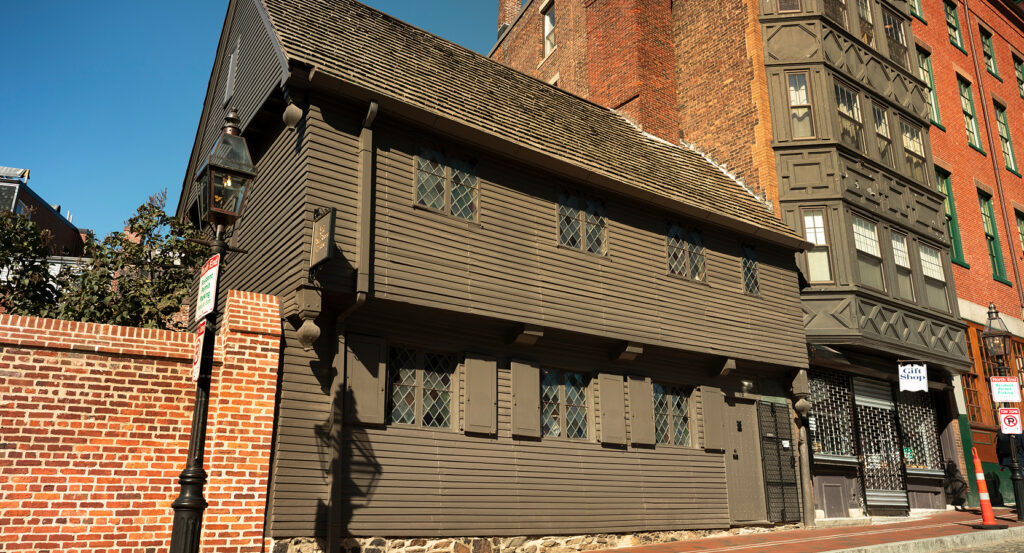
Why North Square matters.
North Square is a historic public square where North End's colonial heritage, Revolutionary history, centuries-old architecture, and enduring neighborhood life preserve one of Boston's oldest civic spaces.
Set between North Street and Moon Street near Garden Court Street and just steps from Paul Revere House, this intimate cobblestone square is surrounded by beautifully preserved brick townhouses, colonial-era landmarks, and narrow streets that have shaped the neighborhood since the seventeenth century. Historic façades, outdoor cafés, and generations of family-owned businesses reinforce an atmosphere that feels remarkably unchanged despite the city's continual evolution. Every building contributes another chapter to one of America's oldest surviving urban neighborhoods. The result is a destination defined by architectural authenticity, historical continuity, and one of Boston's most evocative public spaces.
What defines North Square.
North Square is best known for serving as the oldest continuously occupied public square in Boston, originating during the 1630s as the commercial and residential heart of the colonial town before becoming home to influential merchants, revolutionary leaders, and some of the city's earliest surviving architecture. During the seventeenth and eighteenth centuries, the square formed the center of Boston's prosperous North End, where maritime trade, warehouses, elegant residences, and civic institutions flourished near the waterfront. Among its most distinguished landmarks is the Paul Revere House, constructed 1680 and recognized as Downtown's oldest surviving building, while the nearby Pierce-Hichborn House, built in 1711 and attributed to Peter Harrison, further demonstrates the neighborhood's exceptional colonial architectural legacy. Although successive waves of immigration transformed the North End into Boston's historic Italian-American community during the nineteenth century, North Square retained its original street pattern and remarkable concentration of preserved buildings, earning recognition within the Blackstone Block Historic District and helping establish the area as one of the nation's most significant collections of colonial urban fabric.
Brick sidewalks, carefully restored period buildings, and intimate pedestrian scale continue conveying the character of colonial Boston more vividly than almost anywhere else in the city. Together, architectural preservation, revolutionary history, and centuries of continuous neighborhood life establish North Square as one of America's most historically significant civic spaces.
How North Square fits.
North Square works as the centerpiece of an exploration through the North End's celebrated historic landmarks.
Begin at Paul Revere House, where one of Boston's most important colonial homes introduces the neighborhood's Revolutionary history before stepping into North Square. Continue to Old North Church, whose famous lantern signal helped launch Paul Revere's midnight ride and remains one of the city's defining historic sites. Conclude along the Freedom Trail, where centuries of American history provide a memorable finale connecting North Square with the broader story of Boston's colonial past. The progression moves naturally from preserved colonial architecture to historic public space before concluding through two defining national landmarks, revealing why North Square remains the historic heart of the North End.
Where your story begins.
Foresyte Travel reveals places that feel extraordinary long before you arrive.
Enjoy editorial crafted for luxury travelers.
Foresyte may earn a commission when you book.







































































































