
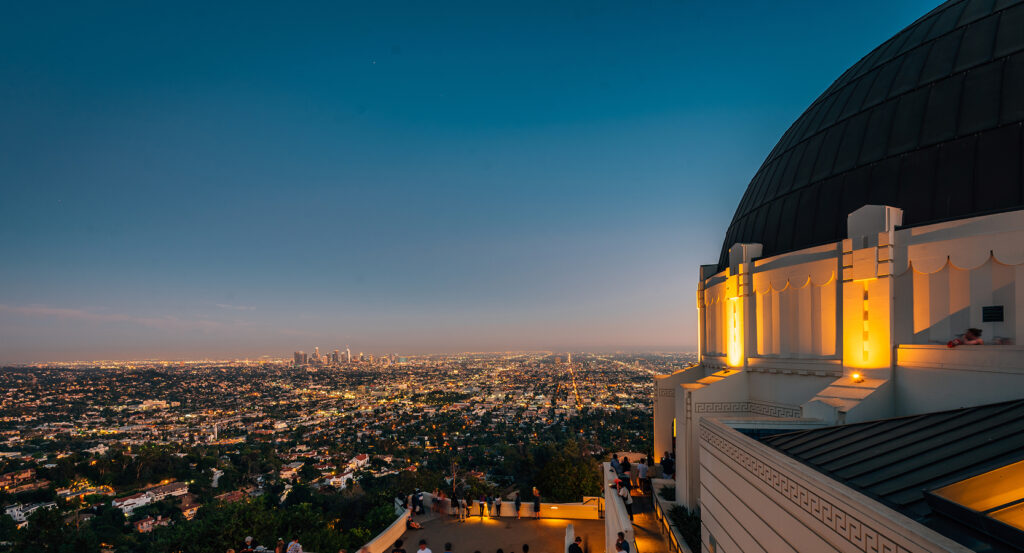
Why Northeast San Fernando Valley matters.
Northeast San Fernando Valley is a layered enclave where the San Fernando Valley's metropolitan character meets former olive groves, foothill settlements and postwar communities spreading across the alluvial plain beneath the San Gabriel Mountains.
Positioned between North San Fernando Valley, Crescenta Valley, and Santa Clarita Valley, the area occupies the northeastern reaches of the basin extending through San Fernando Road, Foothill Boulevard and Van Nuys Boulevard from the broad valley floor toward the mountain front and the passages leading north through Newhall Pass. Dense residential blocks across Pacoima, Arleta and Sun Valley give way toward Sylmar and Lake View Terrace to larger properties, equestrian streets and development increasingly constrained by foothill terrain. Movement through Northeast San Fernando Valley follows long diagonal corridors inherited from older rail and regional transportation routes, with the rectilinear residential grid repeatedly interrupted by washes, mountain approaches and expansive open ground. The San Gabriel Mountains rise abruptly along the northern and eastern horizon, creating a pronounced physical boundary behind communities whose streets extend across comparatively level ground below. The result is a greater area whose foothill edge, extensive residential districts, semi-rural pockets and older transportation corridors retain the successive physical layers through which the northeastern valley became part of metropolitan Los Angeles.
What defines Northeast San Fernando Valley.
Northeast San Fernando Valley is best known for the agricultural communities that developed across its northern plain before metropolitan growth converted orchards, ranches and cultivated acreage into extensive residential districts. San Fernando emerged as the principal nineteenth-century town in the northern valley after Southern Pacific reached the settlement in 1874, providing a commercial outlet for agricultural production across the surrounding countryside. A group of Illinois businessmen purchased 2,000 acres east of the railroad near present-day Sylmar in 1886 and planted more than 1,000 acres with olive trees. The enterprise expanded until the community possessed one of the world's largest olive groves and mills, with a packing operation beside San Fernando Road processing fruit under the Sylmar name. Olives were joined across the northeastern valley by citrus, flowers, poultry and horse ranches, giving communities below the mountains a diversified agricultural economy that survived well into the twentieth century. Water arriving through the Los Angeles Aqueduct in 1913 strengthened cultivation across the northern valley, and Sylmar remained distinctly rural through the 1920s and 1930s as olive oil, pickled olives and varietal flowers continued in production. Residential construction began consuming cultivated ground before World War II and accelerated sharply afterward, leaving surviving ranch properties, old agricultural parcels and remnant olive trees embedded within communities whose physical scale changed within only a few decades.
Pacoima developed through a separate social history that made the northeastern valley one of the most consequential centers of Black suburban life in postwar Los Angeles. Wartime aircraft and assembly employment drew thousands of workers into the San Fernando Valley during the 1940s, and discriminatory housing practices concentrated many African American families in Pacoima even after the United States Supreme Court rendered racially restrictive covenants unenforceable in 1948. Builder Paul R. Trousdale developed Joe Louis Homes in 1950 as a 93-house subdivision marketed to African American veterans and middle-class buyers, with Minimal Traditional residences arranged across a conventional suburban grid. San-Fern Manor followed in 1952 near Herrick Avenue and Filmore Street, widening access to detached homeownership for Black households excluded from numerous surrounding developments. San Fernando Gardens added another major residential complex in 1955, and Black-owned businesses subsequently concentrated along Van Nuys Boulevard as Pacoima's population expanded. Styles Ville Barber Shop and Beauty Salon opened there in 1958 within a commercial district that also supported establishments including Neely Beauty Nest, Fletcher's Place and El Toro Cocktail Lounge. By 1960, 90 percent of African Americans living in the San Fernando Valley resided in Pacoima, giving the community a cultural importance far beyond its geographic size and embedding the northeastern valley within the broader history of Black migration, suburban homeownership and entrepreneurship in twentieth-century Los Angeles.
How Northeast San Fernando Valley fits.
Northeast San Fernando Valley works as the anchor for a daytime outing connecting an 1880s adobe tied to one of the Valley's earliest settler families, a zoological center occupying an old olive grove and an automotive collection created through exacting concours restoration.
Begin at Lopez Adobe, built in 1882 and 1883 by Valentin Lopez for his sister Catalina and her husband Geronimo Lopez in the young town of San Fernando. The two-story residence combined thick adobe walls with Victorian woodwork, including upper and lower verandas distinguished by hand-cut railings and jigsaw-patterned balustrades. Geronimo and Catalina belonged to a family deeply involved in the Valley's nineteenth-century development: their earlier Lopez Station contained the Valley's first post office, opened in 1869, alongside its first general store and English-language school. The San Fernando Times, the community's first newspaper, was printed at the later adobe in April 1889. Members of the Lopez family remained in the house until 1961, and San Fernando purchased the property in 1971, preserving the city's oldest standing building. Continue to Wildlife Learning and Conservation Center, founded in 2007 within an old Sylmar olive grove whose surviving trees place the facility inside the agricultural landscape once characteristic of the northern valley. Its founders created the center to house displaced, rescued and zoo-born wildlife and connect animal care with public education in biology and conservation. More than 100 animals now live on the property, and its conservation work includes participation in managed programs for two-toed sloths, three-banded armadillos and North American porcupines. The setting gives the institution an unusual historical continuity, with a contemporary zoological operation occupying vegetation descended from the kind of orchard landscape that once spread extensively across Sylmar. Conclude at The Nethercutt Collection, whose beginnings reach to J. B. and Dorothy Nethercutt's acquisition of two deteriorated automobiles in 1956. J. B. paid $500 for a 1930 DuPont Town Car and spent eighteen months and more than $65,000 restoring it to concours condition. The DuPont captured Best of Show at Pebble Beach in 1958, the first of six such victories Nethercutt accumulated by 1992. J. B. and Dorothy opened their museum in 1971, and the collection grew beyond automobiles to encompass mechanical musical instruments, antique furniture, a 1937 locomotive and a private railcar. More than 250 restored American and European automobiles now form the core of an institution whose holdings trace the technical and decorative ambitions of elite automotive manufacturing across much of the twentieth century. The progression moves from the Lopez family's nineteenth-century adobe through a wildlife center occupying remnants of Sylmar's orchard landscape and culminates in Nethercutt's pursuit of concours-level automotive restoration, connecting three distinct inheritances preserved across the northeastern valley.
Where your story begins.
Foresyte Travel reveals places that feel extraordinary long before you arrive.
Enjoy editorial crafted for luxury travelers.
Foresyte may earn a commission when you book.





































































































