
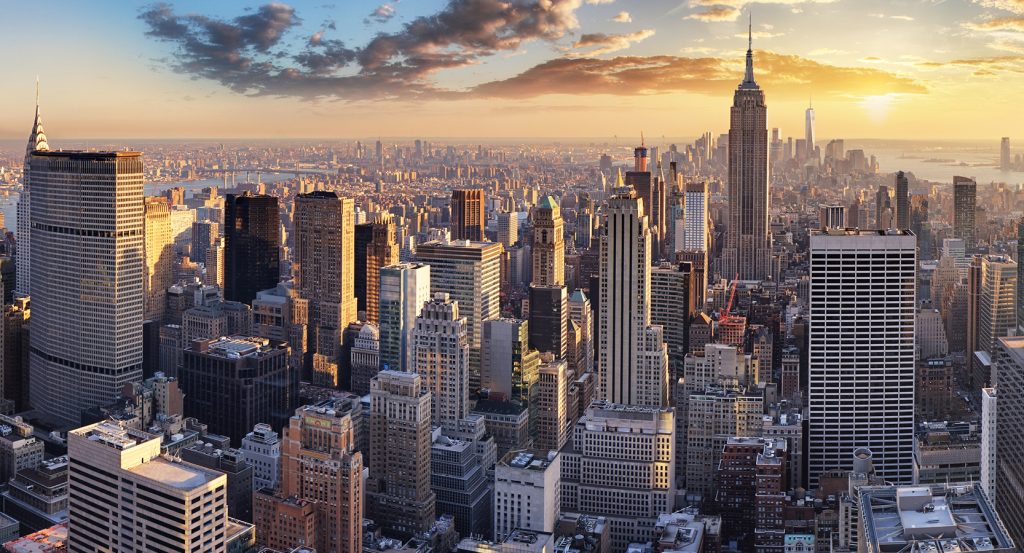
Why you should experience Paramount Times Square - A Generator Hotel in New York, NY.
Paramount Times Square - A Generator Hotel is a theatrical hotel where Times Square's Broadway imagination, Jazz Age exuberance, nightlife mythology and design-driven reinvention converge within one of West 46th Street's great performance-era buildings.
Set along West 46th Street near 8th Avenue and just steps from Richard Rodgers Theatre, the hotel occupies the only hotel designed by Thomas W. Lamb, the Scottish-born architect whose career encompassed more than 300 theaters and cinemas and whose dramatic approach appears here in a double-height street arcade, ornate brick, stone and terra-cotta surfaces and a copper mansard roof. The building later became a pivotal design address when Ian Schrager commissioned Philippe Starck to reinvent its interiors, producing a double-height lobby whose theatrical scale helped introduce the designer-hotel sensibility to Times Square. Beneath the guestrooms, the former grill room developed an equally powerful entertainment character through Billy Rose's Diamond Horseshoe, bringing nightclub performance directly inside Lamb's hospitality architecture. The result is a hotel where Thomas W. Lamb, Ian Schrager, Philippe Starck and Billy Rose give Times Square's culture of performance an unusually coherent expression across architecture, hospitality, design and nightlife.
What you should know about Paramount Times Square - A Generator Hotel.
Paramount Times Square - A Generator Hotel is best known for opening in 1928 after developers Isidore Zimmer, Samuel Resnick and Frank Locker assembled six West 46th Street lots for a Thomas W. Lamb-designed hotel whose plans evolved into an 18-story, 612-room project during construction. Approximately $3.5 million went into the original development, while the completed property incorporated a large lobby with mezzanine, nine retail spaces and an air-conditioned grill room conceived for dining, dancing and live entertainment. Chase National Bank acquired the property for $500,000 following foreclosure during the Depression, beginning an ownership chronology that eventually led to Philip Pilevsky and Arthur G. Cohen's acquisition and Ian Schrager's operation of the hotel. Schrager and Philippe Starck subsequently undertook a three-year, $75 million reinvention that reopened the property with Starck's soaring lobby as its defining contemporary interior, while the exterior later received individual New York City protection. Thomas W. Lamb's singular hotel commission, Depression-era foreclosure, Schrager and Starck's design intervention and the surviving French Renaissance-inspired envelope place Paramount Times Square - A Generator Hotel at the intersection of two major New York hospitality eras.
Billy Rose developed the building's most consequential entertainment chapter by converting Thomas W. Lamb's former grill room into Billy Rose's Diamond Horseshoe, a lavish supper club built around showgirls, cabaret performers and elaborately staged revues. Albert Johnson designed the club for Rose, while The Turn of the Century used Diamond Jim Brady and Lillian Russell as the narrative structure for the opening production and established the room's nostalgic Gay Nineties theatrical vocabulary. 20th Century Fox carried the Diamond Horseshoe mythology onto film through a Technicolor musical starring Betty Grable and Dick Haymes, with Harry Warren and Mack Gordon's score introducing “The More I See You.” Sony Hall now continues the performance lineage inside the same basement space, connecting Billy Rose, Albert Johnson, Betty Grable and contemporary live music within a room that has remained intrinsically tied to the Paramount building across successive entertainment formats.
How to fold Paramount Times Square - A Generator Hotel into your trip.
Paramount Times Square - A Generator Hotel works as the anchor for an afternoon tracing Broadway architecture, theatrical authorship and the creative infrastructure that turns scripts into New York productions.
Begin at Richard Rodgers Theatre, where Herbert J. Krapp designed the original 46th Street Theatre for Irwin Chanin in a particularly ornate neo-Renaissance style before the house eventually took the name of composer Richard Rodgers and became part of the Nederlander Organization's Broadway portfolio. Continue to Drama Book Shop, founded by the Drama League before developing into an independent theatrical bookstore carrying thousands of plays, earning a Tony Award Honor for Excellence in the Theatre and becoming the creative setting where Thomas Kail's Back House Productions gathered and Lin-Manuel Miranda developed In the Heights; Miranda, Kail, Jeffrey Seller and James L. Nederlander later acquired the institution, with Hamilton scenic designer David Korins creating its current home. Conclude at New Victory Theater, where the surviving Broadway house on West 42nd Street carries the district's performance history into programming centered on young audiences and families. The progression moves from Krapp and Chanin's Broadway architecture through Miranda and Kail's working culture of theatrical creation into a stage devoted to introducing another generation to live performance, revealing the creative ecosystem surrounding Paramount Times Square - A Generator Hotel.
Where your story begins.
Foresyte Travel reveals places that feel extraordinary long before you arrive.
Experience premium editorial crafted for luxury travelers.







































































































