
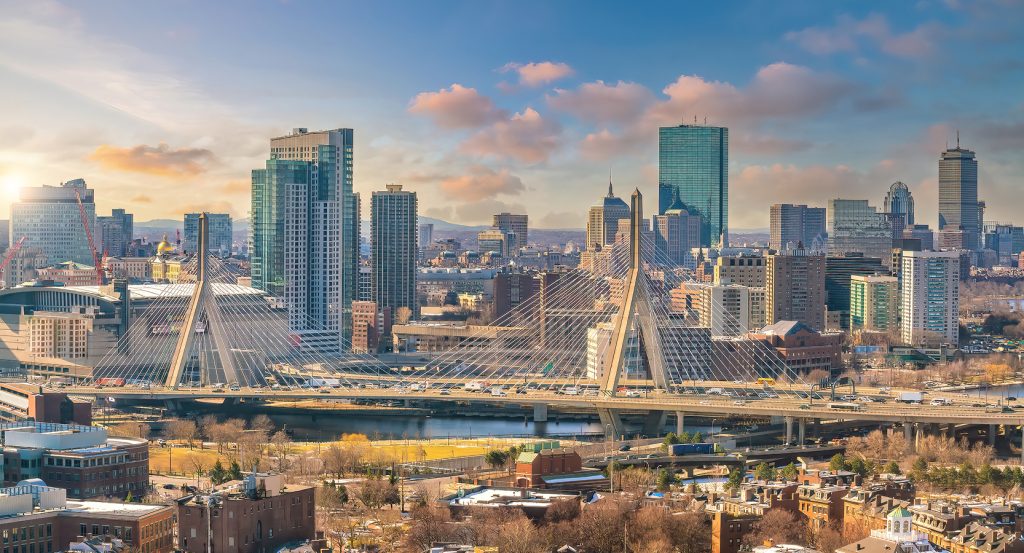
Why Prince Street matters.
Prince Street is a storied corridor where North End's colonial heritage, Italian-American traditions, maritime legacy, and neighborhood vitality create one of Boston's most enduring urban streets.
Running through the North End between the Waterfront and Charlestown, the corridor connects centuries-old brick buildings, celebrated churches, family-owned businesses, and intimate streetscapes that embody one of America's oldest continuously inhabited neighborhoods. Each successive block heightens the experience as narrow rights-of-way, historic masonry, church towers, and generations of neighborhood institutions reveal the remarkable continuity of Boston's colonial street pattern and immigrant heritage. The corridor reaches its defining moment where maritime commerce, revolutionary history, and enduring cultural traditions converge into an unmistakably Boston experience. The result is an experience defined by historical continuity, cultural richness, and one of the North End's most distinctive corridors.
What defines Prince Street.
Prince Street is best known for extending through Boston's North End, where much of the colonial street network established during the seventeenth and eighteenth centuries survives within one of the nation's oldest continuously inhabited urban neighborhoods. The corridor developed alongside Boston Harbor as merchants, artisans, chandlers, and shipowners constructed tightly arranged brick residences, warehouses, and commercial buildings that reflected the North End's central role in Atlantic maritime commerce. During the late nineteenth and early twentieth centuries, successive waves of Italian immigrants reshaped the surrounding neighborhood into New England's foremost Italian-American community, establishing enduring religious, culinary, and commercial traditions while preserving its remarkably compact urban fabric. Recognition of large portions of the North End on the National Register of Historic Places, together with sustained preservation of its historic masonry architecture and colonial street pattern, has safeguarded Prince Street's architectural and cultural character for future generations. Collectively, the North End's colonial origins, maritime economy, Italian-American heritage, and preservation efforts established Prince Street as one of Boston's defining historic corridors.
Religious processions honoring patron saints evolved into a defining neighborhood tradition, bringing generations of residents together through annual festivals that continue reinforcing the corridor's cultural identity. Family-operated bakeries, specialty grocers, cafés, and artisan businesses sustained Prince Street's longstanding commercial vitality while preserving neighborhood-scale enterprise across changing economic eras. Granite curbstones, brick façades, cast-iron fire escapes, narrow building frontages, and carefully preserved masonry construction continue expressing the physical character that has distinguished the North End since the nineteenth century. Together, these living traditions, enduring local businesses, and exceptionally intact streetscape features demonstrate how Prince Street matured into one of Boston's most historically significant neighborhood corridors.
How Prince Street fits.
Prince Street works as an exploration of Boston's colonial heritage, revolutionary history, and waterfront identity.
Begin at Paul Revere House, where the city's oldest surviving residence establishes the colonial foundation before naturally leading into Prince Street and the surrounding North End. Continue to Old North Church, where one of the defining moments of the American Revolution deepens appreciation for the neighborhood's national significance while advancing the historical experience. Conclude at Copp's Hill Burying Ground, where one of Boston's oldest cemeteries provides the historical payoff through centuries of colonial memorials overlooking the harbor that shaped the North End's maritime identity. The progression moves naturally from colonial domestic life to revolutionary history before concluding with one of Boston's oldest burial grounds, revealing why Prince Street remains central to the North End's enduring legacy.
Where your story begins.
Foresyte Travel reveals places that feel extraordinary long before you arrive.
Enjoy editorial crafted for luxury travelers.
Foresyte may earn a commission when you book.







































































































