Why Quince matters.
Quince is a distinguished contemporary Californian restaurant where Jackson Square's historic commercial character meets the agricultural abundance of Northern California, the culinary precision of chef Michael Tusk and one of San Francisco's most accomplished expressions of Italian-influenced fine dining.
Set along Pacific Avenue near Montgomery Street and just steps from the historic commercial buildings surrounding Jackson Square, the restaurant occupies a restored nineteenth-century structure in one of San Francisco's oldest surviving business districts, where brick warehouses, narrow streets and carefully preserved storefronts establish a distinctive architectural setting. Exposed masonry, refined contemporary furnishings and carefully controlled lighting create an intimate interior that preserves the building's historic proportions. The dining room incorporates generously spaced tables, polished surfaces and restrained decorative elements that support an elaborate multicourse service. A carefully organized kitchen and attentive service team accommodate the restaurant's extensive tasting-menu preparations, maintaining a deliberate progression through successive courses. The result is an elegant culinary destination whose historic surroundings and contemporary refinement establish a distinctive setting for ambitious Northern California cooking.
What defines Quince.
Quince is best known for the culinary leadership of chef Michael Tusk, whose cooking combines the agricultural resources of Northern California with classical French technique and the regional traditions of Italian gastronomy. Tusk developed his professional career through positions in distinguished American restaurants, acquiring extensive experience with seasonal ingredients and technically demanding kitchen operations. He worked at Stars in San Francisco under chef Jeremiah Tower, gaining exposure to the city's influential contemporary Californian culinary movement. His subsequent tenure at Chez Panisse in Berkeley introduced him to Alice Waters's commitment to agricultural relationships, carefully selected produce and cooking shaped by the changing seasons. Tusk later worked at Oliveto in Oakland, where chef Paul Bertolli's interpretation of Italian regional cooking contributed substantially to his developing culinary approach. His experience established a particular interest in handmade pasta, traditional preparations and the relationship between ingredient quality and restrained technical execution. Tusk and his wife, Lindsay, opened Quince in 2003 in San Francisco's Pacific Heights neighborhood, introducing an intimate restaurant devoted to Italian-influenced Californian cuisine. The restaurant's early menus emphasized carefully prepared pasta, seasonal vegetables and products obtained through relationships with Northern California farms. Its growing reputation encouraged the couple to pursue a larger and more ambitious dining environment. Quince relocated to Jackson Square in 2009, occupying a historic building that provided additional space for elaborate tasting menus and expanded hospitality operations. The move strengthened the restaurant's position within San Francisco's established fine-dining community and supported increasingly sophisticated culinary presentations. Quince earned its first MICHELIN star in 2007, followed by a second star in 2014. The restaurant received a third MICHELIN star in 2017, establishing Tusk among the leading chefs in American fine dining. He also received the James Beard Foundation's Best Chef: Pacific award in 2011, recognizing his contribution to the region's culinary development. The restaurant subsequently underwent a substantial renovation, reopening in 2023 with redesigned interiors and an expanded emphasis on contemporary hospitality. Quince's sustained recognition established its importance within San Francisco's internationally influential restaurant community.
Michael Tusk's cooking incorporates an extensive relationship with Fresh Run Farm, the agricultural property in Bolinas that supplies the restaurant with seasonal produce and specialty ingredients. The farm cultivates vegetables, herbs and flowers selected for their culinary qualities, allowing the kitchen to develop menus around carefully managed harvests. Its agricultural program emphasizes soil health, biodiversity and the cultivation of varieties suited to the coastal climate of Marin County. The restaurant's tasting menus incorporate these products through elaborate preparations that emphasize natural flavors, precise textures and carefully balanced accompaniments. Handmade pasta occupies an important position within the culinary program, demonstrating Tusk's command of traditional Italian techniques and contemporary presentation. Delicate filled pastas, carefully rolled doughs and richly developed sauces introduce substantial technical complexity to the menu. Seasonal vegetables receive detailed attention through preparations involving roasting, fermentation, delicate broths and controlled temperature techniques. Seafood selections incorporate products associated with the Pacific coastline, emphasizing freshness and the relationship between marine ingredients and regional agricultural products. The kitchen also employs classical preparations associated with French fine dining, introducing carefully developed stocks, reductions and sauces. Bread service contributes another dimension through naturally leavened preparations and carefully selected grains. Desserts extend the restaurant's agricultural emphasis through seasonal fruit, refined pastry techniques and precisely balanced combinations of sweetness and acidity. The beverage program incorporates an extensive wine collection, with particular attention to California producers and established European regions. Its cellar supports elaborate pairings designed to complement the menu's progression through delicate opening preparations, substantial savory courses and desserts. Lindsay Tusk has played a consequential role in shaping the restaurant's hospitality, design and service standards, contributing to the development of its refined dining environment. Quince's continued importance rests in its integration of agricultural stewardship, accomplished Italian technique and the formal precision associated with internationally recognized fine dining.
How Quince fits.
Quince works as the culinary anchor for a northeastern San Francisco outing connecting the city's maritime commerce, its preserved financial architecture and the distinctive cultural institutions associated with the historic neighborhoods surrounding Jackson Square.
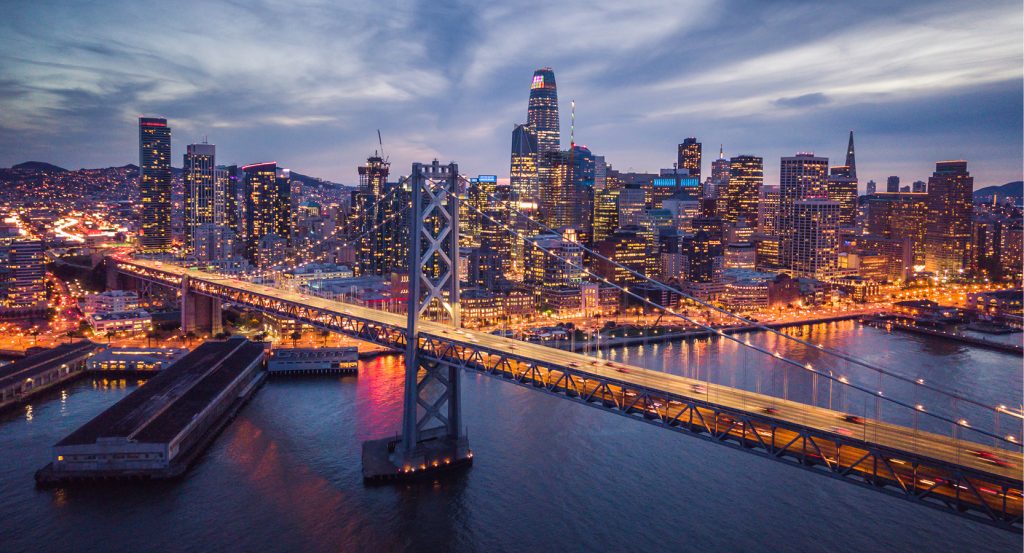
Begin at Ferry Building Marketplace, the expansive waterfront complex occupying the eastern terminus of Market Street. Completed in 1898, the building served as a principal transportation terminal for ferry passengers traveling between San Francisco and communities across the bay. Its prominent clock tower rises above a substantial Beaux-Arts facade, establishing a commanding architectural presence along the Embarcadero. The interior incorporates a long central nave with decorative structural details and expansive public circulation spaces. Its contemporary marketplace contains specialty food merchants, regional agricultural producers and restaurants associated with Northern California's culinary traditions. Continue to Transamerica Pyramid, the distinctive skyscraper occupying the intersection of Montgomery and Washington streets. Completed in 1972, the building was designed by architect William Pereira and introduced a striking pyramidal form into San Francisco's skyline. Its tapered profile rises above the surrounding commercial district, incorporating a structural system designed to accommodate the demands of a major office tower. The building's construction generated substantial public debate concerning the changing architectural character of Downtown. Its eventual acceptance established the tower as one of the city's most recognizable modern structures. Conclude at Chinese Historical Society of America Museum, the cultural institution devoted to preserving and interpreting the history of Chinese communities in the United States. The museum occupies a historic building designed by architect Julia Morgan, whose work contributed substantially to California's early twentieth-century architectural development. Its exhibitions examine Chinese immigration, labor, family life and the cultural achievements of Chinese American communities. The institution maintains collections and educational programs that address the historical experiences of immigrants and their descendants. Its location near San Francisco's historic Chinese commercial district establishes a substantial connection with the city's development as a major Pacific immigration center. The progression moves from Ferry Building Marketplace's preserved transportation architecture through Transamerica Pyramid's modern commercial design and culminates at Chinese Historical Society of America Museum's cultural exhibitions, connecting three consequential dimensions of San Francisco's maritime, architectural and immigrant history.
Where your story begins.
Foresyte Travel reveals places that feel extraordinary long before you arrive.
Enjoy editorial crafted for luxury travelers.
Foresyte may earn a commission when you book.