
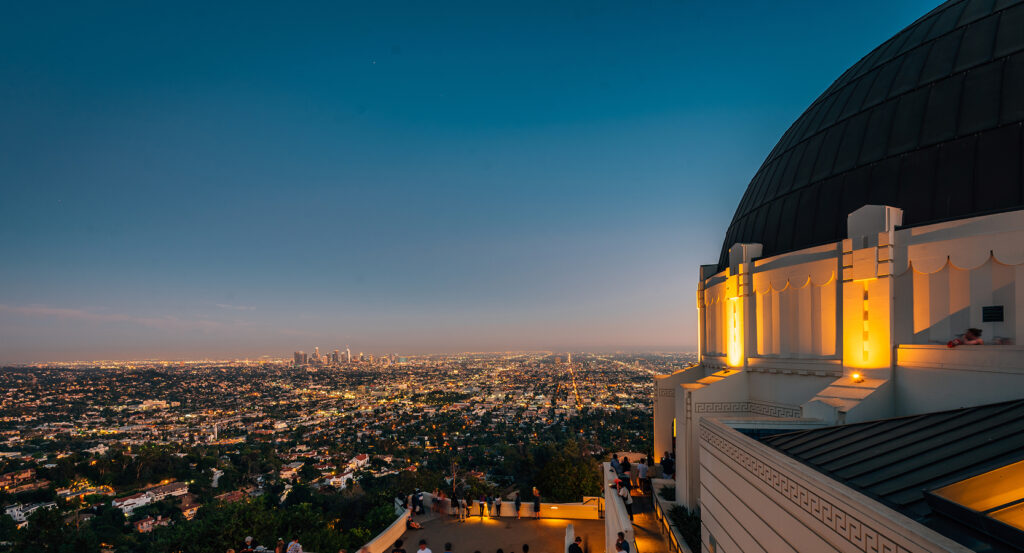
Why Reseda Boulevard matters.
Reseda Boulevard is a storied corridor where Reseda's postwar suburban character meets early Valley settlement, streetcar-era commerce and a north-south route extending from the Santa Monica Mountains across the immense floor of the San Fernando Valley.
Running through Reseda between Tarzana and Northridge, the valley corridor follows a long north-south line from the Santa Monica Mountains toward the northern Valley, crossing Ventura Boulevard, Victory Boulevard, Vanowen Street, Sherman Way, Roscoe Boulevard, Nordhoff Street and Devonshire Street across successive residential and commercial districts. Southern reaches descend from steep mountain terrain into Tarzana before the roadway settles onto the broad Valley floor, where detached houses, apartment buildings and low commercial frontage occupy increasingly regular blocks. Traveling north brings larger intersections and longer sightlines into view as the street crosses the principal east-west arterials that organize western San Fernando Valley geography. Development intensifies around Sherman Way before returning to lower commercial buildings and residential blocks toward Northridge, with distant mountain ridges remaining visible beyond the basin. The result is a corridor whose dramatic mountain terminus, extended Valley-floor alignment, changing development scale and succession of major cross streets reveal the enormous north-south dimensions of the western San Fernando Valley.
What defines Reseda Boulevard.
Reseda Boulevard is best known for forming the commercial spine of a community created from the Suburban Homes Company's immense San Fernando Valley development during the years surrounding completion of the Los Angeles Aqueduct. The area had belonged to Mission San Fernando lands before a syndicate associated with Harry Chandler, Harrison Gray Otis, Moses Sherman and Hobart Johnstone Whitley acquired a vast Valley property in 1909 and prepared it for subdivision. The new community opened in 1912 under the name Marian, honoring Otis's daughter, and became one of three planned subdivisions developed by the enterprise. Sherman had already created the east-west boulevard bearing his name and installed Pacific Electric tracks along it in 1911, giving the future intersection with Reseda Boulevard a transportation axis before a substantial town center existed. A blacksmith shop opened on the southwest corner in 1915, followed during the ensuing years by a hardware store, drugstore and post office that concentrated commerce around the crossing. Marian became Reseda in 1921 when the post office adopted the botanical name, derived from a plant name with Latin roots associated with healing or comfort. The roadway still known as Reseda Avenue during that decade became Reseda Boulevard through a Los Angeles ordinance in May 1929, carrying the community's new name north and south across a Valley still dominated by farms and orchards.
Postwar population growth converted the boulevard into a second commercial landscape whose architecture remains visible in both Reseda and Northridge. Construction around Sherman Way accelerated during the 1940s and 1950s as large areas of agricultural land disappeared beneath single-family subdivisions, strengthening the intersection's position as Reseda's principal shopping district. The Reseda Theatre arrived on Sherman Way in 1948 as a Mid-Century Modern movie house designed by S. Charles Lee, among the nation's most prolific theater architects, whose career encompassed hundreds of cinemas. Farther north, Reseda Boulevard developed another concentrated shopping district in Northridge between Gresham and Rayen streets, where nearly sixty commercial properties formed a linear center. Most of those buildings rose between 1946 and 1963 as one- and two-story storefronts with flat roofs, broad windows, canopies and wall-mounted or projecting signs. The district functioned as Northridge's principal shopping street until Northridge Fashion Center opened in 1971 and shifted the commercial center northwest. A 1961 post office at 9534 Reseda Boulevard captured the scale of that suburban expansion: a predecessor had served a single postal route, yet the new facility was serving 22 routes within months of opening. The boulevard carries two distinct postwar commercial centers whose growth followed the conversion of western Valley farmland into one of Los Angeles's largest suburban populations.
How Reseda Boulevard fits.
Reseda Boulevard works as the anchor for an outing connecting an ancient spring and Mexican-era rancho, a preserved expanse of Santa Monica Mountains terrain and a major performing-arts center created after a two-decade campaign at California State University, Northridge.
Begin at Los Encinos State Historic Park, where a natural spring sustained the Indigenous village of Siutcanga long before Spanish occupation of the San Fernando Valley. Chumash, Tongva and Tataviam people lived around the water source, and the 1769 Portolá expedition passed through the area before Mission San Fernando was founded in 1797. Vicente de la Osa built an adobe there in 1849 as the headquarters of Rancho Los Encinos, a property encompassing 4,500 acres during its rancho period. Eugene Garnier acquired the property during a later ownership chapter, constructed the surviving two-story limestone building in 1872 and created the spring-fed pond in 1874. Domingo Amestoy purchased the rancho in 1891, adding another family to a property whose agricultural history extended through Indigenous, Spanish, Mexican, French and French Basque occupation. The surviving adobe, Garnier building, blacksmith shop, spring and pond now preserve those successive eras within five acres of modern Encino. Continue to Marvin Braude Mulholland Gateway Park, where the southern terminus of Reseda Boulevard reaches 1,500 acres of protected Santa Monica Mountains terrain above the unpaved section of Mulholland Drive. The park carries the name of Marvin Braude, the Los Angeles councilmember whose more than three decades of work centered on preserving the mountain range from development. Its protected acreage connects with Topanga State Park and the larger 20,000-acre expanse of mountain open land extending across this portion of Los Angeles. Reseda Boulevard ends at the principal trailhead, producing an unusually abrupt termination for a major Valley arterial as asphalt gives way to mountain roads and trails used by hikers, cyclists and equestrians. The location gives the street's immense north-south alignment a physical origin in the mountain landscape that bounds the San Fernando Valley. Conclude at The Soraya, whose creation followed a two-decade effort to build a major performing-arts venue at California State University, Northridge. Groundbreaking occurred in April 2008, and the Valley Performing Arts Center opened on January 29, 2011 after a fundraising campaign complicated by the Great Recession and state budget crisis. HGA Architects and Engineers designed the 166,000-square-foot complex with lead design architect Kara Hill, placing a 1,700-seat Great Hall behind a sweeping glass exterior. The hall incorporates an 85-foot fly tower, three seating tiers, adjustable acoustics and displacement ventilation supplied through floor outlets beneath the seats; recovered heat from campus hydrogen fuel cells contributes to building heating and hot water. A $17 million gift from the Y&S Nazarian Family Foundation brought the Younes and Soraya Nazarian name to the center in 2017, the largest single arts gift in California State University history at the time. The progression moves from a spring sustaining Indigenous settlement and a nineteenth-century rancho through protected mountain terrain at the boulevard's southern terminus and culminates in a twenty-first-century performance complex, joining three radically different chapters of San Fernando Valley land, preservation and cultural development.
Where your story begins.
Foresyte Travel reveals places that feel extraordinary long before you arrive.
Enjoy editorial crafted for luxury travelers.
Foresyte may earn a commission when you book.





































































































