Why Restaurant Guy Savoy matters.
Restaurant Guy Savoy is a distinguished French fine-dining restaurant where the Las Vegas Strip's luxury hospitality culture meets the culinary legacy of one of France's most influential chefs and the elaborate traditions of contemporary haute cuisine.
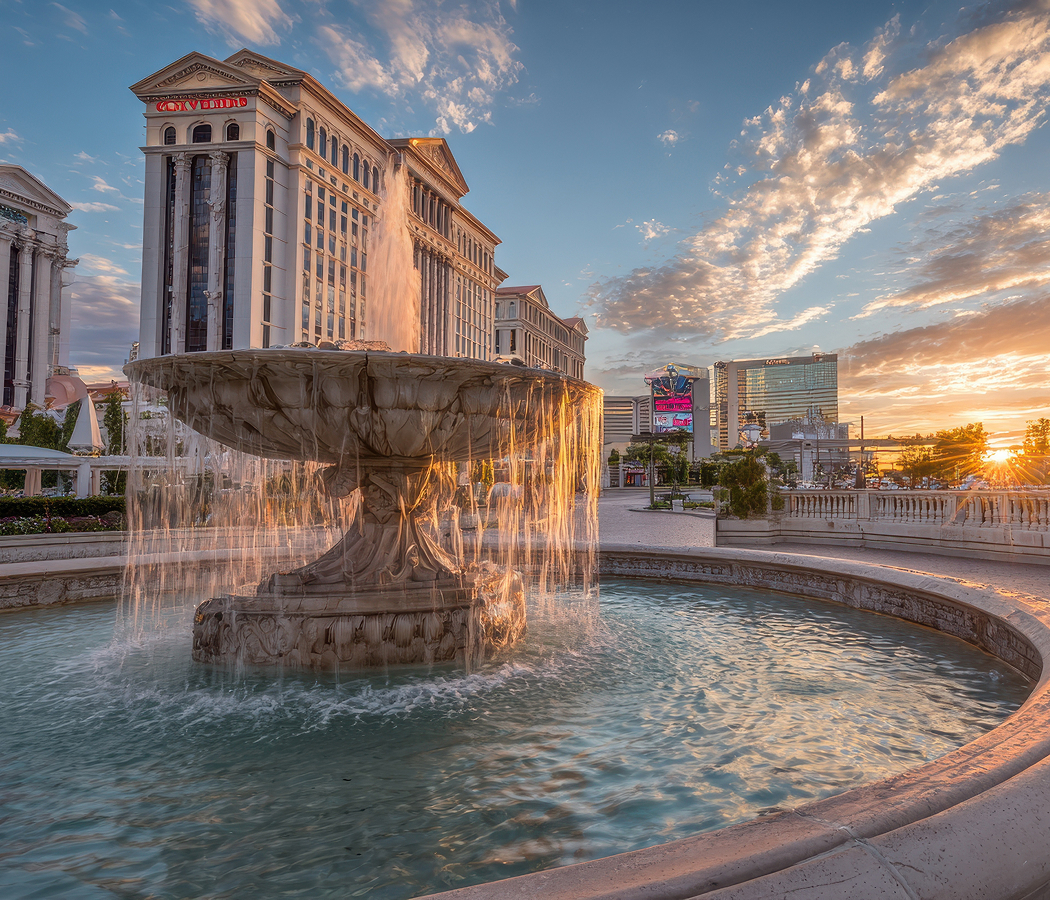
Caesars Palace houses the restaurant within its Augustus Tower, overlooking the resort's Roman Plaza and the surrounding concentration of major hotels along Las Vegas Boulevard. The dining room occupies an elevated position above the casino complex, with tall windows framing the illuminated skyline and architectural landmarks of the Central Strip. Designer Jean-Michel Wilmotte created a restrained contemporary interior defined by dark wood, polished surfaces, carefully arranged lighting and a collection of modern artworks. A formal dining room, private dining areas and specialized service stations support an extended sequence of courses presented through carefully coordinated tableside hospitality. The result is a restaurant whose architectural restraint and elevated setting establish an intimate environment for some of the most technically accomplished French cooking in the American Southwest.
What defines Restaurant Guy Savoy.
Restaurant Guy Savoy is best known for bringing the culinary philosophy of the celebrated French chef to Caesars Palace through an ambitious American restaurant that became one of Las Vegas's most highly regarded fine-dining institutions. Guy Savoy was born in Nevers, France, in 1953 and grew up in Bourgoin-Jallieu, where his family operated a restaurant that introduced him to professional cooking during childhood. He began his culinary apprenticeship at sixteen and subsequently worked under the Troisgros brothers in Roanne, gaining experience in a kitchen central to the development of nouvelle cuisine. Jean and Pierre Troisgros had transformed French restaurant cooking through lighter sauces, precise preparations and a greater emphasis on the natural qualities of individual ingredients. Savoy continued his professional development through positions at prestigious French establishments before opening his first restaurant in Paris in 1980. His cooking developed a distinctive balance between classical technique and contemporary refinement, establishing a reputation for exceptional stocks, sauces and carefully controlled textures. The Paris restaurant received its first MICHELIN star in 1981, followed by a second in 1985 and a third in 2002. Savoy subsequently relocated his principal Paris establishment to the Monnaie de Paris, occupying historic rooms overlooking the Seine and expanding the architectural setting of his culinary enterprise. Caesars Palace partnered with Savoy to introduce his cooking to the United States, opening Restaurant Guy Savoy in May 2006 as part of the resort's expanding collection of internationally recognized chef-driven establishments. The Las Vegas restaurant became Savoy's first American location, extending his culinary reputation into a hospitality market increasingly associated with ambitious fine dining. The opening followed the expansion of Caesars Palace through the Augustus Tower, connecting the restaurant with a major investment in luxury accommodations and high-end hospitality. MICHELIN awarded Restaurant Guy Savoy two stars during its historical Las Vegas coverage, placing it among the city's most highly recognized restaurants. Forbes Travel Guide subsequently awarded the establishment its Five-Star distinction, recognizing the combined standards of its cuisine, service and hospitality. Savoy's influence also extends through the professional development of chefs including Gordon Ramsay, who worked in his Paris kitchen during the formative stages of his career. The restaurant's position within Caesars Palace connects the French chef's international reputation with the broader transformation of Las Vegas into a destination for sophisticated culinary experiences.
Guy Savoy's culinary philosophy centers on the precise treatment of ingredients through preparations that develop flavor, temperature and texture with exceptional control. His celebrated artichoke and black truffle soup provides one of the clearest expressions of that approach, combining the earthy depth of artichokes with the aromatic intensity of black truffles and a carefully developed broth. A toasted mushroom brioche accompanies the soup, introducing buttery richness and a contrasting texture that complements the concentrated flavors of the bowl. The preparation has become one of Savoy's signature creations, establishing a recognizable connection between the Paris and Las Vegas kitchens. Colors of Caviar develops a different interpretation of luxury ingredients through layered preparations that explore the contrasting textures and saline characteristics of caviar. The composition combines delicate creams, chilled preparations and carefully measured accompaniments, allowing the caviar's flavor to develop across successive sensations. Seasonal vegetables receive similarly meticulous treatment through cooking methods that preserve their natural sweetness, structure and aromatic qualities. Seafood preparations emphasize controlled temperatures and refined sauces, drawing on classical French techniques developed through generations of professional kitchens. Roasted meats and poultry depend on carefully prepared reductions that concentrate flavor through patient extraction and precise finishing. The kitchen's pastry program continues the same technical approach through desserts that balance fruit, chocolate, cream and carefully developed textures. Bread service forms an important component of the meal, connecting the elaborate tasting-menu structure with the fundamental traditions of French restaurant hospitality. The wine program emphasizes distinguished French regions, particularly Burgundy, Bordeaux and Champagne, alongside carefully selected international producers. Pairings develop the relationship between individual courses and the acidity, structure and aromatic characteristics of the wines. Tableside service contributes another layer of culinary ceremony through coordinated presentations and carefully controlled pacing. The restaurant's defining character emerges through the sustained precision of its cooking, where ingredient quality, technical mastery and formal hospitality operate together across an extended dining sequence.
How Restaurant Guy Savoy fits.
Restaurant Guy Savoy works as the dining centerpiece for a Central Las Vegas Strip itinerary connecting an internationally significant collection of automobiles, an elaborate indoor Venetian streetscape and one of the city's most ambitious public water installations.
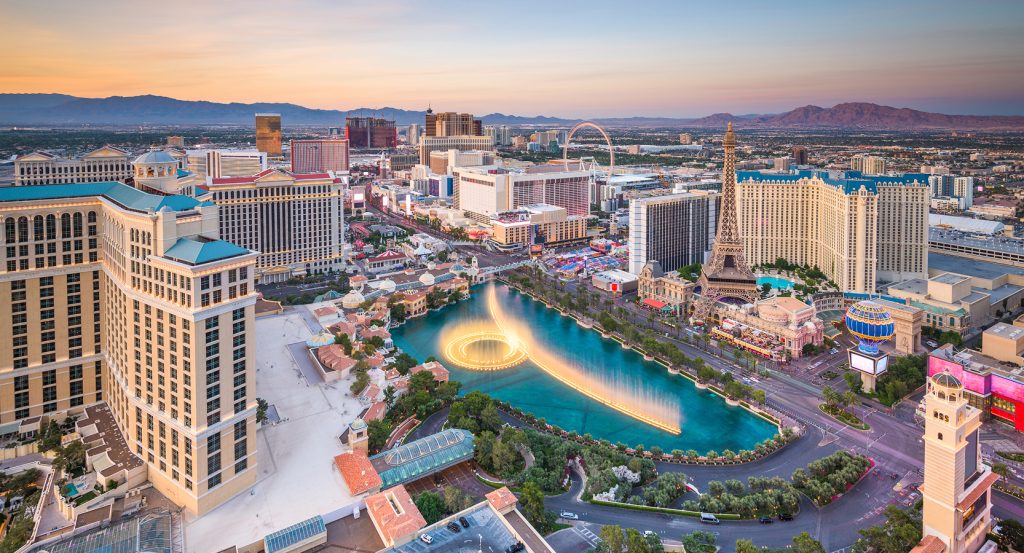
Begin at The Auto Collections, historically housed at the former Imperial Palace and subsequently associated with the LINQ resort complex. Developed through the involvement of collector Don Williams, the exhibition became one of Las Vegas's best-known collections of historically significant automobiles. Its displays brought together rare American classics, European luxury vehicles and examples of twentieth-century automotive engineering, connecting the city's entertainment economy with the international market for collectible cars. Vehicles associated with prominent manufacturers and historical figures formed part of a changing exhibition program organized around preservation, display and private sales. The collection's history provides a connection with the period when Las Vegas resorts incorporated specialized museums and exhibitions into their entertainment programs. Continue to Grand Canal Shoppes, the Venetian-inspired retail complex developed within The Venetian Resort following its opening in 1999. The shopping destination recreates elements of Venice through artificial canals, decorative bridges, elaborate façades and painted ceilings that simulate an outdoor Italian streetscape. Gondolas carry passengers through the indoor waterways, with gondoliers performing songs associated with the traditions of Venetian boat travel. St. Mark's Square forms a central gathering space surrounded by restaurants, storefronts and theatrical architectural details. The complex connects luxury retail with large-scale environmental design, establishing an unusual commercial setting within the resort corridor. Conclude at Fountains of Bellagio, the expansive water installation created by WET Design for the Bellagio resort, which opened in 1998. The fountain occupies an artificial lake along Las Vegas Boulevard and incorporates more than one thousand individually controlled water devices. Powerful jets rise to heights exceeding four hundred feet, producing choreographed performances synchronized with music and lighting. The installation's musical program includes classical compositions, popular standards and contemporary recordings, creating distinct sequences of movement across the water. Its engineering combines hydraulic systems, computerized controls and theatrical design, transforming the resort's frontage into one of the most recognizable public spectacles in Las Vegas. The progression moves from the preservation of historic automobiles through an elaborate recreation of Venetian urban architecture and culminates in an expansive water installation that connects advanced engineering with the theatrical traditions of the Strip.
Where your story begins.
Foresyte Travel reveals places that feel extraordinary long before you arrive.
Enjoy editorial crafted for luxury travelers.
Foresyte may earn a commission when you book.