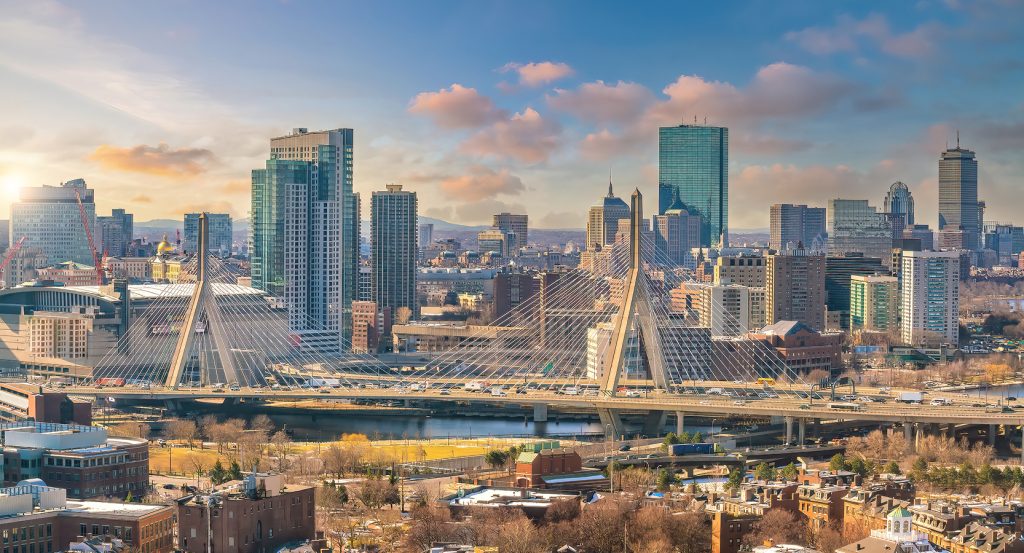
Why you should experience Southampton Street in Boston, Massachusetts.
Southampton Street is an enterprising corridor where Newmarket's industrial heritage, transportation legacy, commercial resilience, and working waterfront character reveal one of Boston's most consequential urban thoroughfares.
Running through Newmarket between South Boston and Roxbury, the corridor connects long-established industrial properties, freight infrastructure, wholesale markets, and evolving business districts that demonstrate Boston's enduring relationship with commerce and distribution. Each successive block heightens the experience as expansive brick warehouses, active rail corridors, historic manufacturing sites, and broad industrial streetscapes reveal the physical structure that supported generations of regional trade. The corridor reaches its defining moment where transportation, industry, and commercial enterprise converge into an unmistakably Boston experience shaped by more than a century of economic evolution. The result is an experience defined by industrial heritage, logistical importance, and one of Newmarket's most distinctive corridors.
What you should know about Southampton Street.
Southampton Street is best known for traversing Boston's Newmarket Industrial District, an area that emerged during the late nineteenth century as railroads, wholesale commerce, and manufacturing transformed the former South Bay marshes into one of New England's principal industrial centers. The corridor developed alongside the extensive freight operations of the New York, New Haven & Hartford Railroad, whose rail yards, sidings, and distribution facilities established Newmarket as a vital gateway for goods entering and leaving metropolitan Boston. Large brick warehouses, cold-storage facilities, food-processing plants, and wholesale produce businesses constructed between the 1880s and the 1930s gave Southampton Street a built environment defined by durable masonry construction, heavy timber framing, and expansive loading platforms designed for industrial efficiency. Direct connections with Interstate 93 and the Massachusetts Turnpike later reinforced the corridor's longstanding importance within Greater Boston's regional freight network while preserving its commercial identity. Collectively, Newmarket's industrial expansion, railroad infrastructure, warehouse architecture, and multimodal transportation connections established Southampton Street as one of Boston's defining commercial corridors.
Food distribution became an enduring theme as the surrounding wholesale produce markets evolved into one of New England's largest centers for fresh food logistics, supplying retailers, restaurants, and institutions across the region through an interconnected network of distributors and refrigerated storage facilities. Private manufacturers operating along the corridor diversified production with printing, metal fabrication, beverage distribution, and commercial services, broadening Southampton Street's economic role beyond rail-based commerce while maintaining its industrial character. Preserved warehouse façades, original freight doors, heavy masonry walls, and steel industrial windows continue expressing the practical craftsmanship that distinguished late nineteenth- and early twentieth-century commercial construction throughout Newmarket. Together, these longstanding distribution networks, diversified industrial enterprises, and remarkably intact warehouse buildings demonstrate how Southampton Street evolved into one of Boston's most significant centers of commerce and logistics.
How to fold Southampton Street into your trip.
Southampton Street works as an exploration of Boston's industrial history, public markets, and waterfront evolution.
Begin at SoWa Open Market, where contemporary makers and local vendors introduce the entrepreneurial energy that now complements the surrounding industrial landscape before naturally leading toward Southampton Street. Continue to Boston Center for the Arts, where galleries and performance spaces reveal how nearby creative institutions have expanded the area's cultural character while preserving its urban character. Conclude at Boston Tea Party Ships & Museum, where the city's maritime commercial history provides the historical payoff linking Boston's global trading legacy with the industrial corridors that later sustained regional commerce. The progression moves naturally from contemporary enterprise to creative expression before concluding with the maritime foundations that helped shape Southampton Street's enduring commercial importance.
Where your story begins.
Foresyte Travel reveals places that feel extraordinary long before you arrive.
Experience premium editorial crafted for luxury travelers.