Why Sterling Vineyards matters.
Sterling Vineyards is a Mediterranean-style hilltop winery where Calistoga's volcanic foothills meet Peter Newton's early investment in Napa Valley Merlot, gravity-assisted winemaking and an aerial tramway connecting the valley floor with the estate's elevated cellars.
Set above Dunaweal Lane near Silverado Trail and a short drive from Downtown Calistoga, the winery occupies an eastern Napa Valley hillside overlooking vineyards between the Vaca Mountains and Mount St. Helena, with its aerial tramway ascending from the lower entrance to the ridge-top complex. White stucco walls, red-tiled roofs and arched passageways give the buildings their Greek island-inspired appearance. Open terraces connect the upper structures with views across the cultivated valley floor. The production facilities follow the hillside's changing elevations, incorporating the terrain into the movement of grapes and wine. The result is a winery whose architecture, transportation system and cellar arrangement derive directly from its elevated setting.
What defines Sterling Vineyards.
Sterling Vineyards is best known for its aerial tramway, Mediterranean-inspired hilltop architecture and early production of varietally labeled Merlot in Napa Valley. British businessman Peter Newton founded the winery in 1964, entering California's expanding premium wine industry during a period of renewed investment in vineyard development. Newton and his associates acquired land in the northern valley and established vineyards suited to the region's warm growing conditions. Their initial plantings included Cabernet Sauvignon and Merlot, two Bordeaux varieties whose California reputations were still developing. Sterling became an early commercial advocate for Merlot as a separately bottled varietal wine, contributing to its acceptance among American consumers. Newton's interest in European architecture influenced the development of a winery that would stand apart from the valley's conventional agricultural buildings. The design drew upon the whitewashed settlements of the Greek island of Mykonos, incorporating Mediterranean architectural forms into a California vineyard setting. Construction of the hilltop complex began during the early 1970s, with production facilities arranged to take advantage of the steep terrain. The winery opened its elevated facilities in 1972, establishing a prominent architectural presence above Calistoga. An aerial tramway subsequently provided passenger access between the lower entrance and the upper buildings, becoming a defining feature of the estate. Coca-Cola acquired Sterling in 1977, placing the winery within a corporate portfolio during a period of consolidation in California's wine industry. Later ownership changes included Diageo and Treasury Wine Estates, extending the property's relationship with international wine businesses. The 2020 Glass Fire damaged portions of the estate and interrupted its visitor operations. A substantial renovation program restored and updated the hilltop facilities, which reopened to visitors in 2023.
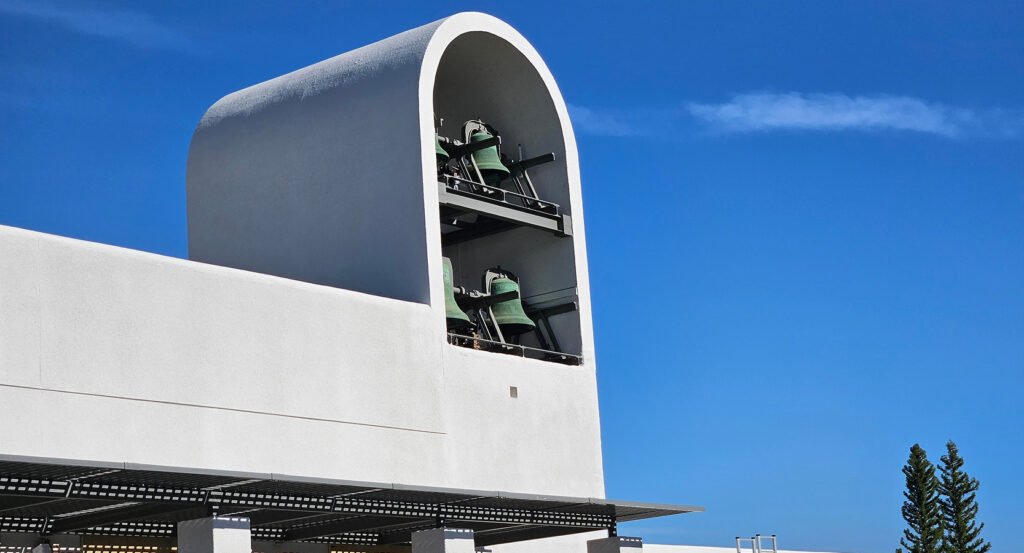
Peter Newton's hillside design established a direct relationship between the winery's architecture and the technical requirements of grape processing. Gravity-assisted production takes advantage of differences in elevation to move grapes, juice and wine between successive stages of vinification. This arrangement reduces the need for mechanical pumping during selected transfers, allowing cellar operations to follow the site's natural descent. Fermentation vessels and barrel-storage areas occupy spaces integrated into the sloping property. The aerial tramway carries passengers above vineyard terraces and wooded terrain before arriving at the upper winery. Its enclosed cabins provide views toward the surrounding mountains and agricultural valley. The visitor route continues through open-air walkways and terraces connecting the estate's production and hospitality areas. Sterling's Cabernet Sauvignon program draws upon Napa Valley vineyards, with fermentation and oak maturation contributing to the structure of its red wines. Merlot retains a central place in the winery's history through Newton's early commitment to the variety. Chardonnay and Sauvignon Blanc extend the production program into white wines requiring different approaches to fermentation and maturation. The estate's Mediterranean architecture incorporates arcades, courtyards and exterior stairways linking buildings across the hillside. A bell tower rises above the complex, recalling architectural forms associated with European religious and civic buildings. Open terraces overlook Mount St. Helena and the northern valley's vineyard parcels. The arrangement connects wine production, mountain transportation and architectural design through the physical characteristics of the property.
How Sterling Vineyards fits.
Sterling Vineyards works as the hilltop centerpiece for a Calistoga itinerary connecting northern Napa Valley's geothermal geology, nineteenth-century settlement and the development of commercial winemaking.
Begin at Old Faithful Geyser of California, the geothermal attraction north of Calistoga. The geyser occupies an area shaped by volcanic activity and underground hydrothermal circulation associated with the northern Napa Valley. Heated groundwater periodically erupts through a surface opening, producing a column of water and steam. The surrounding landscape contains mineral deposits and geological features associated with the region's geothermal system. Calistoga's historic mineral-water resorts and mud baths developed through the same underlying geological conditions. The geyser provides a direct encounter with the volcanic processes that distinguish the northern end of Napa Valley. Continue to Sharpsteen Museum, the Calistoga institution devoted to the history of the upper valley. Founded through the efforts of artist and former Disney animator Ben Sharpsteen, the museum preserves photographs, historical objects and exhibits associated with the community's development. Its displays examine Samuel Brannan's nineteenth-century investments in Calistoga, including the transportation and resort facilities that shaped the town's early economy. A detailed historical diorama reconstructs aspects of the settlement during an earlier period. The museum connects Calistoga's commercial development with the people and industries that established its position within Napa Valley. Conclude at Chateau Montelena, the historic winery situated north of Calistoga near the base of Mount St. Helena. Founded in 1882 by Alfred L. Tubbs, the estate incorporates a stone château designed in a style associated with European fortified residences. Its commercial history includes the interruption of winemaking during Prohibition and subsequent revival under later ownership. Chateau Montelena gained international attention when its 1973 Chardonnay won the white-wine category at the 1976 Judgment of Paris tasting. The result challenged established assumptions concerning the standing of California wines in international competition. The progression moves from Calistoga's geothermal landscape through its nineteenth-century settlement history and culminates at a winery central to California's international recognition, connecting Sterling Vineyards with the geological and commercial development of northern Napa Valley.
Where your story begins.
Foresyte Travel reveals places that feel extraordinary long before you arrive.
Enjoy editorial crafted for luxury travelers.
Foresyte may earn a commission when you book.