
Why The Pierre matters.
The Pierre, A Taj Hotel, New York is a storied hotel where Upper East Side's patrician culture meets Schultze & Weaver architecture, J. Paul Getty's ownership legacy and nearly a century of fashion, entertainment and society history overlooking Central Park.
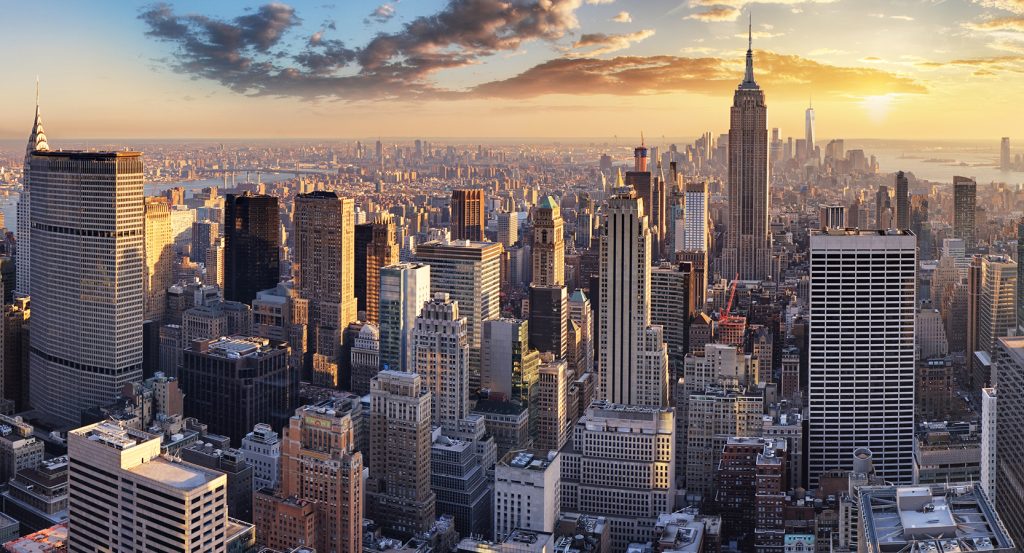
Set along 5th Avenue near East 61st Street and just steps from Pulitzer Fountain, the hotel occupies a commanding corner between Central Park's southeastern entrance, Grand Army Plaza and the mansion-scaled architecture extending north through the Upper East Side. Schultze & Weaver composed the building as a slender blond-brick shaft rising from a limestone Louis XVI base, culminating in a copper-roofed crown modeled on the Royal Chapel at Versailles. Classical stonework, tall arched openings, bossage, urns and carefully proportioned cornices give the lower elevations a ceremonial scale that mediates between 5th Avenue and the tower above. The distinctive roof establishes the building within long views across Central Park, turning its silhouette into an enduring component of the eastern skyline. The result is a hotel whose French classical architecture, park-edge position and residential character established an unusually durable setting for generations of New York social and cultural history.
What defines The Pierre.
The Pierre, A Taj Hotel, New York is best known for opening on October 1, 1930 as Charles Pierre Casalasco's ambitious 5th Avenue hotel, backed by investors including Walter P. Chrysler and E. F. Hutton. Casalasco had built his reputation through restaurants and hotels in Europe and New York before pursuing a property intended to compete at the highest level of Manhattan hospitality. Schultze & Weaver, whose expanding hotel portfolio included major commissions in New York and Florida, designed the skyscraper with a limestone Louis XVI base, blond-brick tower and steep copper crown derived from French architecture. Construction required a $15 million investment and replaced the former Elbridge T. Gerry mansion at 5th Avenue and East 61st Street. The opening arrived weeks after the first anniversary of the 1929 stock-market crash, exposing the new hotel almost immediately to the economic pressures of the Great Depression. Bondholders took control during the ensuing financial crisis, and Casalasco continued managing the property as its social life adapted to the emerging Café Society era. J. Paul Getty acquired The Pierre in 1938 for $2.5 million, beginning an ownership period that carried the hotel through the expansion of Hollywood celebrity culture and postwar New York society. Getty converted the building to cooperative ownership in 1959, creating the hybrid structure of privately owned residences and hotel operations that became fundamental to its later history. The New York City Landmarks Preservation Commission designated the exterior in 1981, formally protecting the architectural character Schultze & Weaver had established half a century earlier. Indian Hotels Company Limited acquired leasehold rights in 2005 and made The Pierre the North American flagship of Taj Hotels, followed by a $100 million renovation completed in 2009.
Edward Melcarth created The Pierre's most distinctive artistic interior in 1967 when Peter Dowling commissioned the American painter to transform the Rotunda with sweeping trompe l'oeil murals. Melcarth filled the circular room with Renaissance-inspired figures, classical architecture, mythological imagery and theatrical perspectives that turn the curved walls into an imagined Mediterranean world. Daniel Romualdez restored and reworked the Rotunda in 2016, preserving Melcarth's paintings while introducing new furnishings and decorative elements into the historic composition. Auguste Escoffier had established an earlier culinary chapter through the Georgian Room, where his involvement during the hotel's first years connected The Pierre with the codification of modern French haute cuisine. The Cotillion Room later developed into a celebrated supper-club setting for big-band dancing and Broadway revues before changing entertainment culture pushed the room toward private events. Valentino staged couture presentations at the hotel during the 1970s, helping establish The Pierre as a major meeting point between European fashion houses and New York society. Karl Lagerfeld developed his own association with the property during the same fashion era, extending its role beyond hospitality into the international design world. The Cotillion Room entered film history through the tango sequence between Al Pacino and Gabrielle Anwar in Scent of a Woman, released in 1992. Audrey Hepburn celebrated her Academy Award for Roman Holiday at The Pierre in 1954, and Elizabeth Taylor entered another chapter of its residential history after marrying Eddie Fisher and purchasing an apartment in 1959. The Pierre, A Taj Hotel, New York carries its cultural significance through Melcarth's expansive painting, Escoffier's culinary lineage, couture presentations, cinema and residents whose lives connected the building with successive eras of twentieth-century culture.
How The Pierre fits.
The Pierre, A Taj Hotel, New York works as an Upper East Side base for an outing connecting a major Reform Jewish congregation's architectural ascent, America's oldest illustration organization and the Seventh Regiment's extraordinary Gilded Age union of military architecture and decorative art.
Begin at Temple Emanu-El, whose congregation originated in 1845 when thirty-seven German Jews gathered in a Lower East Side loft before its growth carried the institution progressively north through Manhattan. Emanu-El consolidated with Temple Beth-El in the 1920s and commissioned Robert D. Kohn, Charles Butler and Clarence Stein to design a new 5th Avenue home on the former site of the John Jacob Astor mansion. Completed in 1929, the immense Romanesque Revival sanctuary incorporates more than sixty stained-glass windows, an eight-story mosaic arch by Hildreth Meière and a column-free interior extending 175 feet beneath a 103-foot ceiling. Continue to Society of Illustrators, founded in 1901 as an organization devoted to the art of illustration and associated across its history with figures including N.C. Wyeth, Rube Goldberg and Norman Rockwell. The Society acquired its East 63rd Street headquarters in 1939, adapting an 1875 carriage house originally built for William P. Read, secretary to J.P. Morgan, and established the Museum of American Illustration there in 1981. Its permanent collection grew to 3,500 works, and the creation of the MoCCA Gallery in 2012 expanded the institution's scope into comic and cartoon art. Conclude at Park Avenue Armory, built between 1877 and 1881 for the Seventh Regiment, whose members included families such as the Roosevelts, Harrimans and Livingstons. Charles W. Clinton designed the fortress-like exterior and immense drill hall, and the regiment commissioned leading figures of the American Aesthetic Movement to create its reception rooms. Louis Comfort Tiffany, Stanford White, Candace Wheeler, Samuel Colman, Francis Millet and George Yewell collaborated on the Veterans Room, among the world's only fully surviving interiors by Tiffany's Associated Artists, and Herzog & de Meuron completed its revitalization in 2016 as part of the Armory's long-term cultural transformation. The progression moves from Kohn, Butler, Stein and Meière's expansive expression of Reform Judaism through the Society of Illustrators' institutional preservation of American graphic art and culminates in Clinton, Tiffany, White and Wheeler's union of military architecture with the American Aesthetic Movement, placing The Pierre within an Upper East Side culture shaped by patronage, architecture and decorative art.
Where your story begins.
Foresyte Travel reveals places that feel extraordinary long before you arrive.
Enjoy editorial crafted for luxury travelers.
Foresyte may earn a commission when you book.







































































































