
Why 5th Avenue matters.
5th Avenue is a commanding Manhattan corridor where New York's metropolitan ambition meets the 1811 street grid, Gilded Age wealth, internationally consequential architecture, luxury commerce and an extraordinary concentration of cultural institutions.
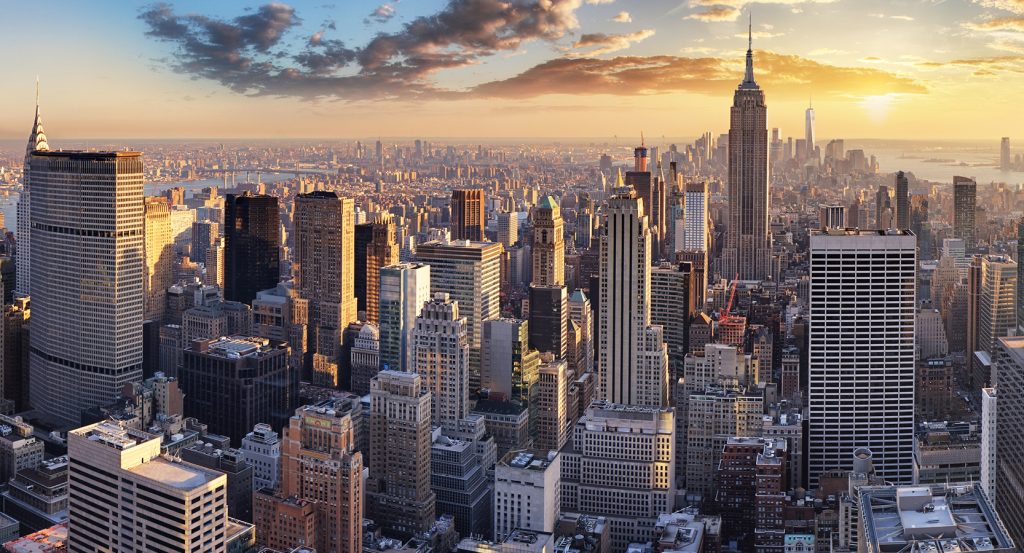
Set along Manhattan's central north-south axis near Broadway at Madison Square and just steps from Central Park along its Upper East Side reach, the corridor extends from Washington Square through Midtown and the park edge before continuing into Harlem across neighborhoods shaped by successive waves of residential, commercial and institutional development. Building scale changes dramatically along the route, moving from nineteenth-century Greenwich Village blocks into Midtown towers and the expansive facades facing Central Park. Major intersections repeatedly alter the street's character as Washington Square, Madison Square, Bryant Park, Rockefeller Center and Grand Army Plaza establish distinct urban episodes. North of 82nd Street, museums become unusually concentrated along the park boundary, giving the avenue another architectural register beyond its commercial core. The result is a street whose changing buildings, institutions and public spaces compress several defining chapters of Manhattan's growth into a single continuous axis.
What you didn't know 5th Avenue.
5th Avenue is best known for developing from an element of Manhattan's planned street system into an international symbol of wealth, commerce and culture. Casimir Goerck's late eighteenth-century surveys of the city's Common Lands established a Middle Road that anticipated the avenue's alignment before the Commissioners' Plan of 1811 imposed the defining Manhattan grid. The street began at Washington Square as a modest unpaved route and expanded northward as population and development advanced up the island. Affluent New Yorkers increasingly established houses along the avenue during the 1850s, and Central Park's creation intensified the desirability of land farther north. The decades after the Civil War transformed the central portion into Millionaire's Row as industrial and financial fortunes generated an extraordinary sequence of private residences. William and Alva Vanderbilt completed their château at 660 5th Avenue in 1882 during a period when Vanderbilt family houses helped make the corridor a principal stage for New York society. Andrew Carnegie pushed that residential geography farther north when his family moved into its Babb, Cook & Willard-designed mansion at 91st Street in 1902, helping establish the district subsequently known as Carnegie Hill. Commercial pressure simultaneously advanced north from Lower Manhattan, replacing mansions with shops, hotels, clubs and increasingly valuable business buildings. Merchants and property owners formed the Fifth Avenue Association in 1907 at the Fifth Avenue Hotel, seeking coordinated control over traffic, development and the commercial character of the corridor. 5th Avenue's transformation accelerated during the following decades as luxury retailers occupied addresses formerly associated with private wealth. Traffic itself became an architectural concern: seven 23-foot bronze signal towers designed by Joseph H. Freedlander appeared between 14th and 57th Streets in 1922, imposing order on one of Manhattan's busiest routes. Retail, office construction and major civic institutions eventually displaced much of the residential world that had created Millionaire's Row, yet surviving mansions, clubs and churches preserve fragments of that earlier avenue within the commercial city that succeeded it.
Museum Mile gives the northern avenue its clearest concentration of cultural power, placing major collections directly against Central Park and turning the street itself into connective tissue among radically different institutions. The Metropolitan Museum of Art established the pattern when it moved to its park site at 82nd Street in 1880, beginning with Calvert Vaux's High Victorian Gothic structure before later construction transformed the complex. Richard Morris Hunt designed the expansive entrance hall and Central Fifth Avenue facade opened in 1902, and McKim, Mead & White extended the composition through additional wings. Frank Lloyd Wright overturned that expansive architectural convention farther north with the Guggenheim Museum, commissioned in 1943 and opened in 1959 as a spiraling concrete building organized around continuous ascent and descent. Andrew Carnegie's former residence at 91st Street supplies another institutional model through Cooper Hewitt, converting a 64-room Georgian mansion completed in 1902 into the Smithsonian's national design museum. The mansion's structural steel frame, electric elevator, sophisticated heating and cooling equipment and extensive private garden made the house technologically advanced during Carnegie's lifetime. Cooper Hewitt opened there in 1976, joining a museum collection founded by Sarah and Eleanor Hewitt in 1897 with the domestic architecture of one of the avenue's defining industrial fortunes. Farther north, the Museum of the City of New York occupies Joseph H. Freedlander's Georgian Colonial Revival building at 103rd Street, dedicated in 1932 for an institution founded by Henry Collins Brown in 1923. These buildings place radically different architectural ideas beside the same park edge, ranging from mansion and civic palace to Wright's sculptural spiral. Their collections broaden that physical sequence through fine art, design, urban history and modernism. 5th Avenue gains exceptional cultural density from this accumulation, using a single street frontage to connect institutions whose buildings themselves chart changing American ideas about wealth, collecting, architecture and public access to culture.
How 5th Avenue fits.
5th Avenue works as a Manhattan itinerary whose strongest sequence traces the transformation of private Gilded Age wealth into public collecting and then into a dramatic twentieth-century conception of museum architecture.
Begin at Cooper Hewitt, Smithsonian Design Museum, whose collection originated with Sarah and Eleanor Hewitt's Cooper Union Museum for the Arts of Decoration in 1897 before eventually entering the Smithsonian Institution. Its Fifth Avenue home began as Andrew and Louise Carnegie's residence, constructed between 1899 and 1902 by Babb, Cook & Willard with a steel frame, electric elevators and elaborate mechanical systems. Carnegie deliberately selected an uptown site with enough land for an extensive garden, shifting elite residential development toward what became Carnegie Hill. The mansion became Cooper Hewitt's home in 1976, bringing a design collection spanning more than 30 centuries into a building that was itself an important artifact of turn-of-the-century domestic technology and craftsmanship. Continue to Guggenheim Museum, whose institutional origins reach to the Solomon R. Guggenheim Foundation's creation in 1937 and the Museum of Non-Objective Painting opened two years later. Hilla Rebay encouraged Solomon Guggenheim's commitment to abstraction and selected Frank Lloyd Wright in 1943 to design a permanent museum. Wright spent years refining the building before excavation began in 1956 and construction followed in 1958. He died months before the museum opened on October 21, 1959, leaving New York a building whose continuous spiral ramp challenged the conventional sequence of rectilinear museum galleries. Conclude at The Metropolitan Museum of Art, incorporated in 1870 after John Jay and other civic leaders pursued a major art institution for New York. Its first object was a Roman sarcophagus, followed in 1871 by 174 European paintings including works by Anthony van Dyck, Nicolas Poussin and Giovanni Battista Tiepolo. The museum reached its Central Park site in 1880 through Calvert Vaux's building, and subsequent architects progressively enveloped that original structure as the institution expanded. Richard Morris Hunt's expansive central facade and entrance hall opened in 1902, followed by McKim, Mead & White wings that extended the museum along 5th Avenue. The progression moves from industrial fortune converted into a national design institution through Wright's rejection of conventional museum form and culminates in a metropolitan collection whose century of architectural expansion parallels New York's rise as a global center for art.
Where your story begins.
Foresyte Travel reveals places that feel extraordinary long before you arrive.
Enjoy editorial crafted for luxury travelers.
Foresyte may earn a commission when you book.







































































































