
Why The Fifth Avenue Hotel matters.
The Fifth Avenue Hotel is a vivacious hotel where NoMad's Gilded Age legacy meets McKim, Mead & White's 1907 Renaissance palazzo, Alex Ohebshalom's decade-long revival and Martin Brudnizki's richly layered vision of a cosmopolitan private mansion.
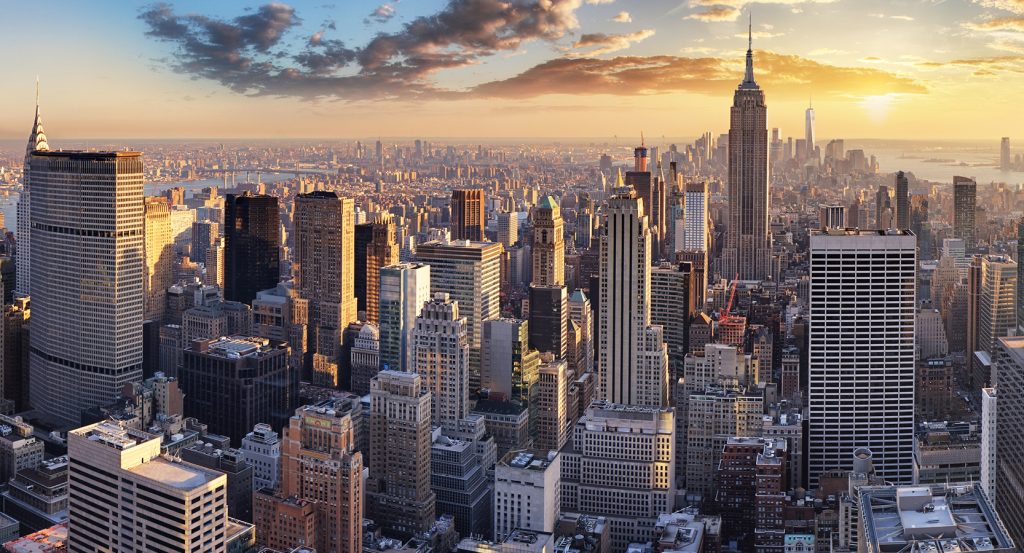
Set along 5th Avenue near West 28th Street and just steps from the Marble Collegiate Church, the hotel occupies a corridor where surviving Beaux-Arts commercial buildings, former clubhouses and early skyscrapers mark Madison Square's transition from nineteenth-century residential enclave to metropolitan business center. The restored limestone-and-brick mansion stands beside Perkins Eastman and PBDW Architects' contemporary tower, creating a deliberate architectural pairing between the protected historic structure and a vertically articulated addition clad in precast concrete, stone and metal-framed windows. Martin Brudnizki developed the interiors through saturated color, patterned textiles, Murano glass, hand-painted wallpaper, lacquered cabinetry and objects assembled with the density of a collector's residence. Salon-style artwork, intimate passages and dramatically differentiated rooms make discovery central to encountering the property as the architectural sequence moves between the former bank and the contemporary tower. The result is a hotel whose historic preservation, new architecture and decorative abundance turn a complex 5th Avenue site into one of New York's most ambitious independent luxury projects of the twenty-first century.
What defines The Fifth Avenue Hotel.
The Fifth Avenue Hotel is best known for transforming a property whose architectural history reaches from Charlotte Goodridge's nineteenth-century mansion to McKim, Mead & White's Second National Bank and Alex Ohebshalom's Flâneur Hospitality. Goodridge commissioned her mansion and carriage house in 1856 and became associated with receptions and musical soirées during the period when Madison Square ranked among Manhattan's fashionable residential districts. The residence subsequently became an art gallery as 5th Avenue shifted toward commercial use around the turn of the twentieth century. Second National Bank acquired the site and commissioned McKim, Mead & White to create a new bank and office building, completed in 1907 and 1908 as a five-story neo-Classical palazzo of limestone, brick and terra cotta. McKim, Mead & White returned in 1913 for a two-story northern addition and again in 1928 for a commercial extension behind the original structure, producing three successive architectural stages under the same firm. The building later became part of the Madison Square North Historic District, preserving the former bank as a surviving artifact of 5th Avenue's early twentieth-century commercial transformation. The Ohebshalom family acquired the property more than fifty years before the hotel opened, establishing the ownership continuity from which Alex Ohebshalom eventually developed his hospitality project. Ohebshalom founded Flâneur Hospitality and began pursuing the hotel a decade before completion, making the 5th Avenue property the company's premiere development. Perkins Eastman worked with PBDW Architects to restore and adapt the McKim, Mead & White building and design the adjoining 230-foot tower, using vertically grouped windows and masonry-toned cladding to relate the addition to the protected streetscape. The historic bank hall became a vaulted two-story public interior within the conversion, placing a principal social room inside the largest surviving volume of the earlier building. The Fifth Avenue Hotel opened in October 2023, bringing Ohebshalom's decade-long project into operation as an independent hotel spanning both architectural periods.
Martin Brudnizki Design Studio developed the property's decorative world around an imagined cosmopolitan collector, allowing Brudnizki and Ohebshalom to connect the former bank's Gilded Age associations with objects, patterns and artistic references drawn across continents and periods. Pae White's 2023 Bugs & Drugs mosaic commands the lobby through an intricate composition derived from enlarged biological imagery, placing a major contemporary commission at the beginning of the interior sequence. Alanna Airitam's Queen Mary joins the collection alongside photographs by William Klein, Gordon Parks and Melvin Sokolsky, whose images introduce distinct visions of twentieth-century fashion, street life and New York glamour. Jaime Hayon's glazed ceramic Venetian masks and cabinets of collected objects extend the artistic program into three-dimensional pieces that reinforce the property's collector-house premise. Stephen Doyle developed the hotel's visual character and participated in shaping the art program, carrying the flâneur concept into graphic design and the presentation of the collection. Andrew Carmellini and NoHo Hospitality Group opened Café Carmellini in 2023 inside the former banking hall, giving the chef his first namesake restaurant after a New York career that included Café Boulud, Locanda Verde and Lafayette. Martin Brudnizki surrounded the restaurant with blue velvet, bronze lighting, beveled mirrors and dramatic architectural scale, connecting Carmellini's cooking with one of the historic structure's most consequential surviving volumes. The Portrait Bar established a more intimate counterpart through wood paneling and a dense collection of portraiture, with Darryl Chan joining Carmellini's opening team to develop its cocktail program. MICHELIN awarded the hotel Two Keys in both 2024 and 2025, and The World's 50 Best Hotels placed it at number 75 on its 2025 extended ranking. The Fifth Avenue Hotel joins Ohebshalom's independent hospitality venture, Brudnizki's decorative authorship, a substantial contemporary art collection and Carmellini's culinary work inside a preserved McKim, Mead & White building whose own evolution already encompassed residence, gallery and banking history.
How The Fifth Avenue Hotel fits.
The Fifth Avenue Hotel works as a NoMad base for an outing connecting the public landscape that shaped Madison Square, an early steel-frame skyscraper that transformed a difficult triangular parcel and an artists' institution housed inside Samuel J. Tilden's former Gramercy Park residence.
Begin at Madison Square Park, officially opened in 1847 after decades in which the surrounding ground had passed through military, civic and recreational uses. William Grant and Austrian landscape architect Ignatz Pilat redesigned the park in 1870, establishing much of the spatial organization associated with its mature nineteenth-century form. The Statue of Liberty's arm and torch stood there from 1876 for six years as a fundraising attraction for the monument's pedestal, and the northeast corner of the square subsequently became home to the first two Madison Square Gardens, making the park a focal point for entertainment, performance and metropolitan development. Continue to Flatiron Building, completed in 1902 as the Fuller Building on the triangular parcel created by Broadway's diagonal crossing of 5th Avenue. D. H. Burnham & Co., with Daniel Burnham and Frederick P. Dinkelberg, designed a 285-foot steel-frame skyscraper whose non-load-bearing limestone and terra-cotta exterior translated Beaux-Arts composition onto a technologically advanced structural cage. The Fuller Company developed the building as its headquarters, and New York designated the tower a landmark in 1966 before its addition to the National Register of Historic Places in 1979 and recognition as a National Historic Landmark in 1989. Conclude at National Arts Club, founded in 1898 and established at Samuel J. Tilden's former Gramercy Park mansion after the club's Arts Realty Company acquired the property in 1905. Calvert Vaux had previously transformed adjoining brownstones into Tilden's residence during the 1880s, creating elaborate interiors and a sandstone façade distinguished by carved ornament. Club president George B. Post designed the connecting studio tower after the acquisition, extending the property for an organization whose membership encompassed artists, musicians, writers, performers, collectors and patrons and admitted women from its beginning. The progression moves from Grant and Pilat's shaping of Madison Square's public landscape through Burnham and Dinkelberg's steel-frame transformation of the Flatiron parcel and culminates in Vaux and Post's architectural setting for the National Arts Club, connecting landscape, skyscraper innovation and artistic institution-building around The Fifth Avenue Hotel.
Where your story begins.
Foresyte Travel reveals places that feel extraordinary long before you arrive.
Enjoy editorial crafted for luxury travelers.
Foresyte may earn a commission when you book.







































































































