Why The Westin San Jose matters.
The Westin San Jose is a defining historic hotel where Downtown San Jose's civic culture meets Silicon Valley's technological economy, Spanish Colonial architecture and the city's transformation into Northern California's urban innovation center.
Set along South Market Street beside the San Jose McEnery Convention Center, The Westin San Jose occupies a central position between Plaza de Cesar Chavez, San Jose City Hall, the San Jose Museum of Art and the streets leading toward the Santa Clara Valley. Its distinctive physical setting combines a restored early twentieth-century hotel, convention district, civic plaza and technology-centered downtown within one of San Jose's most important urban corridors. The city is encountered primarily through movement between the hotel, the convention center, public squares, theaters, restaurants and the routes connecting downtown with the university, airport and Silicon Valley offices. A second atmosphere develops inside the property through historic public rooms, restaurants, lounges, guest floors, fitness facilities and event spaces that provide a polished refuge from the active commercial district. The result is an exceptional urban hotel whose architecture and setting connect San Jose's civic history, technological identity, cultural life and contemporary business economy.
What defines The Westin San Jose.
The Westin San Jose is best known for preserving the historic Hotel Sainte Claire, a landmark of California's Renaissance Revival architecture that established Downtown San Jose as a center of sophisticated hospitality during the early twentieth century. Real estate developer and banker Thomas S. Montgomery conceived the original hotel as the centerpiece of the city's expanding commercial and cultural district, extending his earlier investment in the Montgomery Hotel into a substantially more ambitious undertaking. The property occupied the former site of Joseph Hartmann's Eagle Brewery, whose operations had ended during the restrictions of Prohibition, allowing Montgomery to acquire the land in 1923. Its name originated with the Sainte Claire Club, an exclusive San Jose businessmen's organization established in 1893, connecting the development with the city's established commercial leadership. Montgomery commissioned the prominent San Francisco architectural partnership Weeks and Day, whose founders Charles Peter Weeks and William Peyton Day had developed an influential practice specializing in expansive commercial buildings, theaters, and luxury hotels. Their portfolio included San Francisco's Mark Hopkins Hotel and the Beverly Wilshire in Los Angeles, bringing established metropolitan hospitality expertise to a city undergoing substantial commercial expansion. Construction began in September 1925, culminating in the hotel's opening one year later following an investment of $1 million in construction and furnishings. The resulting establishment acquired the nickname Million Dollar Hotel, reflecting its exceptional scale and sophistication within the South Bay's developing hospitality industry. Montgomery reinforced the property's civic importance through his donation of land across the street for San Jose's future Civic Auditorium, establishing a lasting relationship between the hotel and the city's cultural infrastructure. The building became a prominent gathering place for business leaders, visiting performers, and travelers moving between San Francisco and Southern California, establishing a reputation for exceptional accommodations within the region. Its historical significance received federal recognition on June 3, 1980, when the Hotel Sainte Claire entered the National Register of Historic Places for its architectural distinction and contribution to San Jose's commercial development. A substantial restoration during the 1990s introduced the Hyatt Sainte Claire identity, followed by a return to the historic Hotel Sainte Claire name during the subsequent decade. Starwood Hotels & Resorts completed another extensive renovation and introduced The Westin San Jose in July 2015, establishing the city's first Westin hotel within the restored historic structure. South Korean hospitality company AJU Hotels & Resorts acquired the property from an affiliate of Wolff Urban Development for $64 million in June 2017, extending the building's commercial history through international investment. Khanna Enterprises subsequently acquired the hotel in 2022 for $45 million, marking another ownership transition in the preservation and operation of the downtown landmark. The Westin San Jose represents an exceptional continuation of the city's early hospitality ambitions, connecting Montgomery's commercial vision with the architectural inheritance of California's grand hotels and the economic development of Silicon Valley.
Weeks and Day's architectural conception establishes the hotel's distinctive character through a six-story, hexagonal building whose Renaissance Revival composition incorporates Italian, Spanish, and Mediterranean architectural influences. The structure occupies a prominent downtown corner, where two principal elevations converge at a truncated entrance façade, creating an expansive architectural presence within the surrounding commercial streetscape. Its steel-and-concrete structural frame supports an exterior composition of tawny brick and rusticated buff-colored stone, establishing a carefully articulated relationship between the building's masonry surfaces and its decorative architectural details. The ground floor incorporates an arcaded commercial frontage, extending the architectural language of Mediterranean civic buildings into the pedestrian environment of Downtown San Jose. Above the arcade, paired windows, arched openings, and denticulated stringcourses organize the exterior into a classical three-part composition, giving the relatively compact building the ceremonial character of a much larger metropolitan hotel. The original lobby preserves one of the property's most significant historic interiors, retaining the spatial proportions and decorative craftsmanship associated with its early hospitality identity. Hand-carved wooden doors leading toward the commercial spaces preserve another dimension of the original architectural program, connecting the building's public interiors with the craftsmanship of California's interwar hotel construction. The historic Patio Room originally incorporated an open courtyard framed by a Corinthian arcade, establishing a formal architectural setting for social gatherings within the hotel. Subsequent alterations enclosed and incorporated this space into the adjoining Empire Room, reflecting the evolution of the property's ceremonial interiors through successive generations of hospitality use. The second-floor Spartan Room originally featured a formal garden and fountain, extending the architectural influence of Mediterranean courtyard traditions into the building's interior composition. Hand-painted ceilings once distinguished the lobby and principal gathering rooms, although later renovations substantially altered the original decorative program. The 2015 restoration introduced a contemporary interior palette and a vertical garden, integrating Westin's established wellness-oriented design philosophy into the historic architectural setting. The Grande Ballroom preserves another important connection with the hotel's ceremonial heritage through vintage 1920s chandeliers, decorative wall sconces, mirrored surfaces, crown molding, and traditional wood detailing. Il Fornaio extends the property's relationship with Italian cultural traditions through a restaurant devoted to regional Italian cooking, incorporating handcrafted pasta, traditional baking, and preparations associated with the country's established culinary heritage. Its integration into the historic hotel connects the Renaissance-inspired architectural environment with a contemporary expression of Italian dining culture. Together, the preserved masonry façades, surviving historic interiors, ceremonial gathering spaces, and carefully integrated contemporary design establish The Westin San Jose as an enduring architectural expression of the city's twentieth-century commercial and cultural development.
How The Westin San Jose fits.
The Westin San Jose works as the starting point for an exploration connecting San Jose's civic architecture, its technology-driven cultural character and the institutions that preserve the history of the Santa Clara Valley.
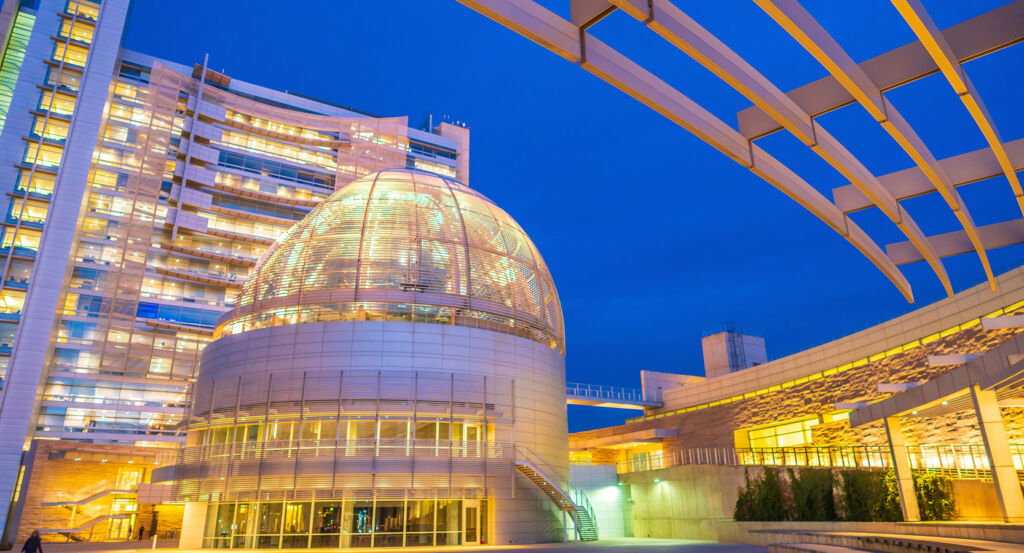
Begin at Plaza de Cesar Chavez, the central civic square where lawns, fountains, public art, seasonal events and surrounding cultural buildings create one of Downtown San Jose's most important public spaces. The plaza occupies a historic position between Market Street, the Tech district and the city's principal theaters, connecting civic gatherings with the cultural development of the central city. Its open landscape provides a counterpoint to the surrounding office towers, convention buildings and historic façades. Continue to The Tech Interactive, the major science and technology center where hands-on exhibitions, engineering programs, robotics, digital media and public learning connect San Jose with the innovation economy of Silicon Valley. The building occupies a prominent position beside Plaza de Cesar Chavez and presents technology as a civic and educational experience. Its galleries reveal how experimentation, design and engineering have shaped the region's global identity. Continue to San Jose Museum of Art, the principal downtown art institution where modern and contemporary collections, exhibitions, sculpture and public programs occupy a historic Romanesque Revival building beside the city's civic center. The museum connects California art with international modernism and creates a cultural bridge between San Jose's historic architecture and its technology-driven present. Its galleries and public spaces broaden the city's character beyond business, engineering and corporate development. Conclude at San Jose City Hall, the contemporary civic complex where glass architecture, public plazas, government offices and the distinctive rotunda establish the administrative center of the modern city. The building's transparent forms and open civic spaces contrast with the historic hotel and older downtown structures nearby, revealing the city's transition into a technology-oriented regional capital. Its location connects municipal government with the offices, cultural venues and public infrastructure that support Silicon Valley's largest urban center. The progression moves from Plaza de Cesar Chavez's civic landscape through The Tech Interactive's technological culture, continues across San Jose Museum of Art's artistic institutions and concludes at San Jose City Hall, where San Jose's government, history, art and innovation meet.
Where your story begins.
Foresyte Travel reveals places that feel extraordinary long before you arrive.
Enjoy editorial crafted for luxury travelers.
Foresyte may earn a commission when you book.