
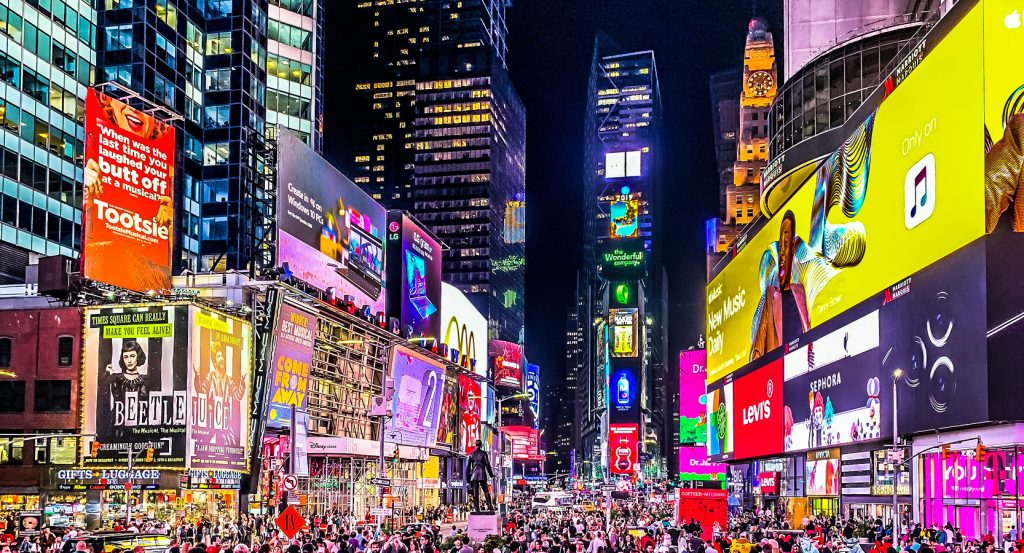
Why you should experience Times Square Ball Drop in New York, NY.
Times Square Ball Drop isn't just a countdown, it's a collective heartbeat, the moment when the world exhales and begins again.
Each New Year's Eve, more than a million people fill the square, bundled in layers and anticipation, their eyes fixed on the glowing crystal sphere poised high above One Times Square. As the final seconds tick away, the air turns electric, strangers hold hands, confetti flutters like technicolor snow, and the city's pulse syncs with the world's. The ball itself is a marvel: a 12-foot geodesic sphere adorned with nearly 2,700 Waterford crystals and illuminated by over 30,000 LEDs. Yet its magic isn't in the machinery, it's in the way it unites humanity. For one minute each year, noise becomes harmony, and even the chaos of New York stands still to welcome what's next.
What you should know about Times Square Ball Drop.
The first Times Square Ball Drop took place in 1907, replacing a fireworks display that had alarmed city officials, and the tradition has continued unbroken for over a century.
The original ball, made of iron and wood and lit by just a hundred incandescent bulbs, weighed a modest 700 pounds. Today's version, redesigned by Waterford Crystal and Philips Lighting, tips the scale at nearly six tons and represents a fusion of art and technology, precision-engineered to withstand both blizzards and broadcast glare. Each year's crystal pattern tells a story, from “Hope for Fellowship” to “Gift of Love”, a poetic theme etched into thousands of prisms. The descent itself takes exactly 60 seconds, guided by a high-tech timekeeping system synced to the U.S. Naval Observatory. What few realize is that the ball remains in place year-round, a permanent fixture glowing quietly above the city, a silent sentinel waiting for its moment to shine.
How to fold Times Square Ball Drop into your trip.
To witness the Ball Drop in person is to join the ultimate urban ritual, but it demands patience, planning, and a touch of New York grit.
Arrive before noon to secure a viewing spot; once you're in, you can't reenter if you leave. Dress for the cold and bring only what you can carry, as bags are prohibited. The best vantage points are near Broadway and 43rd Street, where you can see both the stage and the descent, though the performance radiates throughout Midtown. If crowds aren't your thing, book a room or dinner reservation at one of the nearby hotels or rooftop lounges, The Knickerbocker, Marriott Marquis, or Bar 54 offer incredible elevated views. And if you're watching from afar, tune in from wherever you are, because when that glittering sphere drops, it's not just New York turning the page, it's the whole world deciding to begin again.
Where your story begins.
Foresyte Travel reveals places that feel extraordinary long before you arrive.
Experience premium editorial crafted for luxury travelers.







































































































