
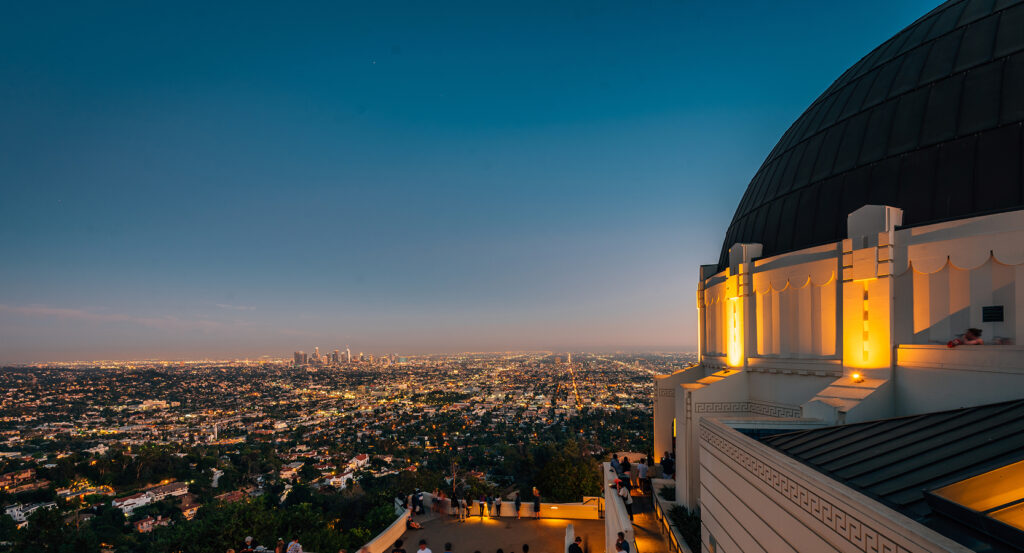
Why Van Ness Avenue matters.
Van Ness Avenue is a dynamic corridor where Mid-Wilshire's architectural heritage, cultural institutions, neighborhood continuity, and civic investment define one of Central Los Angeles' most recognizable north, south streets.
Running through Mid-Wilshire between Hollywood and Jefferson Park, the corridor connects historic residential neighborhoods, museums, educational campuses, public parks, and commercial districts that collectively reflect Los Angeles' transformation into an international center of culture, commerce, and urban development. Mature street trees, preserved early twentieth-century architecture, civic institutions, landscaped boulevards, and neighborhood businesses maintain a streetscape shaped by coordinated planning and sustained public investment. Cultural organizations, educational institutions, local businesses, preservation advocates, and neighborhood associations continue reinforcing the avenue's importance within Mid-Wilshire while supporting one of Los Angeles' most historically significant urban communities. The result is an experience defined by architectural continuity, cultural vitality, and the enduring character of Central Los Angeles.
What defines Van Ness Avenue.
Van Ness Avenue is best known for traversing Mid-Wilshire, where substantial residential and institutional development accelerated during the early twentieth century following expansion of the Pacific Electric Railway, transforming former agricultural land into one of Los Angeles' premier urban districts distinguished by apartment buildings, civic institutions, and architecturally significant residential neighborhoods. The corridor occupies land formerly associated with Rancho La Brea, the Mexican land grant confirmed in 1846, before rapid urban expansion accompanied completion of the Los Angeles Aqueduct in 1913, the engineering project directed by William Mulholland that supplied the water supporting the city's extraordinary population growth. Nearby Wilshire Boulevard Temple, completed in 1929 and designed by architects Abram M. Edelman, Allison & Allison, and muralist Hugo Ballin, remains one of Los Angeles' most significant religious and architectural landmarks through its Byzantine Revival dome, nationally recognized murals, and enduring civic influence. Van Ness Avenue also benefits from continuing investment through the Wilshire Community Plan, historic preservation initiatives administered by the City of Los Angeles Office of Historic Resources, transportation improvements, urban forestry programs, and neighborhood revitalization efforts supporting architectural conservation, mobility, and long-term community development.
Los Angeles High School, established in 1873, is the oldest public high school in Southern California and has occupied its present Mid-Wilshire campus since 1917, educating generations of civic leaders, artists, and public officials. The Ebell of Los Angeles, completed in 1927 and designed by architect Sumner P. Hunt, has served as one of California's foremost women's cultural organizations through educational programming, public lectures, concerts, and preservation of its distinguished Italian Renaissance Revival campus. Harold A. Henry Park, dedicated in honor of former Los Angeles mayor Harold A. Henry, provides neighborhood recreation, athletic facilities, mature landscaping, and community gathering space within the heart of Mid-Wilshire. The Los Angeles Conservancy continues supporting preservation of historic residences, religious buildings, schools, theaters, and civic architecture surrounding Van Ness Avenue, reinforcing the corridor's architectural and cultural significance.
How Van Ness Avenue fits.
Van Ness Avenue works as an exploration of Central Los Angeles' architectural heritage, educational history, and cultural institutions.
Begin at Wilshire Boulevard Temple, where grand Byzantine Revival architecture, internationally significant murals, and nearly a century of civic history introduce the cultural foundations that distinguish Mid-Wilshire before following Van Ness Avenue through historic residential neighborhoods. Continue to The Ebell of Los Angeles, where beautifully preserved Italian Renaissance Revival architecture, historic performance spaces, and longstanding educational traditions deepen the story of civic leadership while naturally leading toward one of Southern California's oldest educational institutions. Conclude at Los Angeles High School, where the historic campus, distinguished alumni, and enduring educational legacy provide a fitting finale celebrating the academic and civic development that helped shape modern Los Angeles. The progression moves naturally from religious architecture to cultural leadership before concluding with public education, revealing why Van Ness Avenue continues expressing the historical character of Mid-Wilshire.
Where your story begins.
Foresyte Travel reveals places that feel extraordinary long before you arrive.
Enjoy editorial crafted for luxury travelers.
Foresyte may earn a commission when you book.





































































































