Why Grand Canal Shoppes matters.
Grand Canal Shoppes is an elaborate Venetian-inspired shopping destination where the Las Vegas Strip's theatrical resort architecture meets indoor canals, Italian Renaissance imagery and one of the most ambitious experiments in entertainment-driven retail development in the United States.
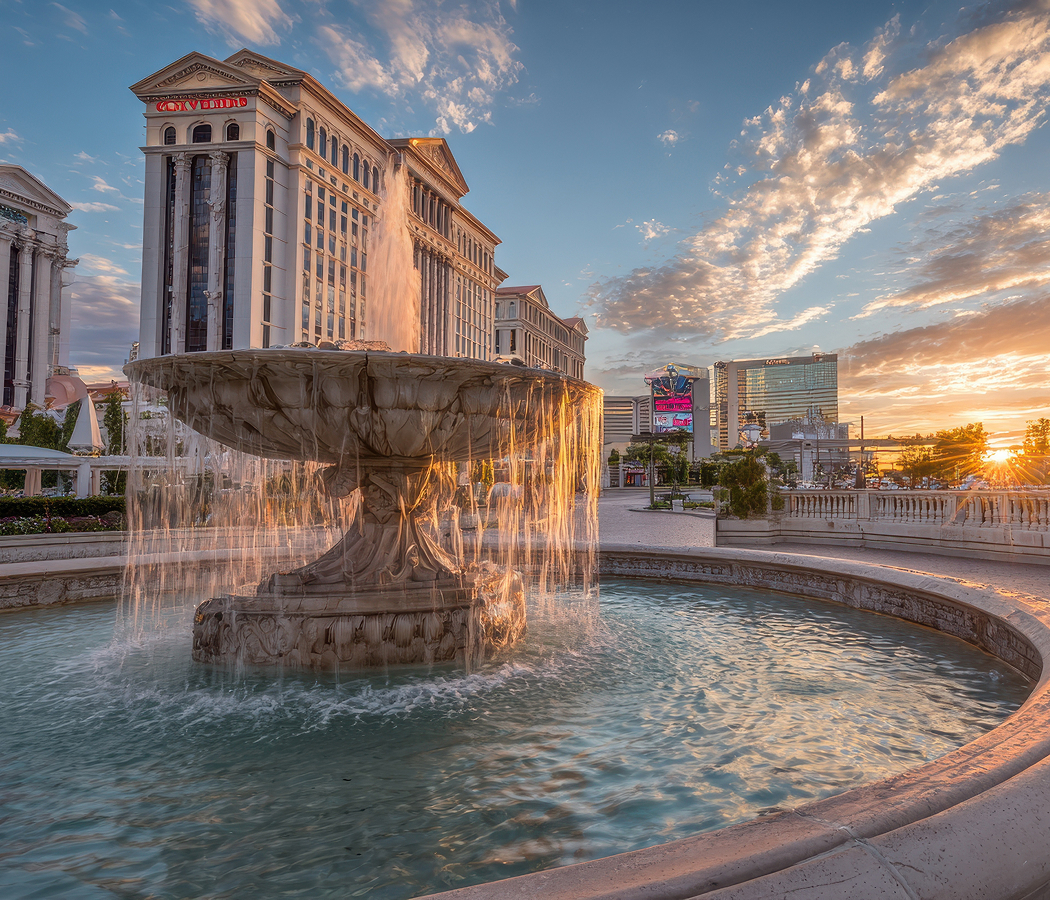
Set within The Venetian Resort near Sands Avenue and just steps from the Central Las Vegas Boulevard pedestrian corridor, the shopping complex occupies an interconnected network of elevated retail galleries extending through The Venetian and Palazzo properties. Cobblestone-style walkways, arched storefronts, decorative balconies and painted ceilings establish the appearance of an Italian city beneath a permanently illuminated sky. An artificial waterway passes beneath pedestrian bridges and alongside restaurant terraces, creating an unusual relationship between commercial storefronts and the movement of passenger gondolas. The adjoining galleries incorporate grand staircases, marble surfaces, ornamental columns and large atrium spaces that connect luxury boutiques with dining and entertainment. The result is a shopping complex whose architectural staging turns movement between stores into an extended encounter with an imagined Venetian streetscape.
What defines Grand Canal Shoppes.
Grand Canal Shoppes is best known for integrating luxury retail, artificial canals and live Venetian-style entertainment into a major Las Vegas resort development conceived by Sheldon Adelson and Las Vegas Sands. Adelson acquired the historic Sands Hotel and Casino in 1988 through an investment group that included several business partners, gaining control of a property associated with Frank Sinatra, Dean Martin and the Rat Pack. The Sands had opened in 1952 and became one of the defining entertainment destinations of the early Las Vegas Strip. Adelson subsequently developed the Sands Expo and Convention Center, recognizing the commercial importance of combining convention business with resort hospitality. The original hotel was demolished in 1996 to accommodate a much larger development inspired by Venice, Italy. Construction of The Venetian began in 1997, bringing together a luxury hotel, casino, convention facilities and an elaborate commercial environment modeled on the historic Italian city. The resort opened on May 4, 1999, establishing a new architectural presence on the Strip through reproductions of Venetian civic buildings and waterways. Grand Canal Shoppes followed on June 16, 1999, after construction and inspection delays, introducing a retail component developed at a cost of $300 million. The shopping center initially opened with sixteen operating tenants among seventy-two planned spaces, beginning a gradual expansion of its commercial program. Forest City Enterprises managed the property during its early years, bringing established shopping-center expertise into a resort development organized around tourism and entertainment. Las Vegas Sands sold the retail complex to General Growth Properties in 2004 for $766 million, creating a substantial financial transaction that helped support the development of The Palazzo. The agreement also established a structure for the future retail space associated with the adjoining resort. The Shoppes at The Palazzo opened on January 18, 2008, extending the commercial development northward through a second luxury property. Its retail galleries subsequently became part of the Grand Canal Shoppes identity, joining the two shopping environments into a larger destination. General Growth Properties entered a joint venture with TIAA-CREF in 2013, selling a fifty-percent interest in the combined retail properties for net proceeds of $410 million. Brookfield Properties acquired General Growth Properties in 2018, bringing the complex into an international commercial real estate organization. The development's history connects the transformation of the Sands property, the expansion of integrated resort retail and major transactions that established luxury shopping as a significant component of the Las Vegas hospitality economy.
Venice provides the organizing architectural inspiration for the shopping complex through an interconnected sequence of canals, bridges, piazzas and commercial passages. The interior waterway extends through the retail environment beneath a painted sky, creating the impression of outdoor movement within a climate-controlled building. Gondolas carry passengers along the artificial channel, with gondoliers performing songs associated with the traditions of Venetian boat travel. The waterway's bridges establish elevated viewpoints across the surrounding storefronts, giving pedestrians opportunities to observe boats moving through the center of the commercial galleries. St. Mark's Square recreates the spatial character of a Venetian public piazza through surrounding façades, restaurant seating and a central gathering area. Live performers bring Italian-inspired music, theatrical entertainment and costumed appearances into the setting, extending the architectural theme into the daily activities of the complex. Decorative shopfronts incorporate arched openings, balconies, columns and ornamental details derived from historical Italian architecture. The painted ceiling creates a consistent atmospheric backdrop, allowing the streetscape to retain its theatrical appearance across changing weather and daylight conditions outside the resort. Luxury boutiques occupy substantial portions of the galleries, joining international fashion houses, jewelry specialists and designer accessories with smaller specialty retailers. The shopping center also incorporates restaurants whose terraces face the simulated streets and waterways, creating a direct relationship between dining and the surrounding architectural environment. Palazzo's adjoining retail galleries extend the commercial program through a more contemporary luxury setting, adding substantial interior spaces and high-end storefronts to the original Venetian composition. The combined destination contains more than 160 stores and a substantial restaurant collection, supporting shopping, dining and entertainment within a continuous indoor environment. The complex's defining character emerges through the coordination of architecture, retail and live performance, transforming a conventional commercial circulation system into a carefully staged urban environment.
How Grand Canal Shoppes fits.
Grand Canal Shoppes works as the shopping centerpiece for a Las Vegas Strip itinerary connecting a major automotive collection, an influential exhibition of contemporary sculpture and one of the city's most ambitious theatrical fountain installations.
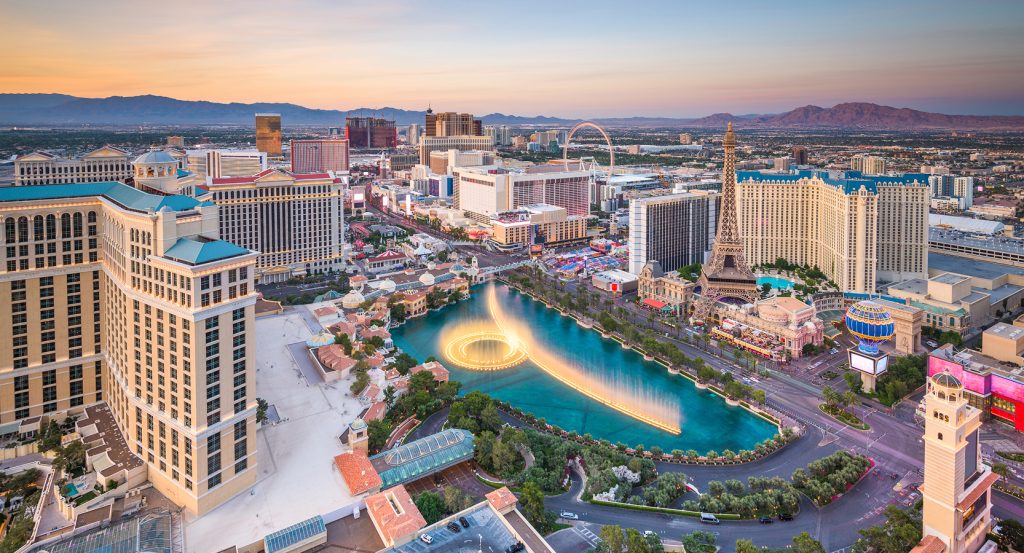
Begin at The Auto Collections, historically housed within the LINQ Hotel and associated with one of Las Vegas's most substantial displays of collectible automobiles. The collection developed through the efforts of automobile enthusiast Don Williams and the Imperial Palace resort, bringing rare and historically significant vehicles into a public exhibition and sales environment. Its holdings included classic American automobiles, European luxury vehicles, racing cars and historically important examples of automotive design. The exhibition became associated with the preservation and commercial exchange of collector automobiles, connecting the resort corridor with a specialized international market. Vehicles displayed across its history included examples from manufacturers whose engineering and design influenced the development of twentieth-century transportation. Continue to Wynn Fine Art Collection, developed through Steve Wynn's longstanding involvement with major works of painting and sculpture. Wynn became a prominent collector of European and American art, acquiring works by artists including Pablo Picasso, Vincent van Gogh and Claude Monet during the expansion of his hospitality enterprises. His collection helped establish a connection between luxury resort development and the display of internationally significant artworks. The Wynn resort incorporated major pieces of contemporary sculpture into its public spaces, extending the relationship between fine art and hospitality architecture. Jeff Koons's Tulips, a large stainless-steel sculpture from the artist's Celebration series, became one of the property's most recognizable artistic installations. Conclude at Fountains of Bellagio, the expansive water installation developed for the resort that opened in 1998. WET Design created the fountain system within an artificial lake occupying a substantial portion of the property's frontage along Las Vegas Boulevard. The installation uses more than one thousand individually controlled water devices to produce choreographed performances synchronized with music and lighting. Powerful water jets rise to heights exceeding four hundred feet, creating an immense outdoor performance against the surrounding hotel architecture. Musical selections span classical compositions, popular standards and contemporary recordings, giving individual performances distinct visual structures. The progression moves from the preservation of collectible automobiles through major works of contemporary sculpture and culminates in a large-scale water installation that transformed choreographed engineering into a defining form of Las Vegas entertainment.
Where your story begins.
Foresyte Travel reveals places that feel extraordinary long before you arrive.
Enjoy editorial crafted for luxury travelers.
Foresyte may earn a commission when you book.