Why Wall Street matters.
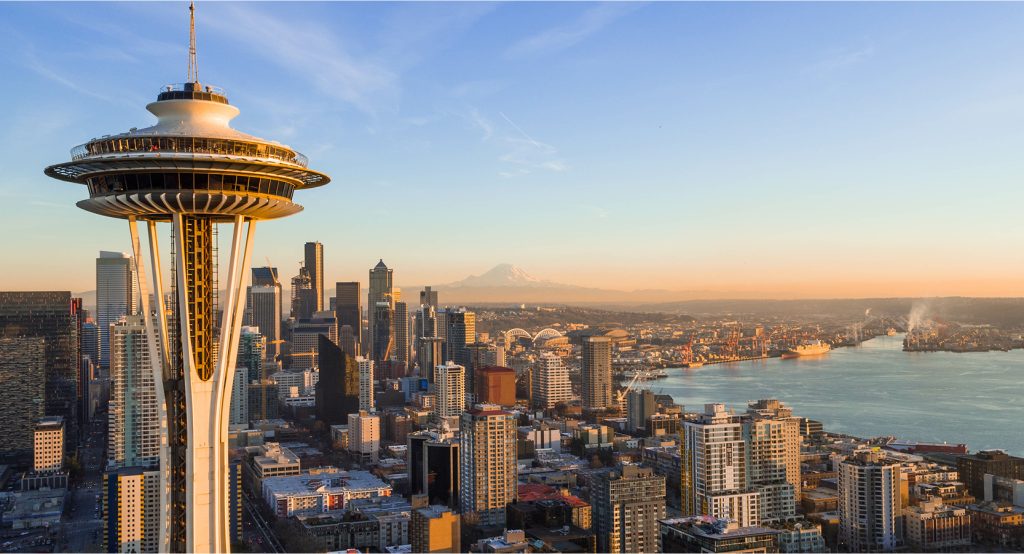
Wall Street is a harborside corridor where Belltown's maritime heritage, warehouse legacy, artistic character, and urban sophistication converge along one of Downtown's most distinctive streets.
Running through Belltown between Denny Triangle and the Seattle Waterfront, the corridor descends toward Elliott Bay, linking historic commercial blocks, converted warehouse buildings, residential towers, neighborhood businesses, and public gathering spaces that collectively reflect more than a century of continuous urban evolution. Early twentieth-century brick warehouses, masonry commercial buildings, contemporary residential architecture, ornamental terra cotta, steel detailing, London plane trees, Pacific maples, and thoughtfully landscaped streets establish a streetscape where Seattle's industrial past continues to inform its modern identity. Throughout the corridor, generations of maritime commerce, creative enterprise, neighborhood investment, and architectural preservation have cultivated an atmosphere defined by enduring authenticity. The result is an experience distinguished by waterfront character, architectural depth, and one of Belltown's most engaging urban corridors.
What defines Wall Street.
Wall Street is best known for traversing Belltown, whose modern form emerged after the Great Seattle Fire of 1889 accelerated commercial expansion northward from Pioneer Square while extensive regrading projects reshaped the neighborhood's dramatic coastal bluffs into developable city blocks. Construction surrounding the corridor intensified throughout the 1890s, 1910s, and 1920s, producing brick warehouses, wholesale produce houses, cold-storage facilities, machine shops, commercial loft buildings, and mercantile structures distinguished by heavy timber framing, riveted steel members, reinforced-concrete construction, decorative brick corbelling, multi-light industrial sash windows, and granite loading curbs. The corridor matured alongside seafood distributors, shipping agents, maritime suppliers, printing companies, furniture manufacturers, and regional wholesalers whose businesses supported Seattle's expanding Pacific trade. Glaucous-winged gulls, bald eagles, great blue herons, harbor seals, Douglas fir, western red cedar, Pacific madrone, and vine maple continue reflecting the ecological influence of nearby Elliott Bay. Together, these engineering achievements, commercial enterprises, architectural traditions, maritime industries, and ecological influences establish Wall Street as a defining expression of Belltown's historical evolution.
Architect Elmer H. Fisher helped shape post-fire Seattle through influential commercial commissions that established architectural precedents for rebuilding across the growing downtown during the late nineteenth century. The Port of Seattle, established in 1911, strengthened the city's international shipping economy by expanding maritime commerce, cargo handling, and waterfront infrastructure that sustained businesses throughout Belltown for generations. Original buildings bordering Wall Street continue displaying brick pilasters, cast-iron columns, timber post-and-beam construction, prism transom windows, ornamental terra-cotta detailing, and heavy wood loading doors that demonstrate the craftsmanship associated with Seattle's principal era of waterfront commerce. Together, these influential designers, enduring maritime institutions, and preserved construction traditions demonstrate how Wall Street evolved within one of Seattle's most historically significant waterfront districts.
How Wall Street fits.
Wall Street works as a walk through Belltown's maritime legacy, architectural heritage, and waterfront culture.
Begin at Olympic Sculpture Park, where expansive contemporary artworks, restored shoreline habitat, and sweeping Elliott Bay views introduce the relationship between Seattle's artistic character and its waterfront landscape while establishing an inspiring beginning to the outing. Continue to The Edgewater Hotel, whose overwater setting, storied history, and close connection to Elliott Bay deepen appreciation for the neighborhood's enduring relationship with the city's maritime character before naturally leading toward the final destination. Conclude at Pier 66, where ferries, working vessels, cruise activity, and expansive views across Puget Sound provide the maritime payoff by revealing the living waterfront economy that continues defining the character of Wall Street today. The progression moves naturally from public art through waterfront hospitality before concluding beside the active harbor that explains Belltown's enduring connection to Elliott Bay.
Where your story begins.
Foresyte Travel reveals places that feel extraordinary long before you arrive.
Enjoy editorial crafted for luxury travelers.
Foresyte may earn a commission when you book.