
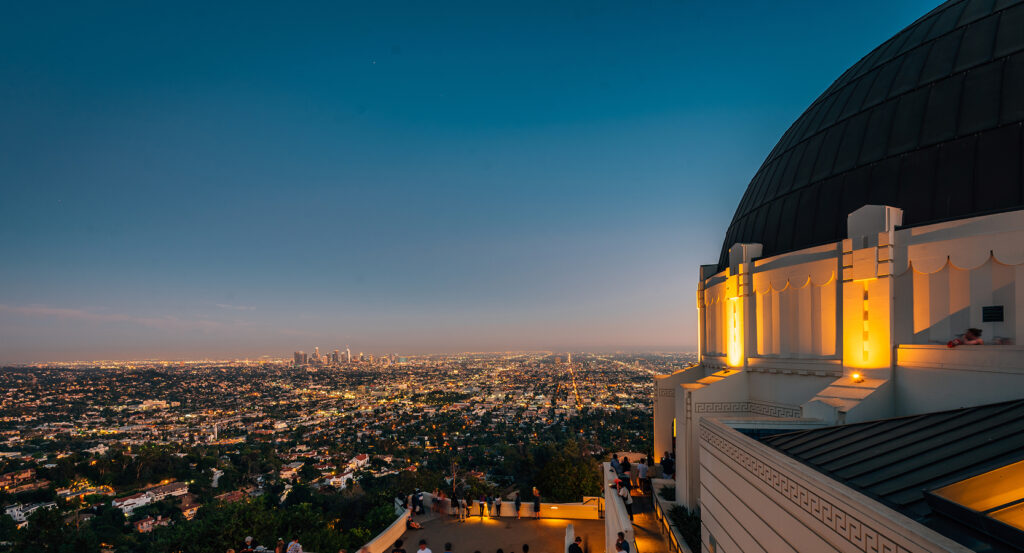
Why West Hills matters.
West Hills is a foothill enclave where the West San Fernando Valley's suburban character meets rising residential terrain, postwar tract development and a western edge shaped by the transition from the Valley floor toward rugged uplands.
Positioned between Chatsworth, Canoga Park, and Woodland Hills, the neighborhood occupies the westernmost reaches of the southern San Fernando Valley, where broad east-west avenues leave the flatter interior and approach increasingly irregular residential streets near the Los Angeles city boundary. Low-slung postwar houses define long interior blocks before larger parcels, curving roads and sharper grades alter the physical scale toward the west, giving the community a pronounced transition between suburban plain and foothill settlement. Platt Avenue supplies the primary encounter through an extended north-south corridor where residential subdivisions gather around commercial nodes without losing the low-rise scale that distinguishes much of the district. Valley Circle Boulevard creates a secondary passage through the outer residential edge, bending with the terrain as the rectilinear street pattern loosens and development becomes progressively less uniform. The result is a neighborhood whose physical form captures the outward expansion of postwar Los Angeles at the precise point where the San Fernando Valley's suburban grid begins yielding to its western topography.
What defines West Hills.
West Hills is best known for occupying territory transformed during the opening decades of the twentieth century as large agricultural holdings across the western San Fernando Valley gave way to transportation corridors, farms and new settlements created in anticipation of metropolitan expansion. A syndicate represented by Harry Chandler purchased 47,500 acres in 1909, incorporating much of the territory that later became Canoga Park, Winnetka, Woodland Hills and West Hills into the Los Angeles Suburban Home Company. General Moses Sherman helped extend the Pacific Electric across the Valley, and the railway reached the new settlement of Owensmouth in 1912. Developers chose that name to associate the community with water arriving through the Los Angeles Aqueduct, despite the town having no geographic position at an Owens River mouth. Sherman Way developed alongside the railway as the principal automobile route across this portion of the Valley, connecting the new settlement with Los Angeles during an era when surrounding ground still supported grazing, wheat fields, walnuts and fruit orchards. Completion of the Los Angeles Aqueduct in 1913 changed the development prospects of the formerly dry western Valley, and Los Angeles annexed the area in 1915. Agricultural production expanded through the following decades as improved water access supported orchards and other cultivated land across territory still substantially removed from the dense metropolitan center. The name Owensmouth disappeared in 1931 after local civic leader Mary Logan Orcutt pressed for federal acceptance of Canoga Park, completing the first major change in the geographic name inherited by the area now divided between Canoga Park and West Hills.
A homeowner campaign beginning in 1986 created the present West Hills name through one of the San Fernando Valley's most consequential late twentieth-century neighborhood boundary disputes. Residents along the western edge of Canoga Park circulated petitions seeking recognition as West Hills, and Los Angeles council members Joy Picus and Hal Bernson accepted petitions covering thousands of households in January 1987. Three areas bordering Chatsworth Reservoir joined the newly named community on January 22 after signatures were obtained from 85 percent of their 2,000 homes, expanding the initial territory only days after the first West Hills signs appeared. Requests for inclusion continued through the year as residents farther east sought the same designation, turning what began as a comparatively compact renaming effort into a dispute over the community's eventual reach. Picus polled 8,500 residents between the existing boundary and Topanga Canyon Boulevard before announcing in October that the eastern line would move to Shoup Avenue. The decision incorporated territory that early organizers had opposed adding and produced a considerably larger community than the original petition campaign envisioned. West Hills retained no independent municipal status and remained inside Los Angeles, yet the 1987 campaign permanently separated the neighborhood name from Canoga Park after decades in which both areas had shared the same community designation.
How West Hills fits.
West Hills works as the anchor for an outing connecting a petroleum geologist's preserved agricultural estate, among the San Fernando Valley's oldest surviving residences and a vast protected landscape at the Valley's western edge.
Begin at Orcutt Ranch Horticultural Center, the former estate of petroleum geologist and Union Oil executive William Warren Orcutt and his wife, Mary Logan Orcutt, who purchased the property in 1917 and called it Rancho Sombra del Roble. Architect L. G. Knipe designed the Spanish Colonial Revival and Mission Revival residence completed during the 1920s, incorporating six-inch adobe walls, Mexican glazed tile and carved Philippine mahogany and walnut; the surrounding ranch supported citrus production and cattle across a property that once extended to 210 acres. William Orcutt had already gained scientific prominence through petroleum geology and fossil discoveries at Rancho La Brea, and the couple developed their Valley retreat with orchards beneath mature native oaks. A 24-acre portion containing the residence, ranch structures, gardens, oaks and citrus plantings received Los Angeles Historic-Cultural Monument status in 1965, followed by municipal acquisition of the property in 1966. Continue to Leonis Adobe, an adobe dwelling dating to 1844 that Miguel and Espiritu Leonis transformed during the 1870s into a two-story California Monterey-style residence with a wraparound veranda and Victorian elements. Miguel Leonis had arrived in Los Angeles from the French Basque country in 1854, worked as a sheep herder and eventually accumulated more than 18,000 acres across Southern California. Espiritu Chijulla descended from the Native American grantees of Rancho El Escorpion, and after Miguel's death in an 1889 wagon accident she pursued a sixteen-year legal battle for a wife's share of his estate and prevailed. The surviving property retains the adobe residence and a 1912 barn that was moved twice during construction of U.S. Route 101, preserving a physical connection to the nineteenth-century rancho landscape immediately southwest of West Hills. Conclude at Upper Las Virgenes Canyon Open Space Preserve, more than 5,600 protected acres extending through the hills along the western edge of the San Fernando Valley. The former Ahmanson Ranch property protects valley oak grasslands, sycamore-lined canyon bottoms and habitat for the California red-legged frog, San Fernando Valley spineflower and Southwestern willow flycatcher. Its watershed carries added geographic significance: the preserve contains headwaters of Malibu Creek, whose drainage crosses the Santa Monica Mountains toward Santa Monica Bay and supports one of Southern California's remaining steelhead populations. The Victory Trailhead at the western terminus of Victory Boulevard links West Hills directly with this immense protected terrain, bringing the metropolitan street system to an abrupt encounter with undeveloped Southern California landscape. The progression moves from the Orcutts' twentieth-century agricultural estate through a nineteenth-century rancho residence and culminates across thousands of protected acres, connecting three surviving layers of the western Valley's transition from privately held land to metropolitan Los Angeles.
Where your story begins.
Foresyte Travel reveals places that feel extraordinary long before you arrive.
Enjoy editorial crafted for luxury travelers.
Foresyte may earn a commission when you book.





































































































