Why you should experience Westlake Avenue in Seattle, Washington.
Westlake Avenue is a maritime corridor where South Lake Union's innovation economy, waterfront heritage, engineering legacy, and urban ambition converge along one of Seattle's defining thoroughfares.
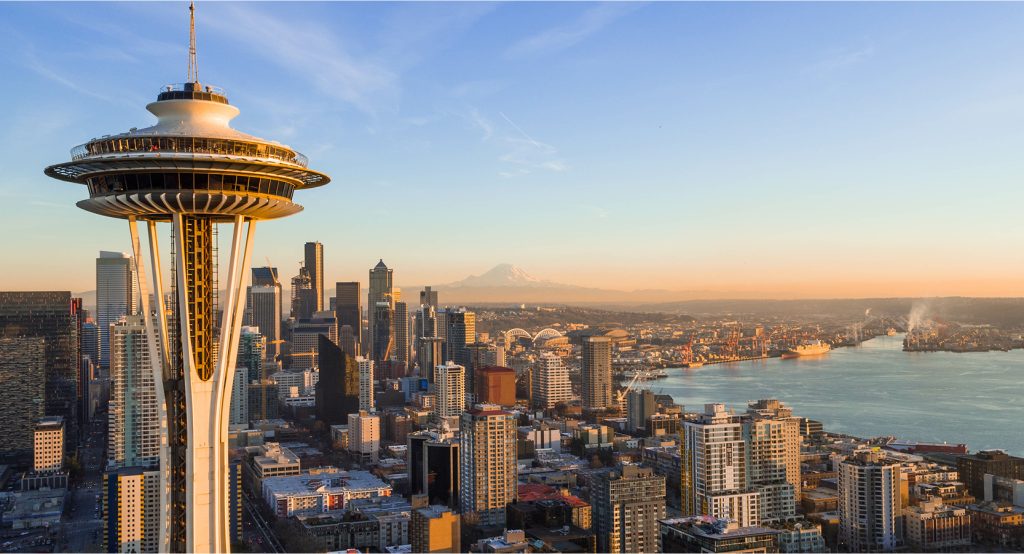
Running through South Lake Union between Belltown and Eastlake, the corridor traces the eastern shoreline of Lake Union, linking research campuses, historic industrial sites, waterfront marinas, modern commercial buildings, and public gathering spaces that collectively demonstrate more than a century of Seattle's transformation. Early twentieth-century warehouses, brick commercial buildings, contemporary glass towers, timber docks, steel bridge infrastructure, floating marinas, and shoreline landscaping establish a streetscape where Seattle's working waterfront continues to shape its modern identity. Throughout the corridor, generations of shipbuilding, scientific research, entrepreneurship, and technological innovation have cultivated an atmosphere defined by continual progress without losing sight of its maritime roots. The result is an experience distinguished by waterfront character, architectural evolution, and one of Seattle's most influential urban corridors.
What you should know about Westlake Avenue.
Westlake Avenue is best known for following the eastern edge of Lake Union, whose modern character emerged after completion of the Lake Washington Ship Canal in 1917, permanently connecting freshwater lakes with Puget Sound and accelerating Seattle's maritime economy. Development surrounding the corridor expanded throughout the 1910s, 1920s, and 1930s, producing shipyards, marine supply businesses, warehouses, machine shops, commercial buildings, and industrial facilities distinguished by heavy timber framing, riveted steel construction, reinforced concrete, brick masonry, overhead traveling cranes, and working dock structures designed for waterfront industry. The corridor matured alongside commercial shipbuilding, fishing fleets, tugboat operators, seaplane services, marine engineering firms, and boat manufacturers that established South Lake Union as one of the Pacific Northwest's foremost centers of maritime enterprise. Great blue herons, double-crested cormorants, bald eagles, harbor seals, Chinook salmon, Pacific madrone, Douglas fir, and western red cedar continue reinforcing the ecological character of the shoreline. Together, these engineering achievements, maritime industries, construction methods, commercial enterprises, and ecological influences establish Westlake Avenue as a defining expression of Seattle's waterfront evolution.
Naval architect L. E. Ted” Geary helped shape Seattle's international reputation for yacht design during the early twentieth century through innovative vessel commissions produced for regional shipyards operating around Lake Union. The Lake Union Drydock Company, founded in 1919, became one of Seattle's leading maritime employers by constructing and repairing commercial vessels, ferries, fishing boats, and military craft that supported the region's expanding marine economy. Historic buildings bordering Westlake Avenue continue displaying heavy timber trusses, brick pilasters, steel industrial sash windows, timber wharf construction, reinforced-concrete structural frames, and corrugated metal cladding that demonstrate the durable craftsmanship associated with Seattle's working waterfront. Together, these influential designers, enduring maritime enterprises, and preserved construction traditions demonstrate how Westlake Avenue evolved within one of Seattle's most historically significant marine districts.
How to fold Westlake Avenue into your trip.
Westlake Avenue works as a waterfront journey through Seattle's maritime heritage, scientific innovation, and lakeside culture.
Begin at Lake Union Park, where restored vessels, shoreline promenades, floating exhibits, and expansive lake views introduce the maritime story that has long defined South Lake Union while establishing an engaging beginning to the experience. Continue to The Center for Wooden Boats, whose meticulously preserved watercraft, live boatbuilding demonstrations, and hands-on maritime interpretation deepen appreciation for Seattle's enduring relationship with Lake Union before naturally leading toward the outing's concluding destination. Conclude at Gas Works Park, where preserved industrial structures, sweeping skyline panoramas, and commanding views across Lake Union provide the historical payoff by revealing how Seattle transformed former industrial landscapes into one of its most celebrated public waterfronts. The progression moves naturally from maritime history through traditional craftsmanship before concluding with a broader perspective on the industrial landscape that shaped Westlake Avenue's enduring identity.
Where your story begins.
Foresyte Travel reveals places that feel extraordinary long before you arrive.
Experience premium editorial crafted for luxury travelers.