
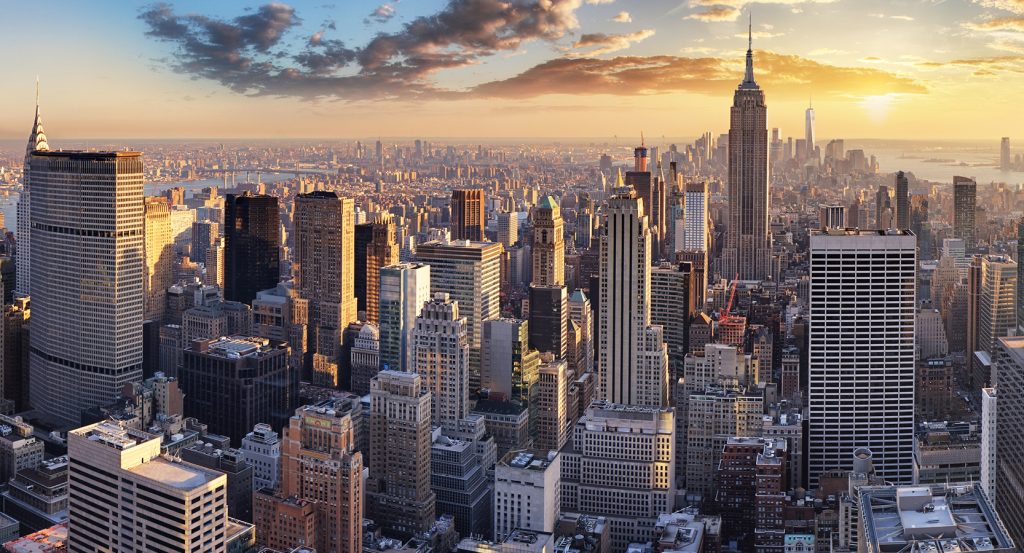
Why 110th Street matters.
110th Street is a storied corridor where Harlem's cultural legacy, Upper Manhattan's civic grandeur, the edge of Central Park, and generations of New York history converge into one of the city's most iconic cross-town streets.
Running through Harlem between Morningside Heights and East Harlem, the corridor forms a remarkable east-west spine connecting residential neighborhoods, expansive public landscapes, celebrated cultural institutions, and architecturally significant streetscapes that together chronicle Manhattan's evolution across more than two centuries. Its buildings, transit infrastructure, civic landmarks, and historic blocks preserve successive eras of nineteenth- and twentieth-century development while continually adapting to the changing life of the city. Walking along 110th Street reveals a corridor where urban planning, neighborhood identity, and architectural heritage remain inseparable. The result is a corridor that continues expressing one of Manhattan's richest and most enduring urban narratives.
What you should know 110th Street.
110th Street is best known for occupying one of the principal east-west corridors established by the Commissioners' Plan of 1811, with its western and eastern approaches developing rapidly following completion of the Ninth Avenue Elevated Railroad in 1879, the opening of the Interborough Rapid Transit subway in 1904, and subsequent expansion of Upper Manhattan's rapid-transit network. Between 1880 and 1935, speculative builders transformed much of the corridor with brownstone rowhouses, limestone apartment buildings, mixed-use commercial structures, and civic architecture representing Romanesque Revival, Renaissance Revival, Beaux-Arts, Classical Revival, and Art Deco design. Today the corridor is supported by the Cathedral Parkway-110th Street, Central Park North-110th Street, and 110th Street subway stations, whose continuing connectivity reinforces its role as one of Upper Manhattan's principal transportation corridors. Extensive façade restoration, adaptive reuse, and historic preservation have preserved 110th Street as an architectural record of Manhattan's greatest era of urban expansion.
Adoption of the Harlem Community Plan by the New York City Planning Commission established long-term planning objectives that continue guiding investment, land use, and neighborhood development throughout the surrounding district. The Mount Morris Park Historic District, designated by the New York City Landmarks Preservation Commission in 1971, became one of Harlem's earliest protected historic districts, preserving an exceptional collection of late nineteenth-century rowhouse architecture representative of the same residential boom that shaped 110th Street. Construction of the Harlem River Drive during the mid-twentieth century fundamentally altered circulation patterns across Upper Manhattan while improving regional access along Manhattan's eastern shoreline. Together, these preservation efforts, planning initiatives, and transportation projects demonstrate how successive generations have continually reshaped 110th Street while protecting its historic urban fabric.
How 110th Street fits.
110th Street is best experienced through an afternoon exploring some of Manhattan's defining cultural and landscape destinations.
Begin at Central Park, where Frederick Law Olmsted and Calvert Vaux's celebrated landscape design introduces one of the world's most influential urban parks. Continue to Cathedral Church of St. John the Divine, whose expansive Gothic Revival architecture ranks among the largest cathedral interiors ever constructed. Conclude at Museum of the City of New York, whose exhibitions interpret more than four centuries of New York City's social, political, architectural, and cultural history. The progression moves naturally from world-renowned landscape architecture to expansive sacred architecture before concluding with one of the city's premier historical museums, revealing the extraordinary breadth of experiences connected by 110th Street.
Where your story begins.
Foresyte Travel reveals places that feel extraordinary long before you arrive.
Enjoy editorial crafted for luxury travelers.
Foresyte may earn a commission when you book.







































































































