Why 2nd Avenue matters.
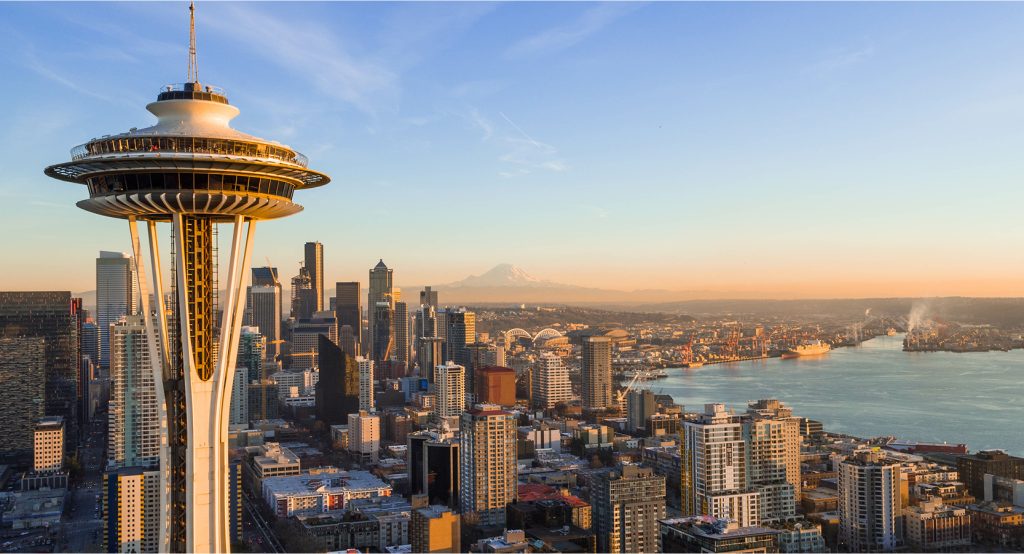
2nd Avenue is a distinguished corridor where Downtown's commercial heritage, architectural ambition, cultural institutions, and waterfront connections create one of the city's defining urban streets.
Running through Downtown between Belltown and Pioneer Square, the corridor links historic commercial blocks, office towers, theaters, civic institutions, and waterfront gateways that collectively reflect more than a century of metropolitan growth. Beaux-Arts buildings, Art Deco towers, terra-cotta façades, granite-clad storefronts, reinforced-concrete high-rises, steel-frame skyscrapers, and broad sidewalks establish a streetscape where architectural evolution and commercial enterprise remain closely intertwined. Throughout the corridor, generations of architects, engineers, financiers, merchants, publishers, and entrepreneurs have cultivated an atmosphere defined by innovation, craftsmanship, and enduring economic importance. The result is an experience distinguished by architectural depth, commercial continuity, and one of Downtown's defining corridors.
What you should know 2nd Avenue.
2nd Avenue is best known for forming one of Downtown's principal north-south streets, where rebuilding accelerated after the Great Seattle Fire of 1889, replacing combustible wooden structures with fire-resistant masonry construction that permanently reshaped the city's commercial core. Development expanded throughout the 1890s, 1900s, 1910s, and 1920s, producing banks, office buildings, hotels, department stores, newspaper headquarters, and financial institutions constructed with structural steel, reinforced concrete, brick masonry, granite, glazed terra cotta, ornamental cast iron, and finely detailed stone façades. The corridor matured alongside architects, financiers, publishers, attorneys, engineers, merchants, and shipping executives whose investment established Downtown as the Pacific Northwest's foremost center of commerce and finance. London plane trees, Douglas firs, peregrine falcons, glaucous-winged gulls, crows, ornamental landscape plantings, and native urban vegetation continue contributing to the ecological character surrounding the avenue. Together, these rebuilding milestones, architectural traditions, construction methods, occupational histories, material craftsmanship, and urban ecosystems establish 2nd Avenue as one of Seattle's most historically significant commercial corridors.
Architect Daniel Riggs Huntington contributed substantially to Seattle's early twentieth-century skyline through commercial commissions emphasizing Classical Revival proportions, durable masonry construction, refined ornamentation, and carefully composed urban façades. His work reflected a broader period of commercial expansion that favored granite bases, terra-cotta cladding, decorative cornices, steel-frame construction, and richly articulated entrance portals throughout Downtown. Preserved brick masonry, glazed terra-cotta detailing, ornamental metalwork, carved stone ornamentation, structural steel framing, and historic storefront proportions continue illustrating the construction traditions that define many of 2nd Avenue's earliest surviving buildings. Together, Huntington's architectural influence, Downtown's commercial evolution, and the corridor's remarkably cohesive historic fabric explain why 2nd Avenue remains one of the city's finest historic business streets.
How 2nd Avenue fits.
2nd Avenue works as an exploration of Downtown's architectural heritage, cultural institutions, and waterfront setting.
Begin at Seattle Art Museum, where internationally recognized collections and a prominent urban presence introduce the cultural dimension that has become integral to Downtown. Continue to Pike Place Market, whose century-old merchants, public arcades, and enduring market traditions deepen appreciation for the city's commercial heritage before naturally guiding the experience toward its concluding destination. Conclude at Waterfront Park, where expansive Elliott Bay views, ferry traffic, and active public spaces provide the historical payoff by revealing the maritime geography that continues shaping the character of 2nd Avenue. The progression moves naturally from artistic expression through commercial tradition before concluding beside the shoreline that has influenced Seattle's growth for generations.
Where your story begins.
Foresyte Travel reveals places that feel extraordinary long before you arrive.
Enjoy editorial crafted for luxury travelers.
Foresyte may earn a commission when you book.