Why 4th Street matters.
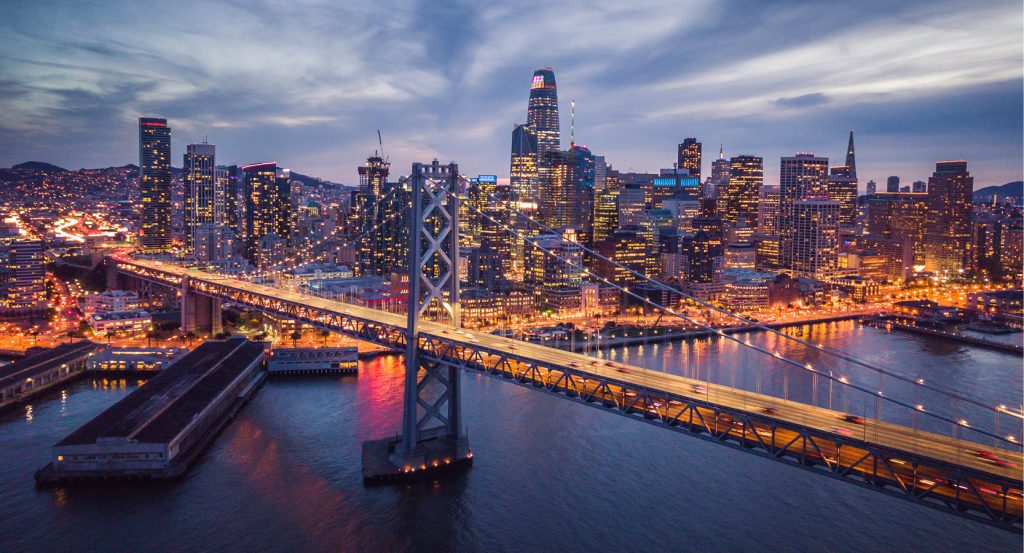
4th Street is a transformative SoMa corridor where transportation infrastructure, technological innovation, and architectural ambition converge along one of San Francisco's most influential streets.
Running through SoMa between Market Street and Mission Bay, this major corridor connects landmark museums, world class sporting venues, pioneering research campuses, contemporary office towers, acclaimed restaurants, neighborhood cafés, and energetic public spaces that have reshaped San Francisco's southeastern waterfront. Historic industrial buildings, award winning modern architecture, landscaped streetscapes, and active pedestrian environments create a setting where the city's manufacturing heritage continues complementing one of the world's leading centers of innovation. Extending from downtown to Mission Bay, 4th Street remains one of San Francisco's defining metropolitan corridors. The result is a street defined by innovation, architectural excellence, and enduring civic significance.
What you should know 4th Street.
4th Street is best known for becoming the backbone of the Mission Bay Redevelopment Project, among the largest urban redevelopment initiatives in the United States, transforming more than 300 acres of former Southern Pacific rail yards and industrial land into a mixed use district anchored by the University of California, San Francisco Mission Bay campus, which opened in 2003, and creating more than 6 million square feet of research facilities, millions of square feet of commercial development, thousands of new homes, expansive parks, and one of the world's foremost life sciences and biotechnology clusters.
The redevelopment fundamentally reshaped San Francisco's southeastern waterfront through coordinated investments in scientific research, higher education, healthcare, housing, transportation, and public open space. The district attracted globally recognized biotechnology companies, research institutions, and medical organizations while establishing an internationally studied model for innovation driven urban regeneration. 4th Street continues expressing that extraordinary transformation through a corridor that connects scientific discovery, economic development, and contemporary city building on a remarkable scale.
How 4th Street fits.
4th Street works as an exploration of SoMa's cultural landmarks, innovation districts, and waterfront attractions.
Begin at the San Francisco Museum of Modern Art, where internationally acclaimed collections immediately establish the corridor's extraordinary cultural significance before exploring 4th Street. Continue toward Oracle Park, whose striking waterfront setting reinforces the district's remarkable architectural and civic transformation. Conclude at the UCSF Mission Bay Campus, where striking contemporary architecture and globally recognized biomedical research provide a memorable finale to an itinerary shaped by innovation, design, and urban development. Along the route, contemporary office towers, restored industrial buildings, neighborhood cafés, public art, landscaped plazas, and welcoming streetscapes demonstrate how 4th Street connects Downtown with one of the world's leading centers of scientific innovation. The progression moves naturally from world class art museum to iconic waterfront ballpark to internationally renowned research campus, revealing why 4th Street remains one of San Francisco's defining metropolitan corridors.
Where your story begins.
Foresyte Travel reveals places that feel extraordinary long before you arrive.
Enjoy editorial crafted for luxury travelers.
Foresyte may earn a commission when you book.