Why 5th Avenue matters.
5th Avenue is a distinguished corridor where Downtown's civic ambition, architectural achievement, commercial influence, and cultural legacy define one of the Pacific Northwest's most celebrated urban streets.
Running through Downtown between Belltown and the International District, the corridor connects nationally significant skyscrapers, historic commercial blocks, performing arts venues, civic institutions, and enduring business addresses that collectively demonstrate Seattle's evolution from a frontier port into a global city. Richardsonian Romanesque masonry, Art Deco towers, Beaux-Arts façades, Modernist high-rises, contemporary glass architecture, granite plazas, London plane trees, and carefully restored streetscapes establish an environment where successive eras of architectural excellence remain seamlessly connected. Throughout the corridor, generations of architects, financiers, merchants, artists, and civic leaders have cultivated an atmosphere defined by confidence, refinement, and enduring metropolitan significance. The result is an experience distinguished by architectural excellence, cultural depth, and one of Downtown's defining corridors.
What you should know 5th Avenue.
5th Avenue is best known for extending through Downtown, where reconstruction following the Great Seattle Fire of 1889 established a modern commercial district built with fire-resistant masonry, structural steel, and ambitious architectural design that reshaped the city's economic future. Construction accelerated between the 1890s and the mid-twentieth century, producing Romanesque Revival office buildings, Beaux-Arts banks, Art Deco towers, department stores, hotels, and corporate headquarters distinguished by brick masonry, Tenino sandstone, terra-cotta cladding, riveted steel framing, polished granite, and ornamental metalwork. The corridor matured alongside financial institutions, department stores, publishing companies, engineering firms, insurance corporations, and regional headquarters whose continued investment reinforced Downtown's position as the commercial center of the Pacific Northwest. Peregrine falcons, glaucous-winged gulls, American crows, London plane trees, ornamental maples, vine maples, and native landscape plantings contribute to the established urban ecology woven throughout the downtown streetscape. Together, these reconstruction milestones, commercial enterprises, architectural traditions, construction methods, and ecological systems establish 5th Avenue as one of Seattle's most influential historic corridors.
Architect John Graham Sr. helped redefine the corridor's architectural character through landmark commercial commissions that introduced ambitious vertical construction while reinforcing Downtown's emergence as the region's financial and retail center during the early twentieth century. His influence continued through John Graham Jr., whose innovative structural and commercial designs expanded Seattle's reputation for forward-looking architecture while extending the family's lasting imprint on buildings surrounding 5th Avenue across successive decades. Original terra-cotta ornamentation, bronze storefront assemblies, granite bases, decorative spandrel panels, riveted steel framing, and finely detailed masonry continue illustrating how those architectural innovations remain embedded within the corridor's built fabric. Together, the Graham family's architectural legacy, successive generations of commercial design, and the corridor's remarkably preserved construction traditions explain why 5th Avenue remains one of Seattle's premier architectural streets.
How 5th Avenue fits.
5th Avenue works as an exploration of Downtown's architectural heritage, performing arts, and skyline.
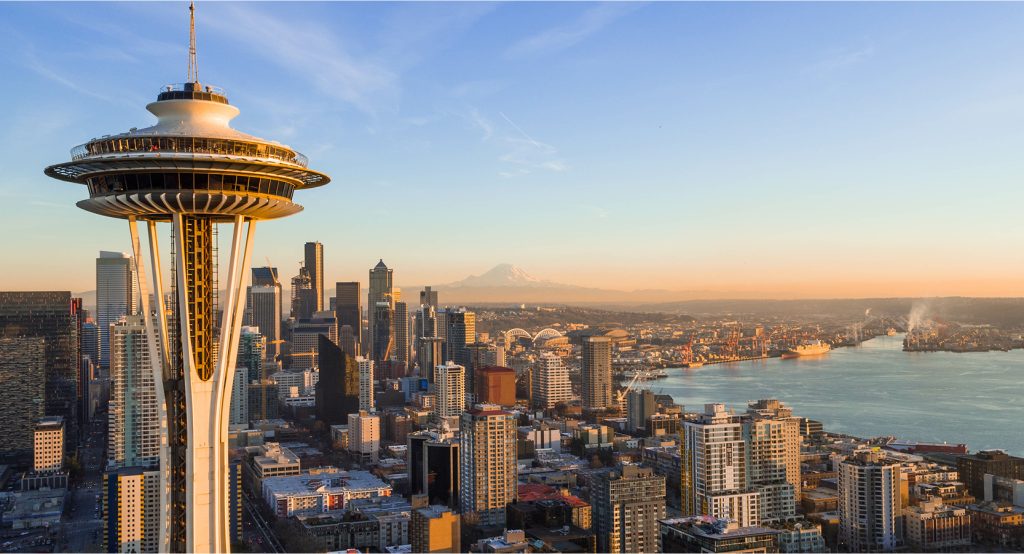
Begin at Seattle Public Library Central Library, where internationally acclaimed contemporary architecture and expansive public spaces establish an inspiring introduction to Seattle's design culture while providing essential context for the corridor ahead. Continue to The 5th Avenue Theatre, whose richly restored Chinese-inspired interiors and celebrated productions deepen appreciation for the city's performing arts tradition before naturally guiding the experience toward its concluding destination. Conclude at Sky View Observatory, where sweeping views across Elliott Bay, Mount Rainier, Lake Washington, and the downtown skyline provide the reflective payoff by revealing the metropolitan landscape that has grown 5th Avenue for well over a century. The progression moves naturally from architectural innovation through theatrical heritage before concluding with the panoramic perspective that best expresses the enduring significance of 5th Avenue.
Where your story begins.
Foresyte Travel reveals places that feel extraordinary long before you arrive.
Enjoy editorial crafted for luxury travelers.
Foresyte may earn a commission when you book.