Why 6th Avenue matters.
6th Avenue is a commanding corridor where Downtown's commercial ambition, architectural evolution, civic influence, and cultural energy converge to create one of the city's defining urban streets.
Running through Downtown between Belltown and the International District, the corridor connects prominent office towers, historic commercial buildings, performing arts venues, hotels, and established business addresses that collectively reflect more than a century of continuous metropolitan growth. Early masonry buildings, Art Deco towers, Modernist high-rises, contemporary glass façades, granite plazas, London plane trees, ornamental maples, and carefully integrated streetscape plantings establish an environment where Seattle's architectural evolution unfolds block by block. Throughout the corridor, generations of merchants, financiers, architects, performers, and entrepreneurs have cultivated an atmosphere defined by confidence, innovation, and enduring civic importance. The result is an experience distinguished by architectural diversity, commercial significance, and one of Downtown's most influential corridors.
What you should know 6th Avenue.
6th Avenue is best known for extending through Downtown, whose rapid expansion following the Great Seattle Fire of 1889 reshaped the city's commercial core with fire-resistant construction and modern urban planning that established Seattle as the leading business center of the Pacific Northwest. Construction accelerated between the 1890s and the mid-twentieth century, producing Romanesque Revival commercial blocks, Art Deco office towers, Modernist headquarters, financial institutions, hotels, and retail buildings distinguished by brick masonry, structural steel, reinforced concrete, terra-cotta cladding, polished granite, and expansive curtain-wall glazing. The corridor developed alongside banks, insurance companies, department stores, publishing firms, engineering consultancies, and corporate headquarters whose continued presence reinforced Downtown's role as the region's principal economic center. Peregrine falcons, glaucous-winged gulls, American crows, London plane trees, vine maples, ornamental elms, and native landscape plantings contribute to the urban ecology woven throughout the downtown streetscape. Together, these reconstruction milestones, commercial enterprises, architectural traditions, construction methods, and ecological features establish 6th Avenue as one of Seattle's defining downtown corridors.
Architect Minoru Yamasaki introduced an elegant modern design language to Seattle through the Rainier Tower, completed in 1977, whose distinctive flared concrete pedestal became one of the city's most recognizable feats of structural engineering and influenced the architectural character surrounding 6th Avenue. That period of vertical growth was further strengthened by firms including NBBJ, whose commercial and corporate commissions expanded Downtown's reputation for innovative office architecture while reinforcing the corridor's concentration of business activity. Buildings lining 6th Avenue continue displaying exposed structural steel, high-performance curtain walls, granite-clad podiums, aluminum sun-control systems, precision-fabricated metal panels, and carefully restored masonry façades that visibly record successive generations of architectural innovation. Together, these architectural achievements, engineering advancements, and enduring construction traditions explain how 6th Avenue evolved into one of Seattle's foremost business corridors.
How 6th Avenue fits.
6th Avenue works as an exploration of Downtown's architectural ambition, performing arts, and skyline.
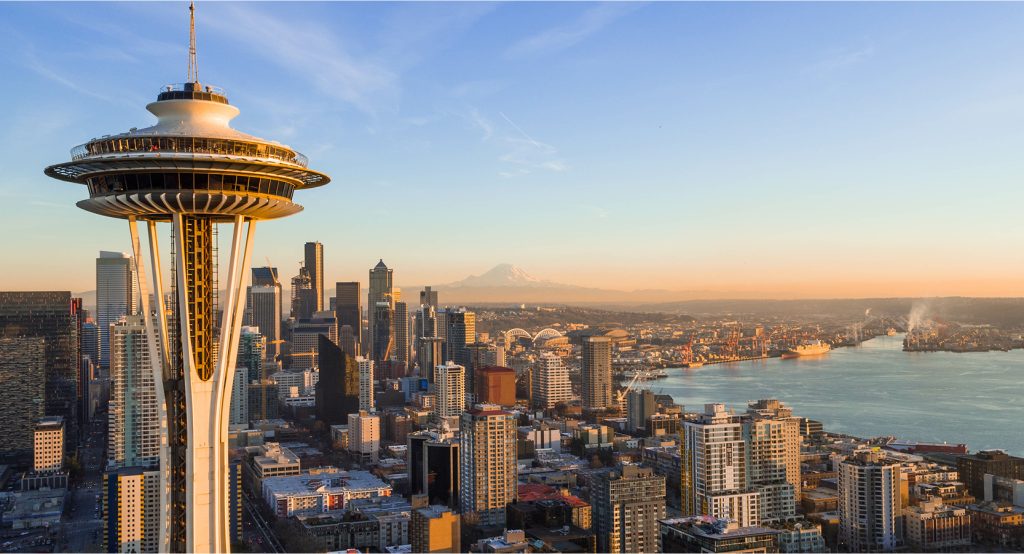
Begin at Benaroya Hall, where acclaimed acoustics, elegant contemporary architecture, and the Seattle Symphony introduce the city's commitment to artistic excellence while establishing a refined opening to the experience. Continue to Seattle Art Museum, whose internationally significant collections and thoughtfully curated exhibitions broaden appreciation for Seattle's cultural character before naturally leading toward the outing's concluding destination. Conclude at Sky View Observatory, where sweeping views across Elliott Bay, Mount Rainier, Lake Washington, and the surrounding skyline provide the reflective payoff by revealing the metropolitan landscape that 6th Avenue has helped shape for generations. The progression moves naturally from musical performance through visual arts before concluding with the panoramic perspective that best expresses the enduring significance of 6th Avenue.
Where your story begins.
Foresyte Travel reveals places that feel extraordinary long before you arrive.
Enjoy editorial crafted for luxury travelers.
Foresyte may earn a commission when you book.