
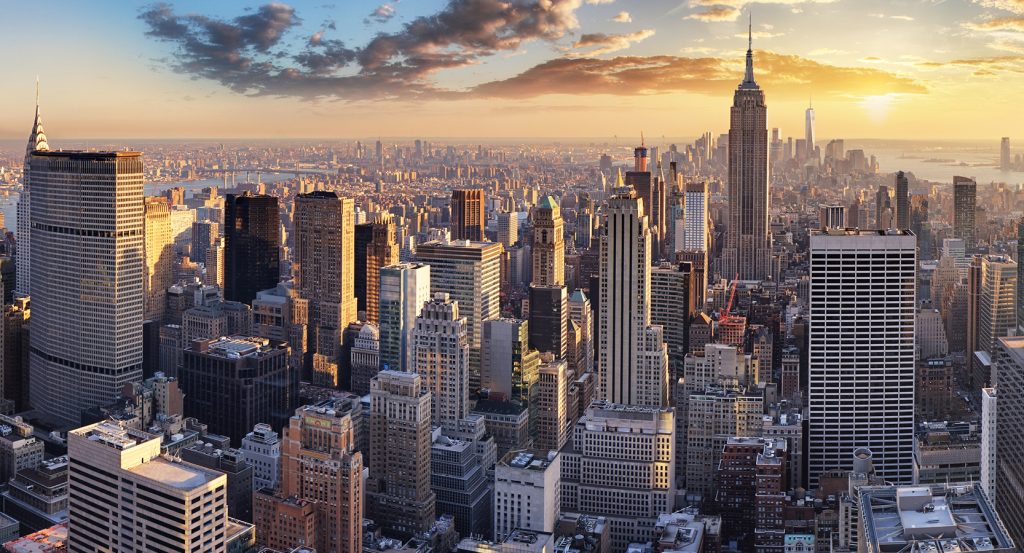
Why you should experience 70 Pine Street in New York, NY.
70 Pine Street is a grand Art Deco skyscraper where the Financial District's corporate ambition, architectural innovation, and pursuit of vertical achievement produced one of the greatest towers of New York's golden age of skyscraper construction.
Set along Pine Street near Pearl Street and just steps from 60 Wall Street, this soaring landmark anchors one of Lower Manhattan's most historically significant commercial corridors, where finance, insurance, and global commerce transformed New York into the economic capital of the modern world. Dramatic setbacks, limestone facades, Art Deco ornamentation, grand lobbies, soaring interiors, sculptural detailing, and commanding skyline views create an atmosphere defined by elegance and ambition. Completed in 1932 as the headquarters of Cities Service Company, the tower emerged during the height of New York's race to build ever-taller skyscrapers and remains one of the finest expressions of the era's architectural vision. The result is a destination defined by innovation, prestige, and architectural excellence.
What you should know about 70 Pine Street.
70 Pine Street is best known for being completed in 1932 as one of the tallest buildings in the world and one of the greatest masterpieces of American Art Deco architecture.
Designed by Clinton & Russell, Holton & George, the tower rose during a transformative period when Lower Manhattan's skyline became a global symbol of economic power and engineering achievement. Originally known as the Cities Service Building, it showcased the confidence and ambition of one of America's leading energy companies while introducing innovative design solutions that maximized height and visual impact. Its elegant massing, rich ornamentation, and dramatic crown helped establish the building as one of New York City's defining skyscrapers. Few towers better capture the grandeur and optimism of the Art Deco era.
How to fold 70 Pine Street into your trip.
70 Pine Street works as an exploration of the architectural icons, financial landmarks, and historic skyscrapers that define Lower Manhattan's skyline.
Begin at Wall Street, where the neighborhood's defining relationship with finance, commerce, and global influence immediately comes into focus. Continue toward 70 Pine Street, whose soaring form and architectural distinction reveal the forces that transformed Lower Manhattan into one of the world's most celebrated urban landscapes. From there, make your way to 40 Wall Street, where engineering ambition, corporate power, and skyscraper rivalry provide a broader perspective on the remarkable era that reshaped New York's skyline. Along the route, you'll encounter Art Deco masterpieces, financial institutions, historic office towers, architectural treasures, celebrated streetscapes, commercial landmarks, and iconic city destinations that showcase the district's remarkable depth. The progression moves naturally from financial epicenter to Art Deco masterpiece to skyscraper icon, revealing how ambition, innovation, and architectural excellence became woven into the character of the Financial District. 70 Pine Street remains one of New York City's most celebrated skyscrapers, preserving a remarkable balance between architectural beauty, historical significance, and urban grandeur.
Where your story begins.
Foresyte Travel reveals places that feel extraordinary long before you arrive.
Experience premium editorial crafted for luxury travelers.







































































































