
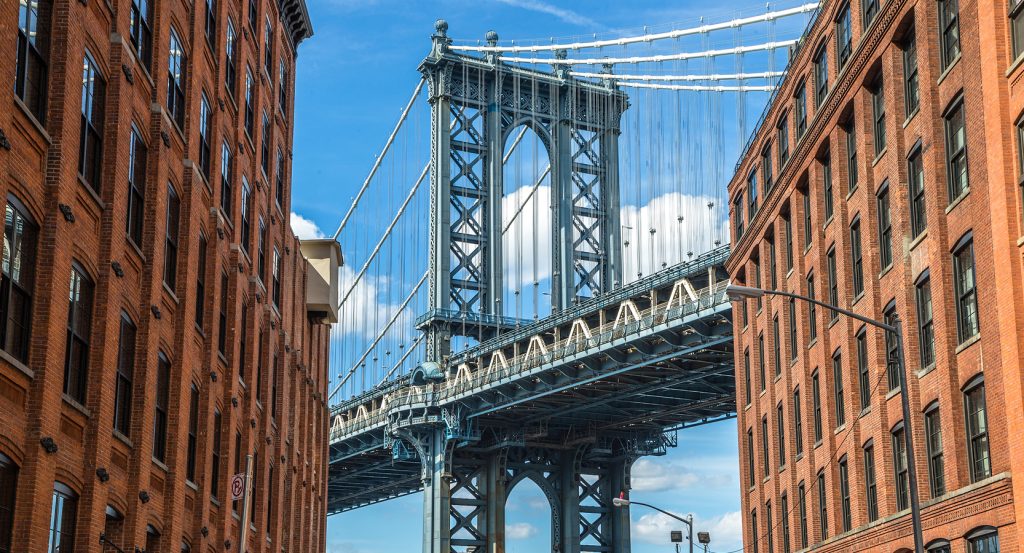
Why you should experience Green Street in New York, NY.
Green Street is a historic Greenpoint corridor where industrial innovation, maritime heritage, and neighborhood charm converge along one of North Brooklyn's most enduring streets.
Running through the heart of Greenpoint between Manhattan Avenue and the East River, this welcoming corridor connects historic factory buildings, neighborhood businesses, landmark churches, converted warehouses, residential blocks, and scenic waterfront spaces that collectively reflect Brooklyn's remarkable industrial evolution. Brick manufacturing buildings, classic rowhouses, adaptive reuse lofts, locally owned cafés, and architecturally significant commercial structures create a streetscape where generations of craftsmanship and entrepreneurship continue to shape the neighborhood's identity. Green Street developed alongside Greenpoint's shipyards, glassworks, porcelain factories, and rope-making industries, attracting immigrant communities whose influence remains deeply embedded throughout the neighborhood today. The result is a corridor defined by industrial legacy, cultural continuity, and neighborhood authenticity.
What you should know about Green Street.
Green Street is best known for being home to the Astral Apartments, completed in 1886 as one of New York City's earliest model tenement buildings for working-class families.
Commissioned by Charles Pratt to improve living conditions for employees of his nearby Astral Oil Works, the building introduced uncommon innovations for nineteenth-century worker housing, including abundant natural light, indoor plumbing, fire-resistant construction, landscaped courtyards, and generous ventilation. Its thoughtful design demonstrated that affordable housing could be both dignified and architecturally ambitious, influencing later model tenement developments throughout New York City. Today, the Astral Apartments remain one of Brooklyn's most significant examples of philanthropic housing and an enduring symbol of Greenpoint's industrial and social history.
How to fold Green Street into your trip.
Green Street works as an exploration of Greenpoint's industrial heritage, waterfront character, and neighborhood culture.
Begin at the Astral Apartments, where one of Brooklyn's pioneering model housing developments immediately establishes the street's defining historical legacy. Continue toward WNYC Transmitter Park, whose restored waterfront and sweeping Manhattan skyline views reveal Greenpoint's enduring relationship with the East River. From there, make your way to McGolrick Park, where beautifully landscaped grounds and historic monuments provide broader perspective on the neighborhood's civic and architectural heritage. Along the route, you'll encounter historic rowhouses, neighborhood cafés, architecturally significant industrial buildings, independent boutiques, welcoming public spaces, and scenic waterfront vistas that reveal the corridor's exceptional depth. The progression moves naturally from pioneering residential landmark to celebrated waterfront park to historic neighborhood green space, demonstrating how Green Street connects industrial innovation, architectural progress, and community life within one of Brooklyn's most distinctive neighborhoods. Green Street remains one of the borough's most rewarding streets, preserving a distinctive balance between historical significance, neighborhood character, and waterfront vitality.
Where your story begins.
Foresyte Travel reveals places that feel extraordinary long before you arrive.
Experience premium editorial crafted for luxury travelers.







































































































