
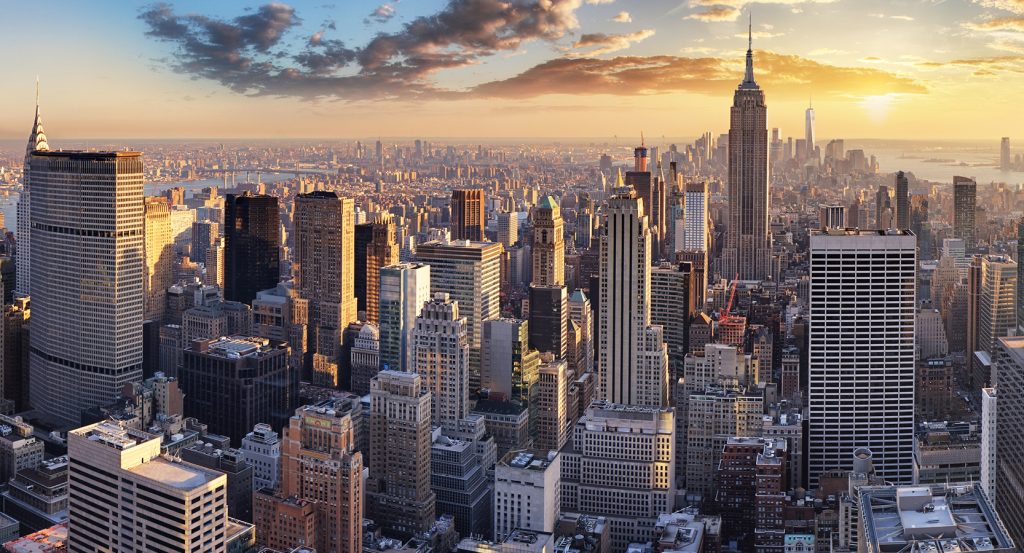
Why you should experience 107th Street in New York, NY.
107th Street is a graceful corridor where the Upper West Side's architectural elegance, Manhattan Valley's layered history, and Morningside Heights' enduring character unfold across one of Upper Manhattan's most distinctive cross-town streets.
Running through Manhattan Valley between Morningside Heights and the Upper West Side, the corridor links historic residential blocks, neighborhood institutions, and longstanding commercial streets that together demonstrate more than a century of urban evolution. Its streetscape blends richly detailed brownstones, prewar apartment houses, civic buildings, and mature tree-lined sidewalks that reflect successive periods of nineteenth- and twentieth-century development. Walking along 107th Street reveals a corridor where architectural continuity and neighborhood character have remained remarkably intact despite generations of change. The result is a corridor that quietly captures the enduring appeal of Manhattan's historic residential fabric.
What you should know about 107th Street.
107th Street is best known for taking shape after the Commissioners' Plan of 1811 extended Manhattan's rectilinear street grid across the island, with intensive residential construction accelerating following arrival of the Ninth Avenue Elevated Railroad in 1879 and expanding further after the opening of the Interborough Rapid Transit subway in 1904, transforming Upper Manhattan into one of New York City's fastest-growing residential districts. Between 1885 and 1925, speculative developers constructed an extensive collection of brownstone rowhouses, limestone apartment buildings, elevator flats, and mixed-use commercial structures displaying Romanesque Revival, Renaissance Revival, Beaux-Arts, and Classical Revival architecture that continues defining the corridor today. The surrounding 103rd Street, 110th Street, and Cathedral Parkway-110th Street subway stations strengthened neighborhood accessibility while supporting sustained residential density and commercial activity across successive generations. Continued façade restoration, masonry conservation, adaptive reuse, and contextual infill have preserved 107th Street as a representative example of Manhattan's principal era of residential expansion.
Construction of the Manhattan Valley Viaduct, completed in 1901 by the Rapid Transit Construction Company, carried Broadway across the natural valley while solving one of Upper Manhattan's most significant engineering challenges. Designation of the Riverside-West End Historic District Extension II by the New York City Landmarks Preservation Commission in 2015 protected additional concentrations of late nineteenth- and early twentieth-century apartment buildings representative of the same development period that shaped the corridor. Adoption of the West Side Neighborhood Transportation Study introduced coordinated recommendations for pedestrian safety, traffic circulation, and streetscape improvements that continue informing infrastructure investment throughout the surrounding area. Together, these engineering achievements, preservation initiatives, and transportation planning efforts explain how 107th Street has continually evolved while retaining its historic urban character.
How to fold 107th Street into your trip.
107th Street is best experienced through an afternoon exploring Manhattan's celebrated cultural institutions and public landscapes.
Begin at Straus Park, where the historic memorial fountain and landscaped plaza create one of the Upper West Side's most elegant civic spaces. Continue to New York City Fire Museum, whose collections chronicle the evolution of firefighting technology and public safety across the city. Conclude at Cathedral Church of St. John the Divine, where grand Gothic Revival architecture and one of the world's largest cathedral interiors provide a fitting finale. The progression moves naturally from intimate civic space to urban history before concluding with one of New York City's most extraordinary architectural landmarks, revealing the remarkable breadth of experiences connected by 107th Street.
Where your story begins.
Foresyte Travel reveals places that feel extraordinary long before you arrive.
Experience premium editorial crafted for luxury travelers.







































































































