
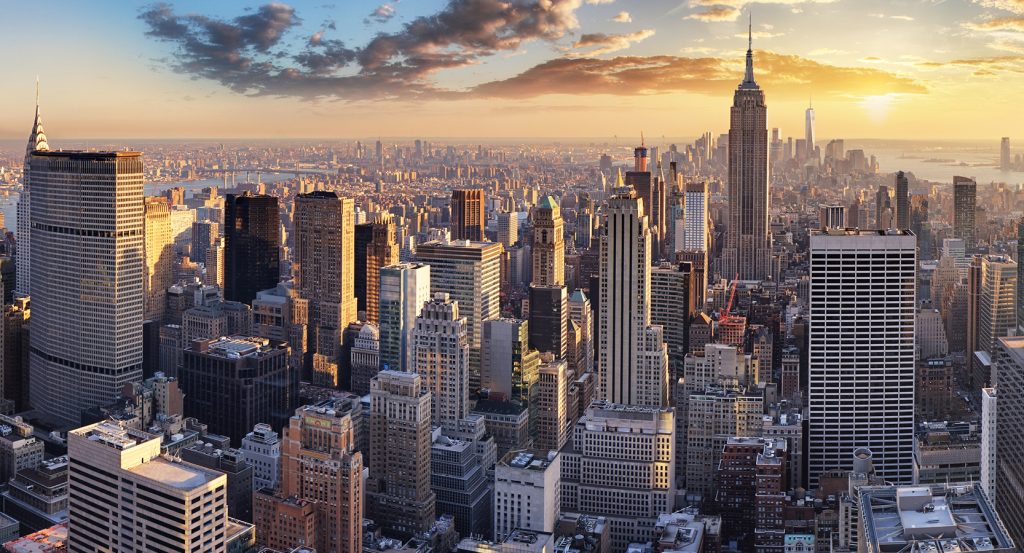
Why you should experience 100th Street in New York, NY.
100th Street is a resilient corridor where Manhattan Valley's residential heritage, the Upper West Side's architectural legacy, and East Harlem's cultural diversity converge across one of Upper Manhattan's defining cross-town streets.
Running through Manhattan Valley between the Upper West Side and East Harlem, the corridor links long-established residential blocks, neighborhood institutions, local commercial streets, and civic spaces that collectively demonstrate more than a century of urban evolution. Brownstone rowhouses, prewar apartment buildings, masonry churches, and carefully preserved apartment houses reveal successive chapters of Manhattan's growth while maintaining a cohesive streetscape. Walking along 100th Street reveals a corridor where architectural continuity and neighborhood character remain deeply connected. The result is a corridor that quietly reflects the enduring character of Upper Manhattan.
What you should know about 100th Street.
100th Street is best known for emerging from the Commissioners' Plan of 1811, which established Manhattan's rectilinear street grid before residential construction accelerated following completion of the Ninth Avenue Elevated Railroad in 1879 and the opening of the Interborough Rapid Transit subway in 1904, expanding access to Upper Manhattan. Between 1885 and 1925, speculative builders developed continuous rows of brownstone townhouses, limestone apartment houses, elevator buildings, and neighborhood commercial structures exhibiting Romanesque Revival, Renaissance Revival, Beaux-Arts, and Classical Revival architecture that continues defining much of the corridor today. The surrounding 96th Street, 103rd Street, and 110th Street subway stations reinforced residential growth while strengthening commercial activity throughout the surrounding neighborhoods. Continued façade restoration, adaptive reuse, masonry conservation, and contextual infill have preserved 100th Street as an architectural record of Manhattan's principal era of residential expansion.
Construction of the Manhattan Valley Viaduct in 1901 solved one of Upper Manhattan's most demanding engineering challenges by carrying Broadway across a steep natural valley while preserving the continuity of the street network surrounding 100th Street. The Bloomingdale District, once the principal rural estate landscape bordering the corridor, gave way during the late nineteenth century to an organized pattern of speculative residential development whose surviving street layout still reflects that transition from country estates to dense urban blocks. Extensive use of Ohio sandstone, brick masonry, pressed-metal cornices, and carved limestone ornament throughout surviving residential buildings demonstrates the durable construction methods that distinguished the corridor's principal building campaign. Together, these engineering achievements, patterns of urban development, and enduring construction materials explain why 100th Street continues to express the physical character established during Manhattan's greatest period of residential expansion.
How to fold 100th Street into your trip.
100th Street is best experienced through an afternoon exploring the Upper West Side's cultural institutions, historic collections, and neighborhood landscapes.
Begin at The Jewish Museum, where exhibitions spanning more than four millennia illuminate Jewish art, history, and global culture while providing an engaging introduction to the area's rich intellectual tradition. Continue to Central Park, where Frederick Law Olmsted and Calvert Vaux's masterful landscape design offers meadows, winding paths, wooded scenery, and open vistas that naturally connect the surrounding neighborhoods. Conclude at Museum of the City of New York, whose thoughtfully curated exhibitions trace the city's architectural, political, and social evolution, providing meaningful context for the streets and neighborhoods experienced throughout the day. The progression moves naturally from cultural heritage to celebrated landscape before concluding with a deeper understanding of New York City's development, revealing how 100th Street connects several of Upper Manhattan's defining experiences.
Where your story begins.
Foresyte Travel reveals places that feel extraordinary long before you arrive.
Experience premium editorial crafted for luxury travelers.







































































































