
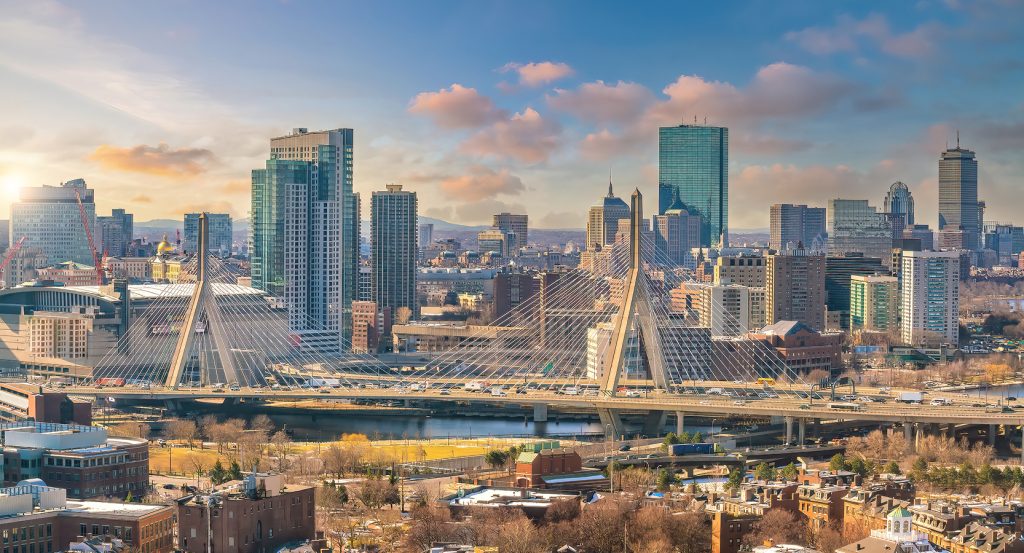
Why you should experience Myrtle Street in Boston, Massachusetts.
Myrtle Street is a graceful corridor where Beacon Hill's Federal-era architecture, residential elegance, civic heritage, and timeless streetscape create one of Boston's most captivating urban settings.
Running through Beacon Hill between the West End and the Boston Common, the corridor winds across the neighborhood's elevated hillside, linking refined brick townhouses, narrow sidewalks, intimate garden spaces, and carefully preserved streets that reflect more than two centuries of residential continuity. Each successive block heightens the experience as Flemish-bond brickwork, black iron railings, granite stoops, gas-style lanterns, and increasingly intricate architectural details reveal the exceptional craftsmanship that has long distinguished Beacon Hill. The defining moment arrives as the corridor's harmonious proportions, elevated setting, and remarkably cohesive streetscape reveal one of America's finest surviving Federal-era residential environments. The result is an experience defined by architectural continuity, historic refinement, and one of Beacon Hill's most distinctive corridors.
What you should know about Myrtle Street.
Myrtle Street is best known for extending through Beacon Hill during the neighborhood's early nineteenth-century residential expansion, when Boston's mercantile prosperity transformed the former hillside into one of the nation's most distinguished urban communities. Development surrounding the corridor accelerated after Charles Bulfinch prepared Beacon Hill's earliest residential plans, encouraging speculative builders to construct elegant Federal, Greek Revival, and later Italianate townhouses using brick masonry, granite lintels, brownstone trim, slate roofs, and finely crafted ornamental ironwork. Wealthy merchants, attorneys, physicians, and civic leaders established residences along streets adjoining Myrtle Street, reinforcing the neighborhood's reputation for architectural distinction and residential stability throughout the nineteenth century. Narrow building lots, consistent setbacks, granite sidewalks, and carefully proportioned façades preserve the unified design principles that continue defining the corridor today. Collectively, the neighborhood's early planning, distinguished architecture, accomplished craftsmanship, and enduring residential character established Myrtle Street as one of Beacon Hill's defining historic corridors.
Literary and intellectual life became the defining thread shaping the corridor as the Boston Athenæum, founded in 1807, cultivated one of the nation's foremost independent libraries only a short walk from Myrtle Street, reinforcing Beacon Hill's reputation as a center of scholarship and civic thought. That atmosphere attracted generations of writers, jurists, publishers, and educators whose residences and professional lives strengthened the neighborhood's character as a place where cultural achievement complemented architectural excellence. Master bricklayers, stone carvers, and ornamental ironworkers sustained that legacy by producing refined fanlights, granite entry surrounds, wrought-iron railings, and delicately detailed cornices whose craftsmanship remains evident throughout the streets adjoining Myrtle Street. Together, these cultural institutions, accomplished residents, and enduring artisan traditions demonstrate how Myrtle Street developed within a neighborhood where intellectual life and architectural excellence evolved in concert across successive generations.
How to fold Myrtle Street into your trip.
Myrtle Street works as a walk through Beacon Hill's architectural heritage and historic streets.
Begin at Louisburg Square, where impeccably preserved Federal-era residences establish the neighborhood's architectural character before naturally leading toward Myrtle Street. Continue to Acorn Street, where hand-laid cobblestones, brick façades, and intimate proportions deepen appreciation for Beacon Hill's remarkably preserved nineteenth-century streetscape. Conclude at Massachusetts State House, where Charles Bulfinch's architectural achievement provides the historical payoff by revealing the civic vision that shaped Beacon Hill's enduring identity. The progression moves naturally from refined residential design to one of Boston's best-preserved historic streets before culminating with the architectural centerpiece overlooking the neighborhood.
Where your story begins.
Foresyte Travel reveals places that feel extraordinary long before you arrive.
Experience premium editorial crafted for luxury travelers.







































































































