
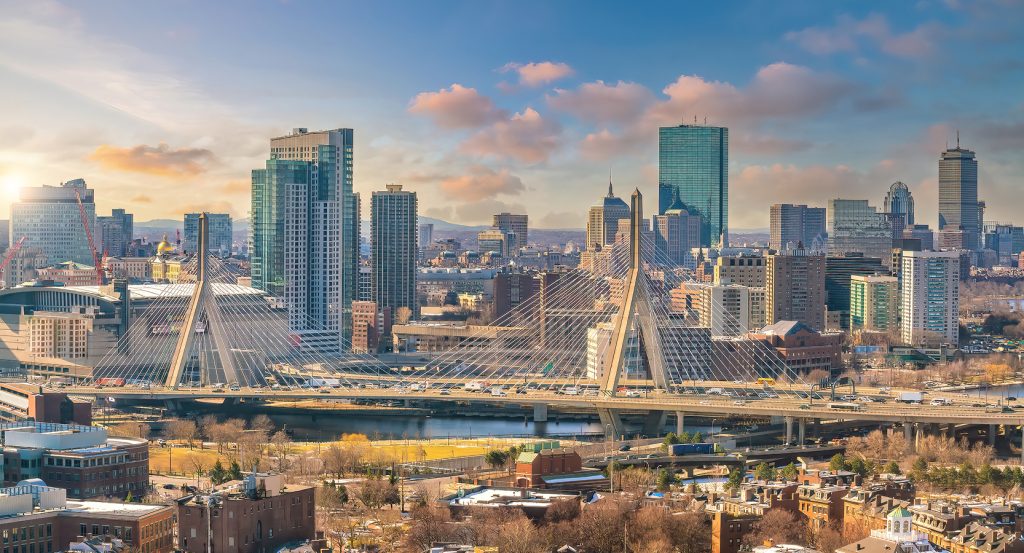
Why you should experience Parker Street in Boston, Massachusetts.
Parker Street is a graceful corridor where Mission Hill's academic legacy, medical innovation, Victorian architecture, and residential character create one of Boston's most engaging urban streets.
Running through Mission Hill between the Fenway and Roxbury, the corridor links tree-lined blocks, historic brick residences, institutional landmarks, and elevated streets that reveal the neighborhood's distinctive topography. Each successive block heightens the experience as brownstone rowhouses, granite retaining walls, mature canopy trees, ornate masonry, and carefully preserved nineteenth-century architecture create an increasingly refined streetscape rooted in Mission Hill's historic evolution. The defining moment arrives as the corridor's intimate residential fabric, landmark architecture, and elevated setting reveal how generations of institutional growth and neighborhood stewardship have shaped one of Boston's most enduring communities. The result is an experience defined by architectural continuity, academic and medical heritage, and one of Mission Hill's most distinctive historic corridors.
What you should know about Parker Street.
Parker Street is best known for extending through Mission Hill during the neighborhood's principal era of nineteenth-century residential expansion, when Boston's growing population transformed former agricultural land into a carefully developed urban community. Residential construction accelerated between the 1870s and the early twentieth century as speculative builders introduced substantial Victorian, Queen Anne, Romanesque Revival, and Colonial Revival rowhouses and apartment buildings distinguished by brick masonry, brownstone trim, decorative lintels, projecting bays, and slate roofs. The corridor evolved alongside the expanding influence of nearby institutions including Harvard Medical School, Brigham and Women's Hospital, and what is now Massachusetts College of Art and Design, whose continued growth reinforced Mission Hill as one of Boston's foremost academic and medical districts. Granite retaining walls, terraced building sites, and irregular street grades preserve the physical expression of Mission Hill's glacial topography while contributing to Parker Street's distinctive urban character. Collectively, the neighborhood's residential expansion, institutional influence, architectural craftsmanship, and dramatic landscape established Parker Street as one of Mission Hill's defining historic corridors.
Religious architecture became a defining influence along the corridor as the Basilica and Shrine of Our Lady of Perpetual Help, completed by the Redemptorists with twin spires rising above Mission Hill, established a visual and cultural anchor that shaped the surrounding streetscape for generations. That enduring institutional presence encouraged nearby builders to commission increasingly elaborate brick residences featuring carved sandstone details, pressed-metal cornices, stained-glass transoms, and finely crafted entrance surrounds that reflected the neighborhood's growing prosperity. Skilled masons, immigrant artisans, and local contractors left a lasting imprint on Parker Street through consistent masonry workmanship and architectural ornament that continues distinguishing its residential blocks from later twentieth-century development elsewhere in Boston. Together, these religious institutions, architectural commissions, and enduring craftsmanship demonstrate how Parker Street developed within a neighborhood whose cultural character is expressed as clearly through its built environment as through its longstanding academic and medical traditions.
How to fold Parker Street into your trip.
Parker Street works as a walk through Mission Hill's architectural heritage and institutional legacy.
Begin at Isabella Stewart Gardner Museum, where world-renowned collections and Venetian-inspired architecture establish the cultural setting before leading naturally toward Parker Street and Mission Hill's historic streets. Continue to Museum of Fine Arts, Boston, where centuries of artistic achievement deepen appreciation for the neighborhood's longstanding relationship with education, architecture, and craftsmanship. Conclude at Basilica and Shrine of Our Lady of Perpetual Help, whose soaring Gothic Revival architecture provides the historical payoff while revealing the grand presence that has long defined Mission Hill's skyline. The progression moves naturally from artistic excellence to architectural appreciation before culminating with the spiritual and visual centerpiece overlooking Parker Street.
Where your story begins.
Foresyte Travel reveals places that feel extraordinary long before you arrive.
Experience premium editorial crafted for luxury travelers.







































































































