Why you should experience Crockett Street in Seattle, Washington.
Crockett Street is a elevated corridor where Queen Anne's hillside grandeur, residential heritage, architectural craftsmanship, and sweeping vistas create one of Seattle's most memorable neighborhood streets.
Running through Queen Anne between Interbay and Lower Queen Anne, the corridor connects established residential blocks, neighborhood institutions, scenic overlooks, historic churches, and mature parkland that collectively reflect more than a century of thoughtful hillside development. Craftsman residences, Colonial Revival homes, Tudor Revival architecture, natural stone retaining walls, Douglas firs, Pacific dogwoods, ornamental cherries, and mature street trees establish a streetscape where enduring craftsmanship and dramatic topography remain inseparably connected. Throughout the corridor, generations of architects, builders, educators, civic leaders, and neighborhood families have cultivated an atmosphere defined by refinement, stewardship, and lasting residential character. The result is an experience distinguished by architectural elegance, panoramic landscapes, and one of Queen Anne's defining corridors.
What you should know about Crockett Street.
Crockett Street is best known for traversing Queen Anne, whose residential expansion accelerated following the extension of Seattle's electric streetcar system during the 1890s, transforming the prominent hill into one of the city's most desirable residential districts while strengthening connections with Downtown and Elliott Bay. Construction expanded throughout the 1900s, 1910s, and 1920s, producing Craftsman residences, American Foursquare homes, Tudor Revival architecture, apartment buildings, churches, and neighborhood institutions distinguished by cedar shingles, clinker brick, reinforced-concrete foundations, decorative half-timbering, leaded-glass windows, and finely crafted wood millwork. The corridor matured alongside architects, physicians, educators, merchants, engineers, and prominent civic leaders whose continued investment established Queen Anne as one of Seattle's finest collections of early twentieth-century residential architecture. Anna's hummingbirds, pileated woodpeckers, Douglas firs, western red cedars, vine maples, Pacific dogwoods, and native understory vegetation continue contributing to the mature urban ecology surrounding the corridor. Together, these transportation milestones, residential traditions, architectural practices, construction methods, and ecological systems establish Crockett Street as one of Queen Anne's defining historic corridors.
Architect Ellsworth Storey helped shape Queen Anne's residential character through thoughtfully proportioned Arts and Crafts homes that emphasized natural materials, restrained ornamentation, and harmonious integration with the hill's distinctive terrain. His architectural philosophy encouraged neighborhood builders to embrace handcrafted woodwork, generous porches, exposed structural details, and carefully balanced massing that complemented the surrounding landscape. Original river-stone retaining walls, tapered porch columns, exposed rafter tails, decorative brick chimneys, divided-light wood windows, and cedar siding continue preserving the architectural style established during the corridor's formative decades. Together, Storey's architectural influence, Queen Anne's enduring tradition of residential craftsmanship, and the corridor's remarkably intact historic fabric explain why Crockett Street remains one of Seattle's most architecturally cohesive hillside corridors.
How to fold Crockett Street into your trip.
Crockett Street works as an exploration of Seattle's residential heritage, scenic landscapes, and architectural legacy.
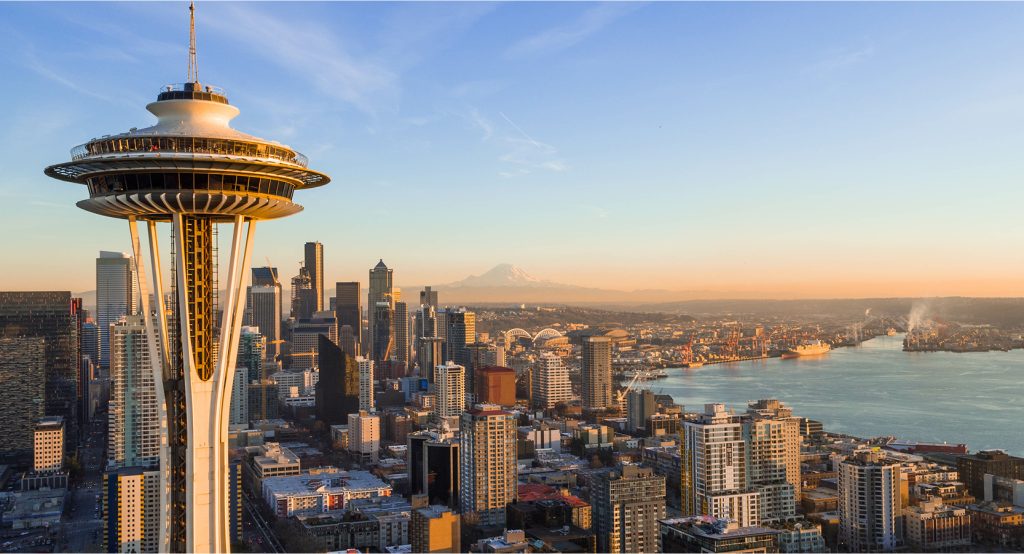
Begin at Kerry Park, where celebrated panoramas of Downtown, Elliott Bay, Mount Rainier, and the Olympic Mountains establish an unforgettable introduction to the elevated landscape surrounding the corridor. Continue to Queen Anne Avenue, whose independently owned cafés, neighborhood shops, and historic commercial buildings deepen appreciation for the community traditions that continue defining Queen Anne before naturally guiding the experience toward its concluding destination. Conclude at West Queen Anne Playfield, where mature trees, open green space, and a peaceful hillside setting provide the historical payoff by revealing the residential landscape that has shaped the enduring character of Crockett Street for generations. The progression moves naturally from sweeping vistas through neighborhood life before concluding within the residential setting that best expresses the lasting significance of Crockett Street.
Where your story begins.
Foresyte Travel reveals places that feel extraordinary long before you arrive.
Experience premium editorial crafted for luxury travelers.